 Passignano sul Trasimeno
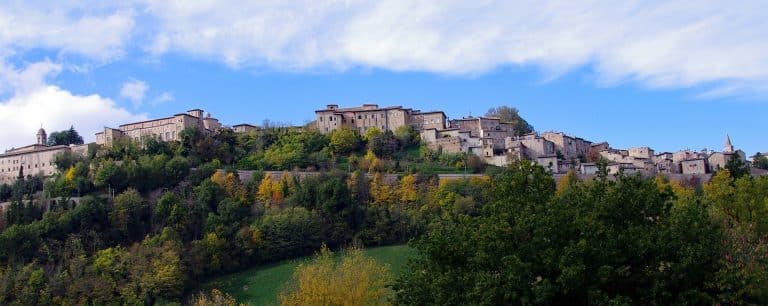 Montefeltro
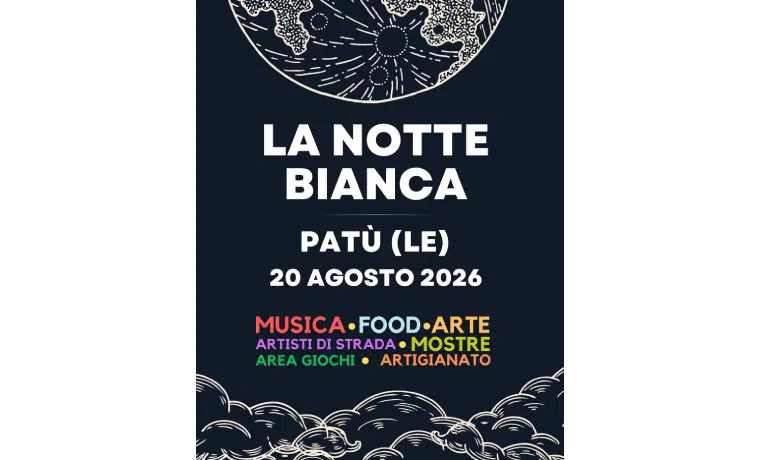 The White Night
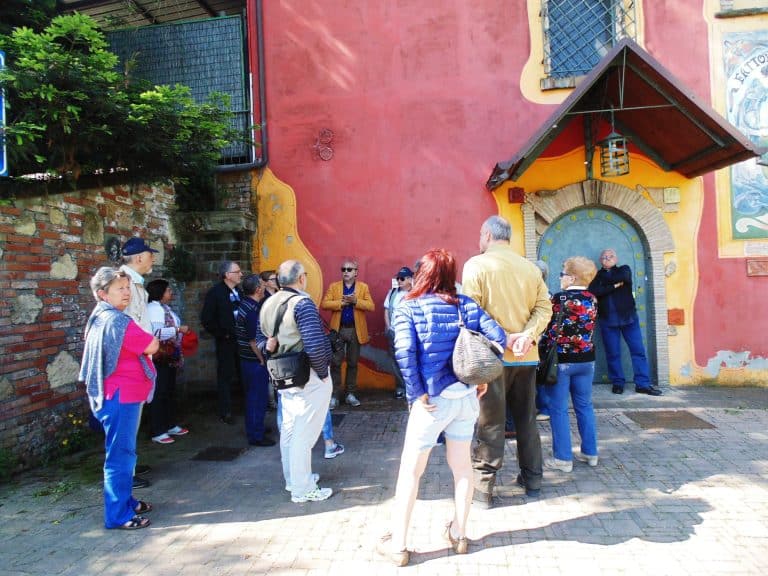 The Ca’ Rossa Experience: from vineyard to glass
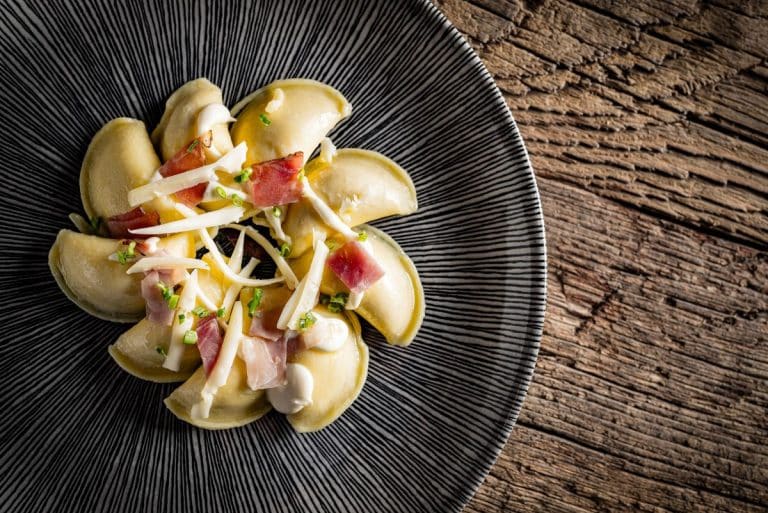 Recipe: Schlutzkrapfen, the traditional ravioli of the Puster Valley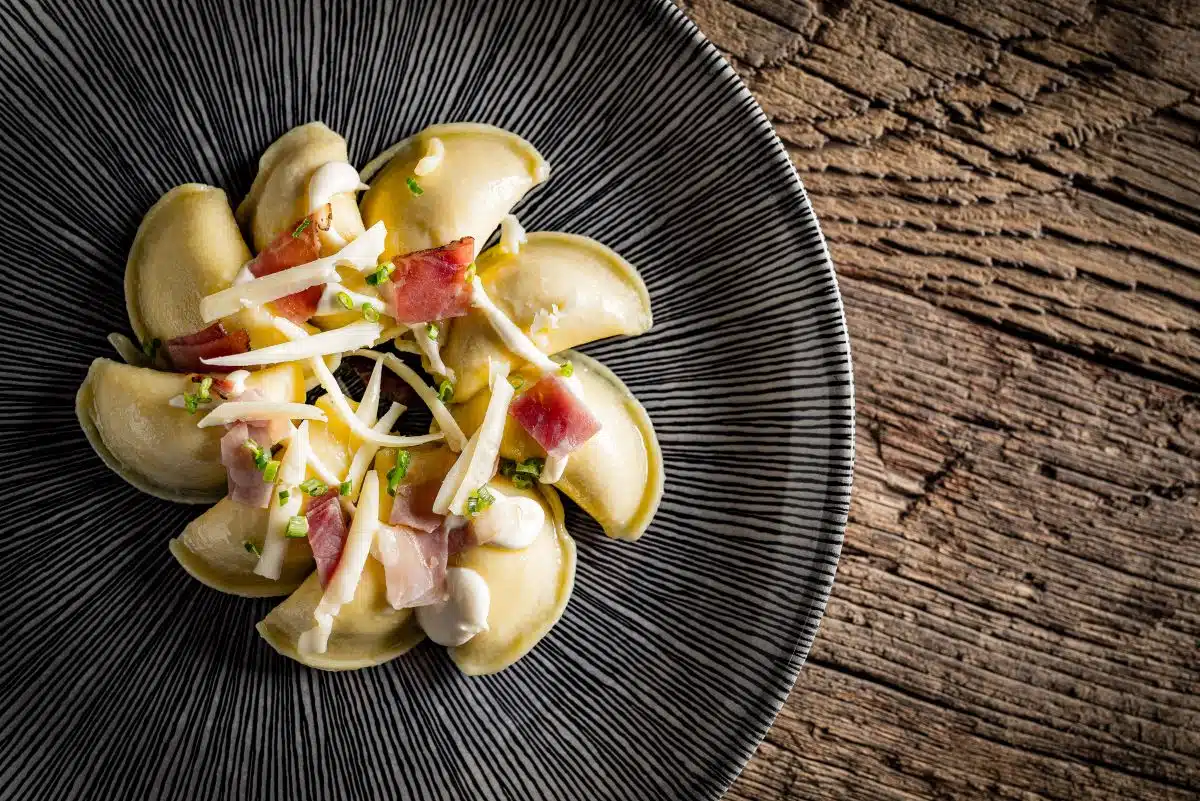
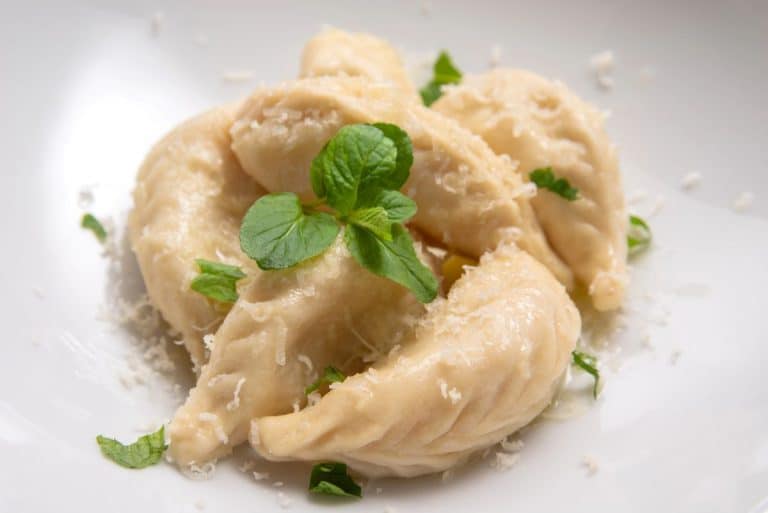
In the heart of South Tyrol, amongst the peaks of the Dolomites and the unspoilt landscapes of the Val Pusteria , there is a dish that has represented the culinary identity of these lands for centuries: the Schlutzkrapfen , also known as Schlutzer . These distinctive half-moon-shaped pasta shapes, filled with ricotta and spinach, are considered one of the most beloved dishes of South Tyrolean cuisine and embody a tradition based on simple, wholesome ingredients deeply rooted in the local area.
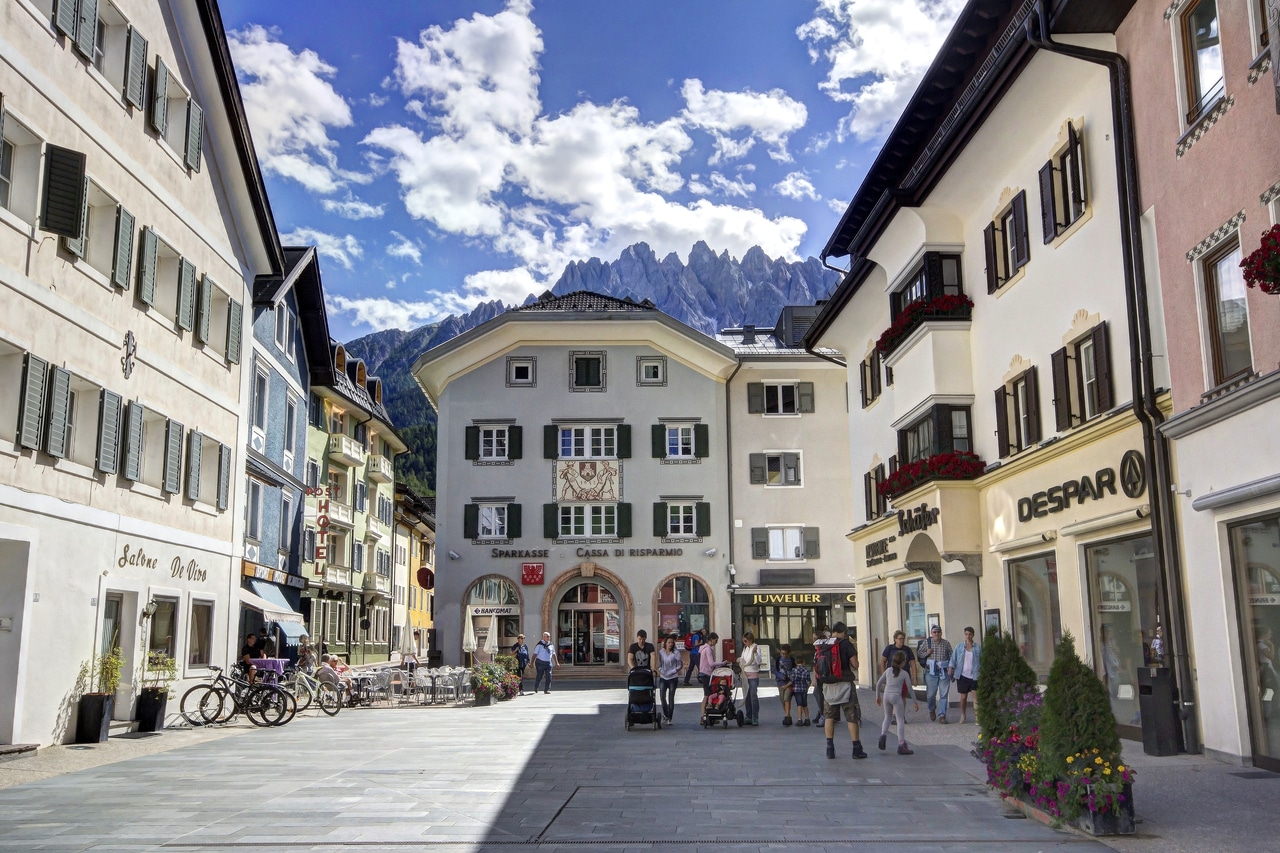
San Candido, one of the most charming towns in the Upper Puster Valley, is the ideal place to discover this iconic dish. Situated at an altitude of over 1,100 metres, the village boasts an extraordinary historical and cultural heritage. Its neat streets, traditional houses, the famous Romanesque collegiate church and its proximity to the Dolomites make this town one of the most popular destinations in the whole of South Tyrol.
Here, the cuisine is an integral part of the travel experience. Recipes handed down from generation to generation tell the story of a borderland where Italian culture and Tyrolean tradition meet, giving rise to unique flavours.
The origins of Schlutzkrapfen
The name Schlutzkrapfen derives from the Tyrolean dialect term “schlutzen”, which literally means “to slide” or “to glide”. According to tradition, this reference is linked to the soft texture of the filling and the ease with which these ravioli are eaten.
Originally a peasant dish, Schlutzkrapfen were made using ingredients readily available on Alpine farms: rye flour, eggs, spinach, ricotta and butter. The use of rye flour – a cereal particularly widespread in the South Tyrolean valleys – gives the pasta a rustic and unmistakable flavour.
Today, they are served all year round in trattorias, mountain huts and restaurants throughout the Puster Valley, having become one of the region’s most iconic culinary symbols.
Ph. Depositphotos
A recipe that smells of the mountains
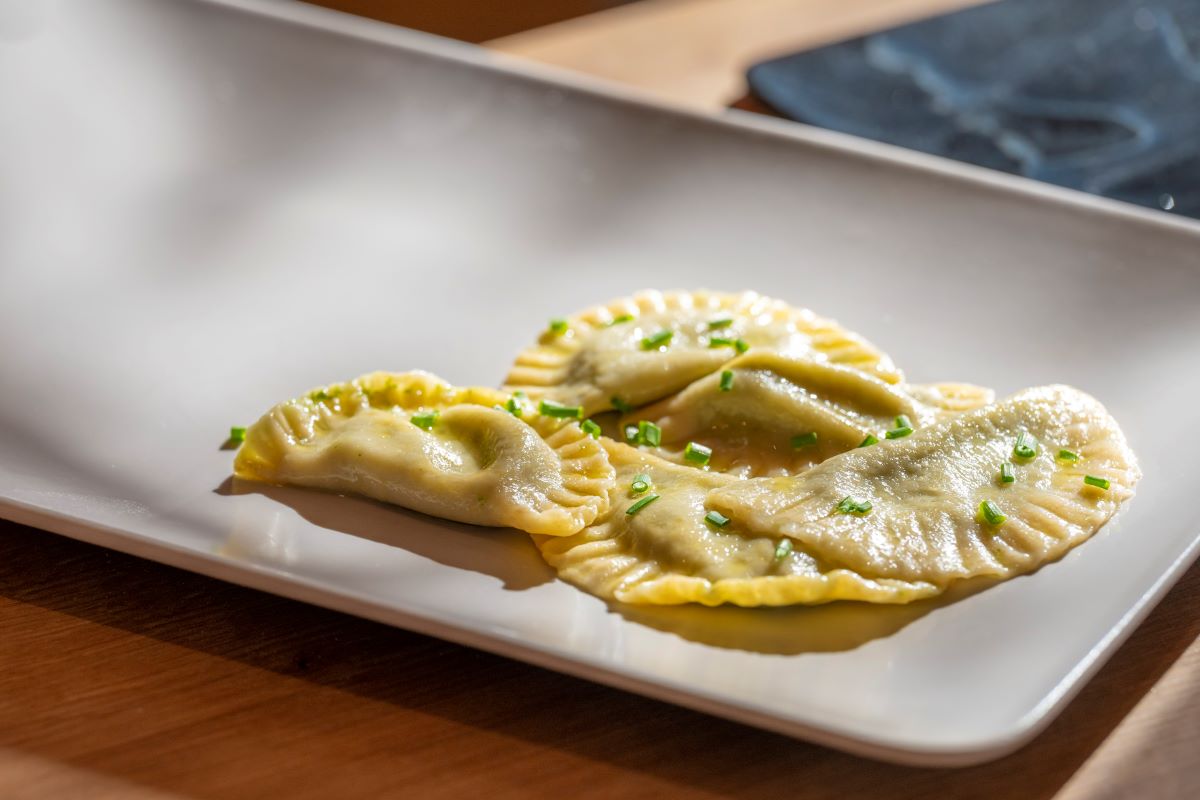
What makes Schlutzkrapfen so special is the perfect balance between the thin pastry and the creamy filling. The pastry, made from a mixture of rye and wheat flour, encloses a delicate filling of spinach, ricotta, onion and herbs.
Once shaped into a half-moon, they are boiled for a few minutes and served with plenty of melted butter, fresh chives and grated cheese. A simple accompaniment that brings out the flavour of the ingredients without overpowering their delicacy.
In some parts of South Tyrol, there are also local variations with different fillings. Among the best known is the version made with ricotta and potatoes, which is very popular in the Alpine valleys.
Ingredients
Serves 4
For the pasta
150 g rye flour
100 g wheat flour
1 egg
50–60 ml lukewarm water
1 tablespoon oil
salt
For the filling
300 g fresh spinach (or 150 g pre-cooked)
50 g finely chopped onion
half a clove of garlic
1 tablespoon butter
100 g ricotta
1 tablespoon grated Parmesan
1 tablespoon chopped chives
a pinch of nutmeg
salt and pepper
Process
Mix the two types of flour and pile them into a mound on the work surface. Add the salt and pour the egg, lukewarm water and oil into the centre. Knead until the dough is smooth and even. Shape into a ball, cover it and leave to rest for about thirty minutes.
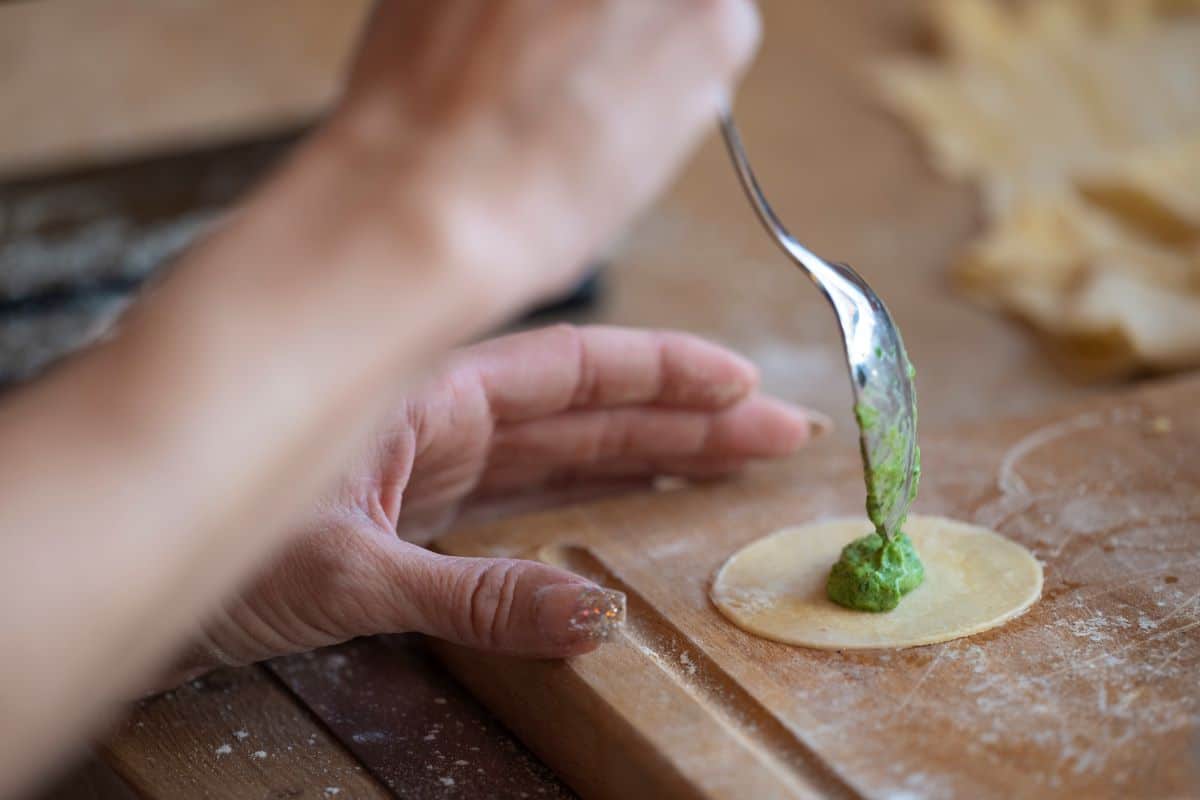
Meanwhile, blanch the spinach, squeeze out the excess water thoroughly and chop it finely. In a frying pan, gently fry the onion and garlic in butter. Add the spinach and cook for a few minutes to allow the flavours to develop.
Remove from the heat and add the ricotta, Parmesan, chives, nutmeg, salt and pepper. Mix until you have a firm, smooth filling.
Roll out the dough very thinly and cut out discs about seven centimetres in diameter. Place a small amount of filling in the centre of each disc. Moisten the edges with water and fold into half-moons, pressing the edges firmly together with your fingers.
Cook the Schlutzkrapfen in plenty of salted water for about three or four minutes. Drain them gently and serve immediately with melted butter, grated cheese and fresh chives.
Ph. Depositphotos
A dish that tells the story of the Puster Valley
Savouring Schlutzkrapfen means immersing yourself in the culture of the Puster Valley. Every ingredient tells the story of the bond between the local people and the land: the rye grown in the Alpine valleys, the dairy products made on mountain farms, the vegetables from family vegetable gardens, and the aromatic herbs that perfume the high-altitude meadows.
It is a cuisine that does not seek complexity, but focuses on the quality of the ingredients and respect for tradition. This is precisely why Schlutzkrapfen remain one of South Tyrol’s most iconic dishes, appreciated by both locals and visitors keen to discover the authentic flavours of the Dolomites.
In collaboration with Associazione Turistica San Candido
Do you want to promote your business on e-borghi?
Reach travellers interested in villages, authentic experiences and quality tourism.
Discover how to become a partner