 San Martino di Castrozza
 VIVA! Festival 2026
 Tandem paragliding flights in Tirolo and Merano: the thrill of flying over the Alps
 Recipe: Polta di Pacentro, the peasant dish that symbolises the traditions of Abruzzo
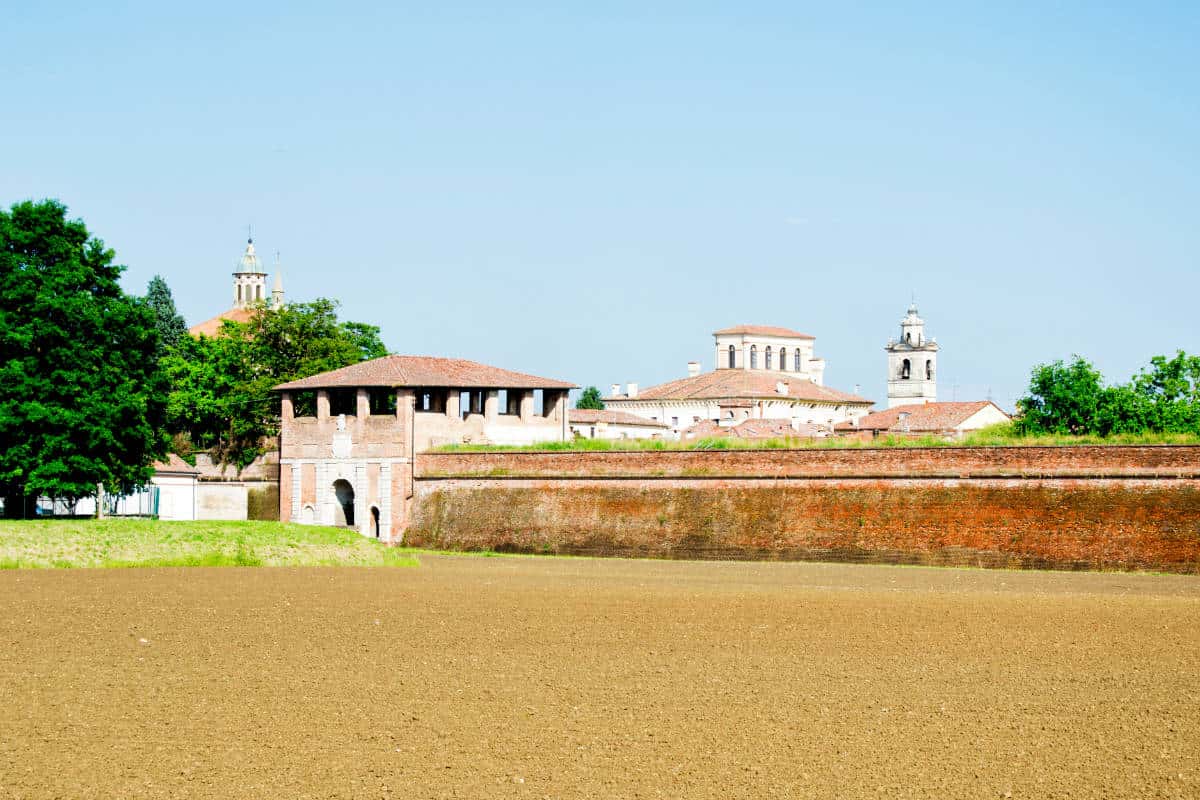
Sabbioneta, located five kilometers from the river Po, is one of the best examples of the Lombard Renaissance architectural style, closed by the mighty defensive curtain wall which can be accessed through austere and imposing monumental doors. Particularly renowned are the antiques market held every first Sunday of the month, excluding January and August, and the Sabbio Summer Fest during the summer. In Sabbioneta you can taste and buy many typical products of the Mantuan lands.
Photo gallery
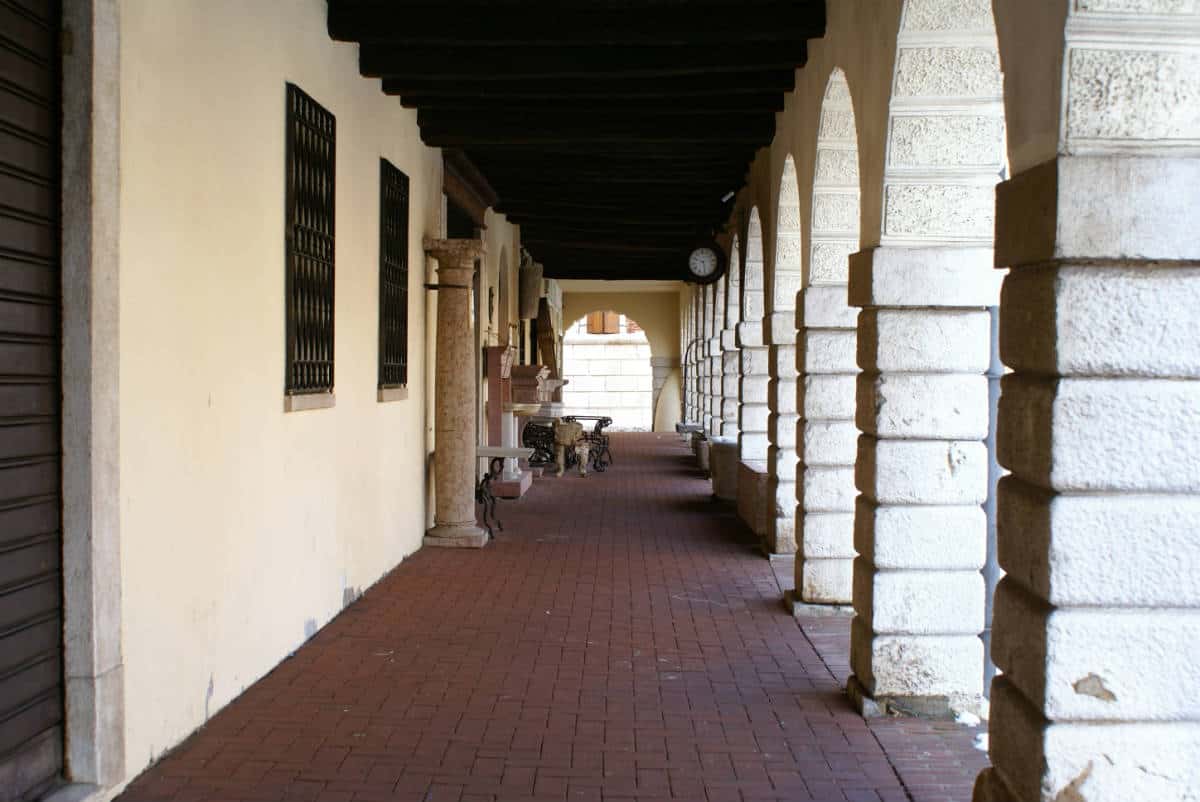
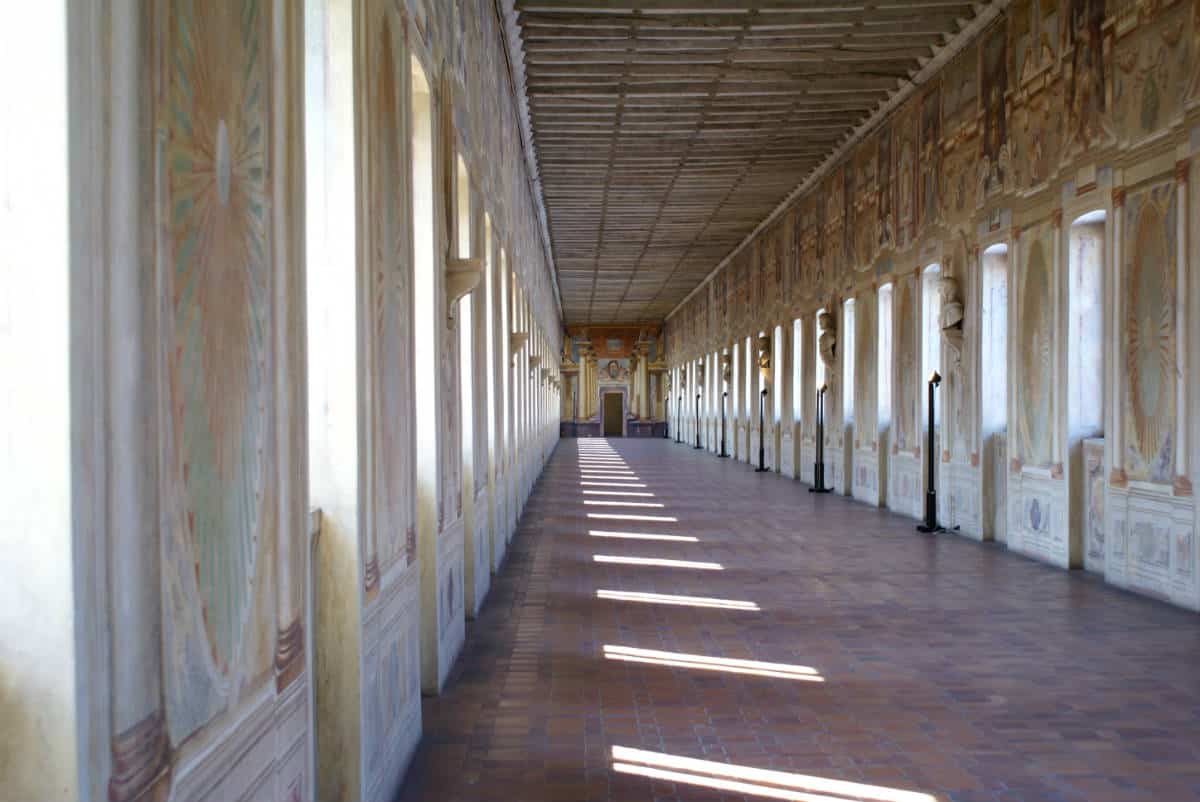
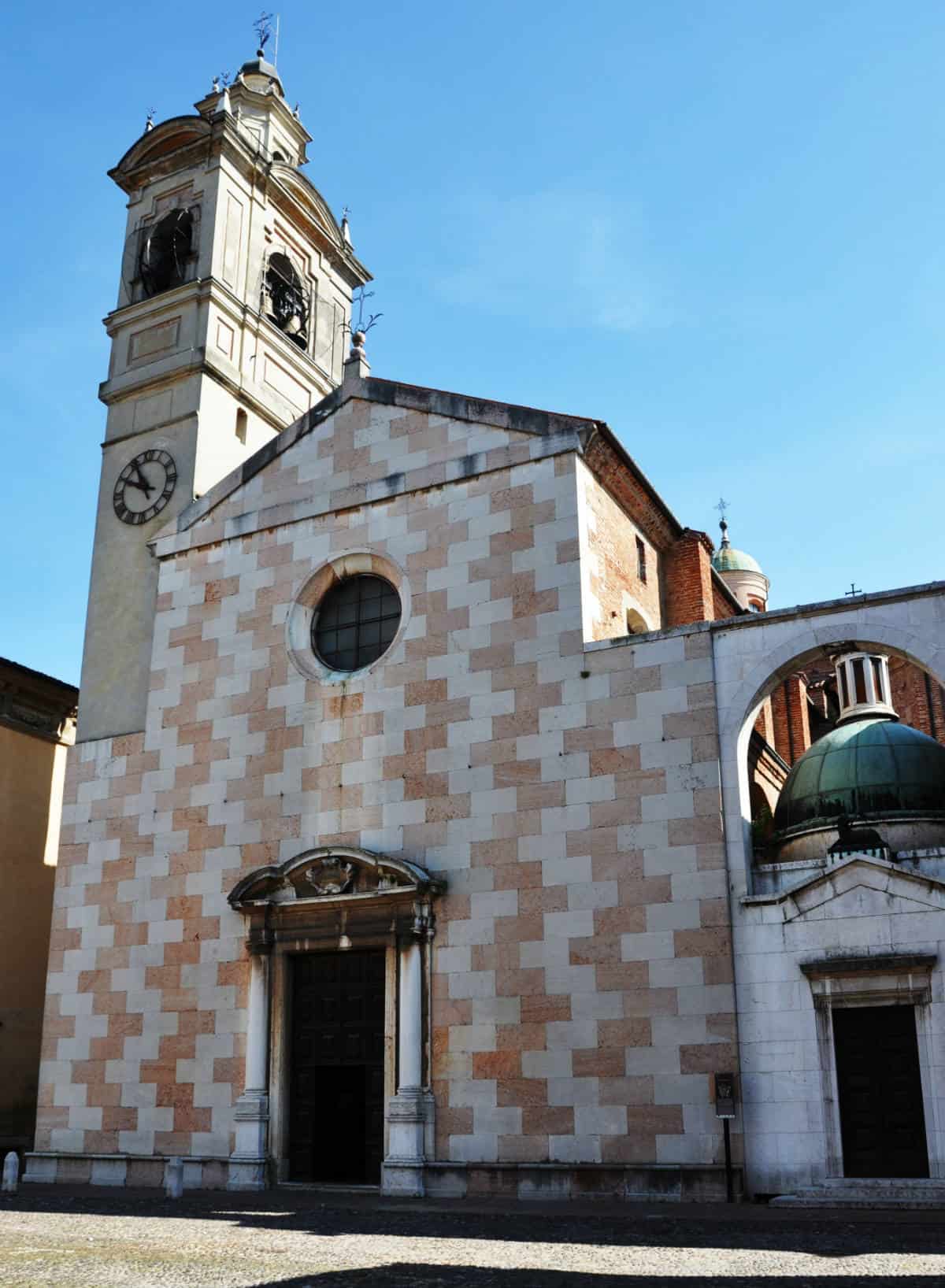
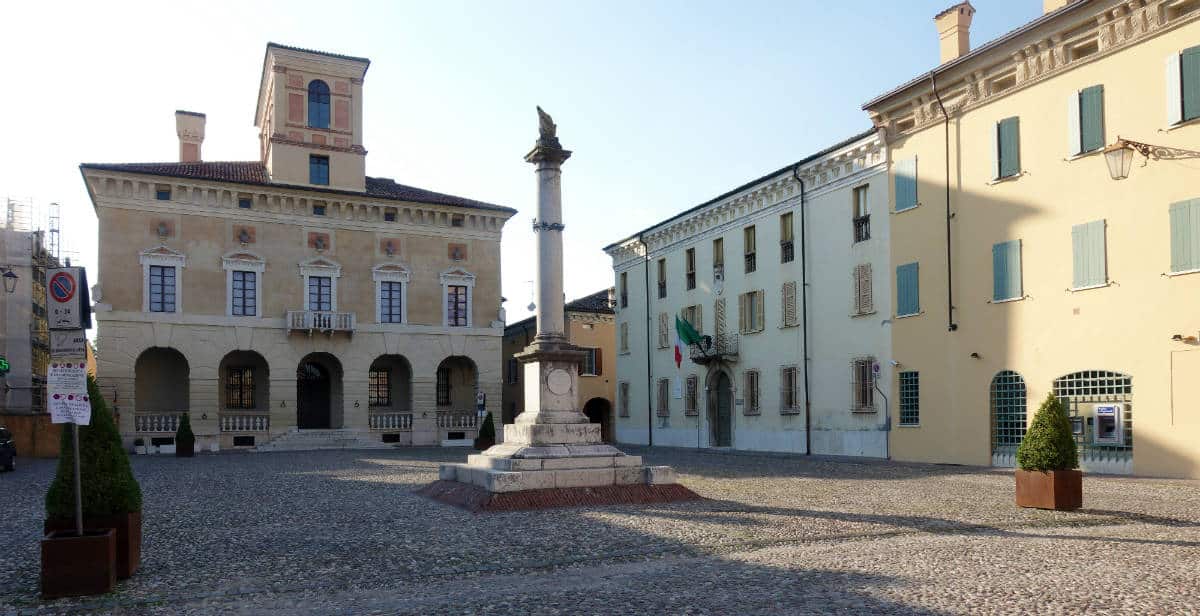
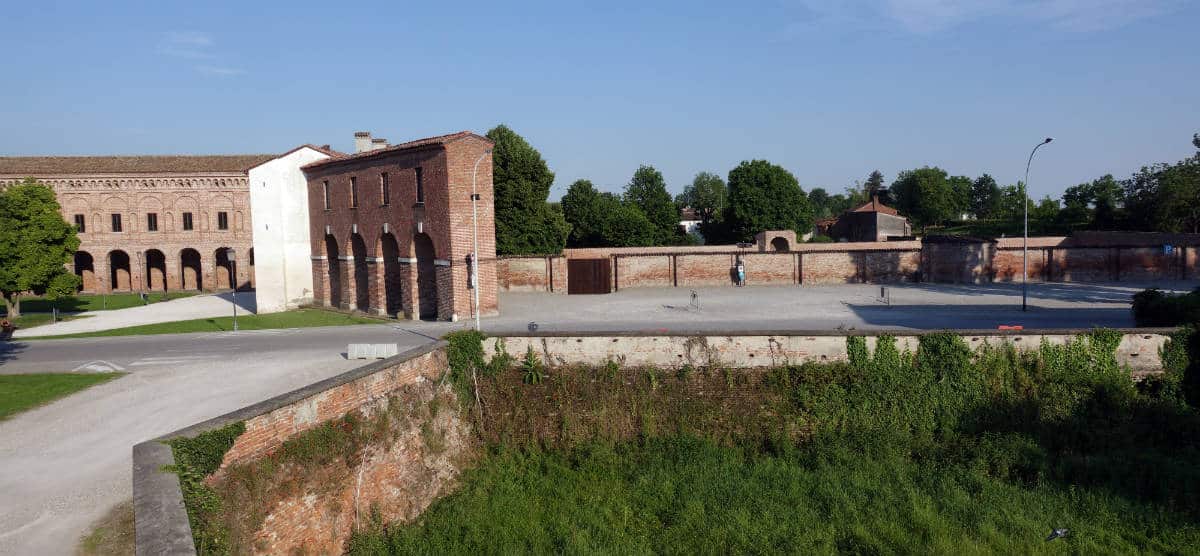
The village of Sabbioneta (Sabiùnèda in the Casalasco-Viadanese dialect), one of the most beautiful towns in Lombardy, is crossed by the 45th parallel. Its name derives from the Latin sabulum, sand. The city was founded by Vespasiano Gonzaga Colonna between 1554/1556 and 1591, the year of his death, in the place where there stood a fortress of his grandfather Ludovico and an ancient settlement. Placed on an alluvial ground between the Po and Oglio rivers, as well as along the route of the ancient Via Vitelliana, it occupied a strategic position in the heart of the Po Valley. For Vespasiano Gonzaga, Sabbioneta had to be above all a fortress and the power of its wall circuit certainly made it, at that time, one of the most armed bulwarks of Lombardy of Spanish domination. Sabbioneta was above all the capital of a small State placed among the great regional states: the Duchy of Milan to the west, ruled by the Spanish governorship at that time, the Duchy of Mantua to the east over the river Oglio, governed by the primeval line of the Gonzagas, cousins “”of Vespasiano, and the Duchy of Parma and Piacenza to the south of the Po, dominated by the Farnese family, supportive and friend of Gonzaga himself. The territory of the small state of Sabbioneta was mainly concentrated to the eastern ramification of the diocese of Cremona and constituted a forced crossroads both for the commercial traffic in the middle course of the Po, and for the communications between the lower Brescia and Emilia. The most prosperous period in the history of the city was in the years of its rebuilding, under the rule of the prince Vespasiano Gonzaga Colonna, of which it became the residence.
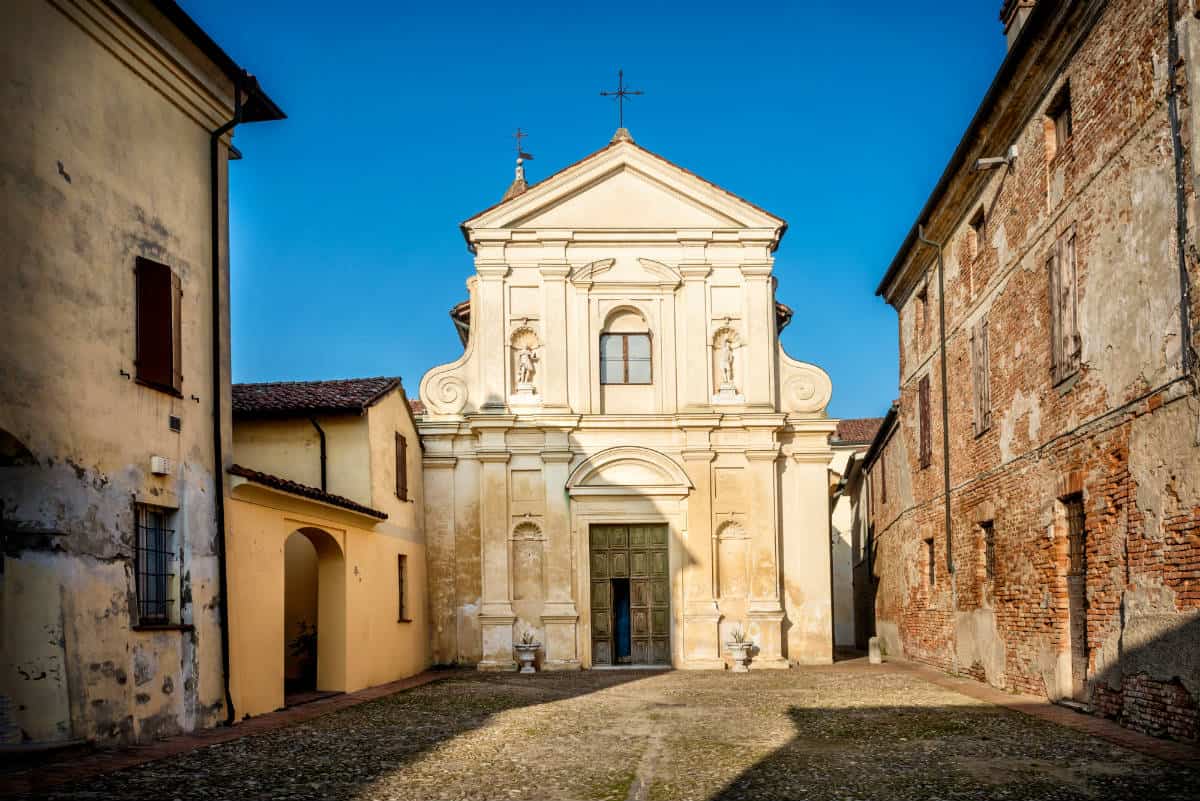
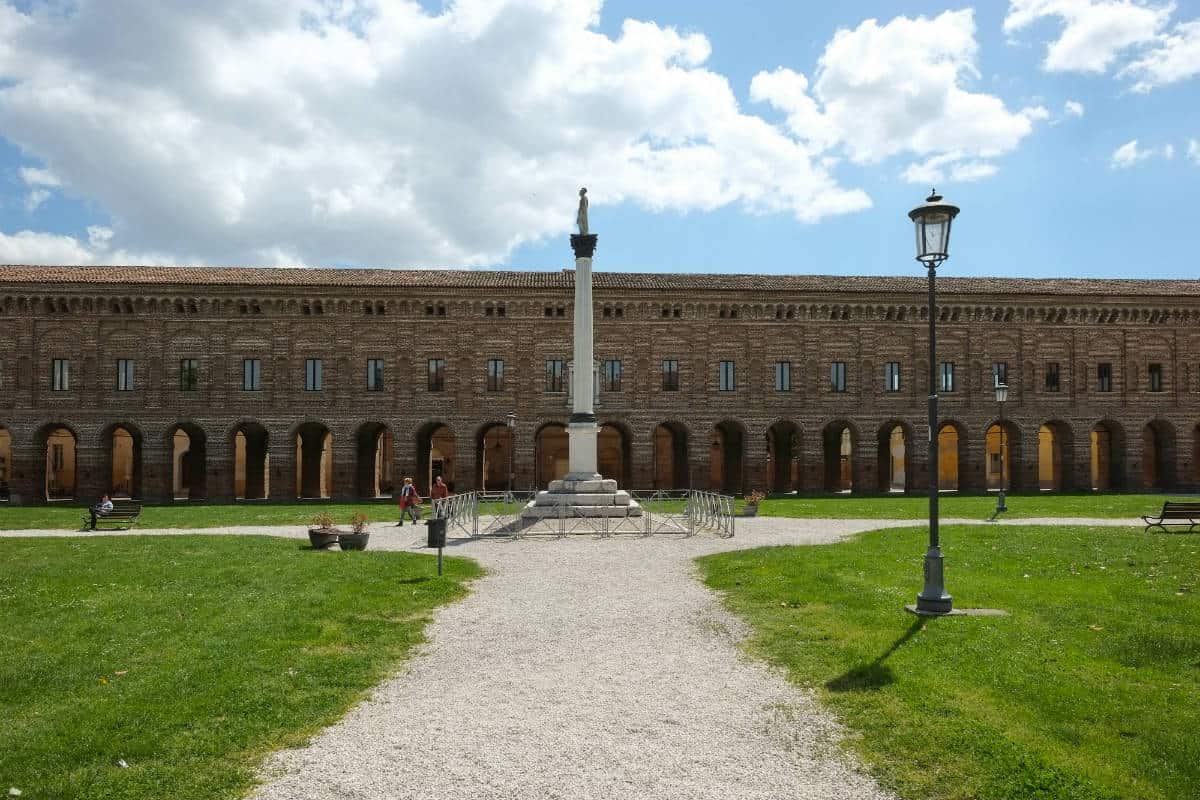
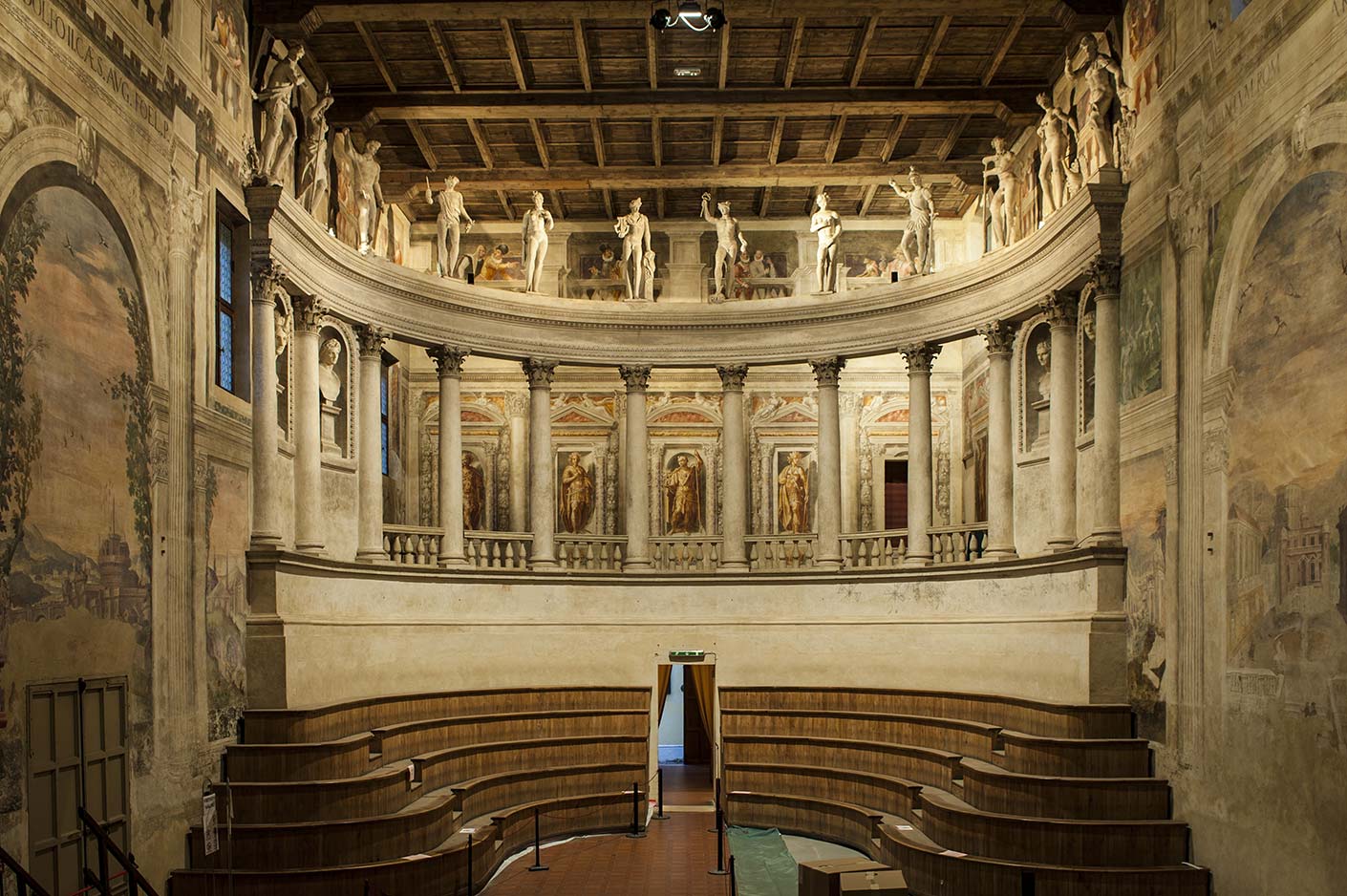
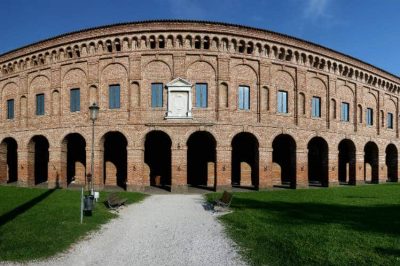
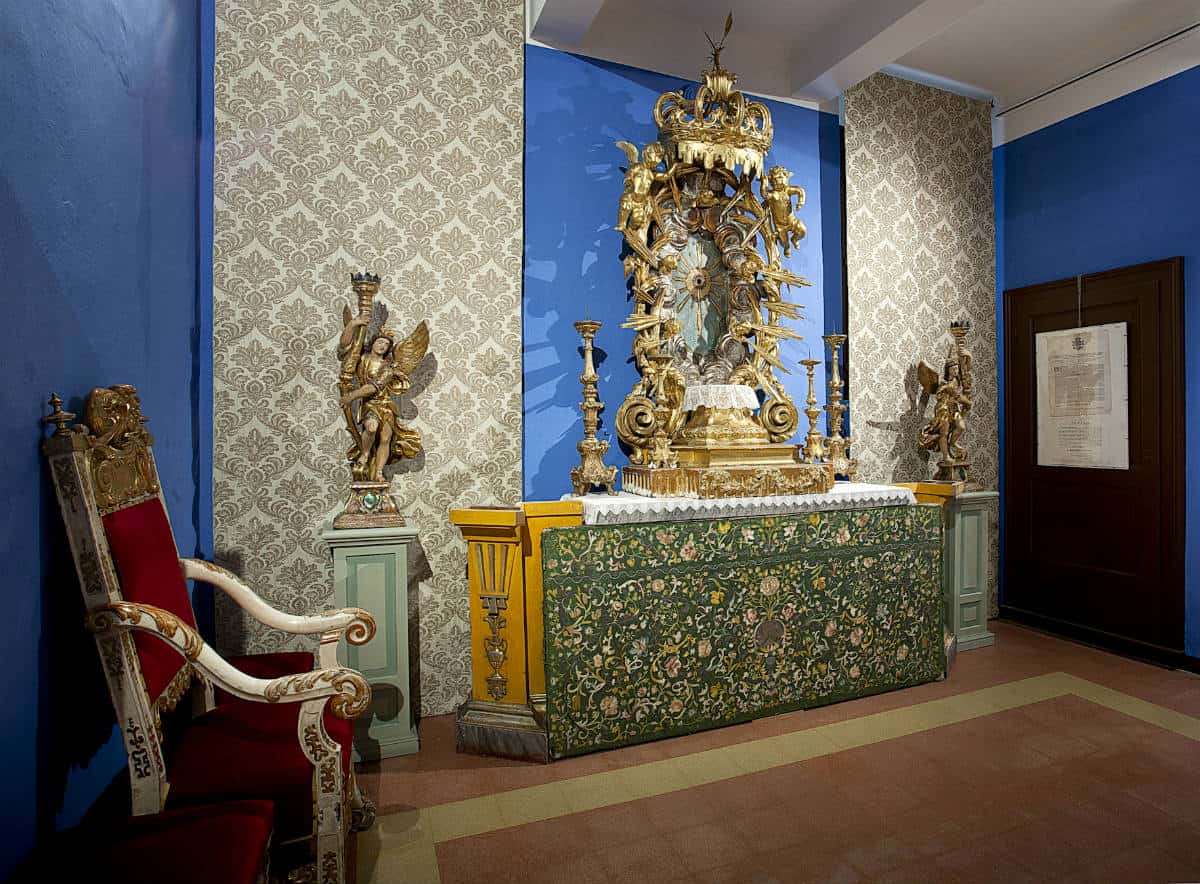
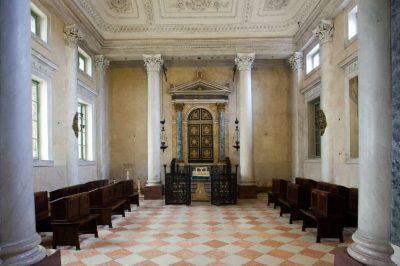
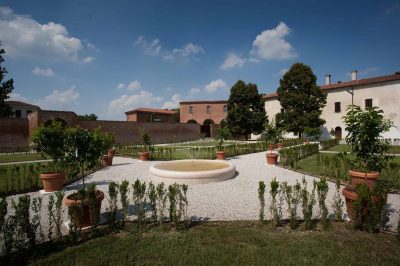
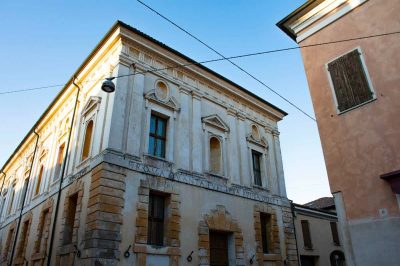
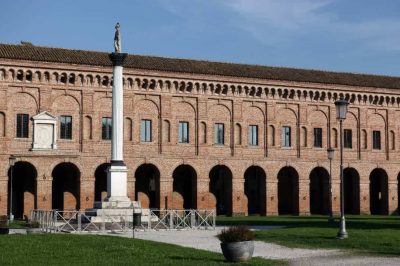
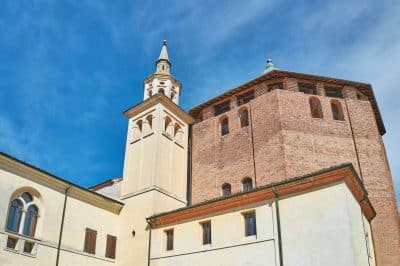
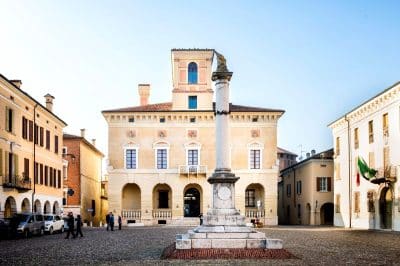
The town, built according to the humanistic principles of the ideal city, houses within it several monuments such as the Palazzo Ducale or Palazzo Grande, ducal residence and place for the administration of the State, the Teatro all’Antica or Teatro Olimpico (1590) designed by Vincenzo Scamozzi, the first theatrical building of the modern era built specifically for this function, the Gallery of the Ancients or Corridor Grande, appointed to host the collection of ancient marbles as well as the hunting trophies, the Palazzo Giardino or Casino, a place dedicated to the otium and valuablely redeveloped between 1582 and 1587 by Bernardino Campi and his team of collaborators, the churches of the Assunta, Incoronata, del Carmine, the Synagogue and the historic Jewish quarter, today no longer inhabited by a community, with its activities of printing, founded in 1567 by Tobias Foa. Noteworthy in the area are the church of Sant’Antonio Abate in the hamlet of Villa Pasquali designed by Ferdinando Galli da Bibbiena and built by his son Antonio Galli and the small Sanctuary of the Madonna delle Grazie in Vigoreto formerly annexed to the Capuchin convent.
In 1970 Bernardo Bertolucci’s film Strategy of the Spider was filmed in Sabbioneta. On the occasion of the film the town took on the fictional name of Tara. More recently (1980s) the filming of the film I Promessi Sposi (The Betrothed) also took place in Sabbioneta, and among the columns of the Galleria degli Antichi, the scene of the “Plague” is filmed. Some scenes were also shot in Sabbioneta for the French film Marquise, released in 1997 and directed by Vera Belmont.
Village of Sabbioneta
Municipality of Sabbioneta
Province of Mantova
Lombardy region
Population: 4,251 sabbionetani
Pop. foreign resident: 385
The Municipality is part of:
I Borghi più belli d’Italia
Paesi bandiera arancione
Acknowledgments
Orange Flag – Italian Touring Club
Unesco site:
Mantova e Sabbioneta
Municipality
Piazza Ducale 2 – phone +39 0375-223001
BY CAR
- Taking the A22 highway, take the exit for Mantua
- Driving on the A4 highway, take the exit for Desenzano del Garda
- Taking the A1 highway, take the exit for Parma
- Taking the A21 highway, take the exit for Cremona
ON THE TRAIN
- Mantua station
- Parma station
- Bozzolo station
- Casalmaggiore station
BY PLANE
- Verona Catullo Airport
- Orio al Serio airport
- Bologna airport
- Parma airport
- Milan Linate Airport
- Milan Malpensa airport
What to see in Sabbioneta
Discover what to see in Sabbioneta among monuments, scenic views, museums, churches and symbolic places of the village. A useful selection to plan your visit and explore the area.
News and stories about “Sabbioneta”
Insights and stories from the area, to keep discovering.
Continue the journey
Sabbioneta is only one of the treasures of the area. Use the interactive map to discover what to visit nearby, how far the other villages are and which experiences you can enjoy along the route.
Explore the area