 San Martino di Castrozza
 Malvasia in Porto 2026
 Tandem paragliding flights in Tirolo and Merano: the thrill of flying over the Alps
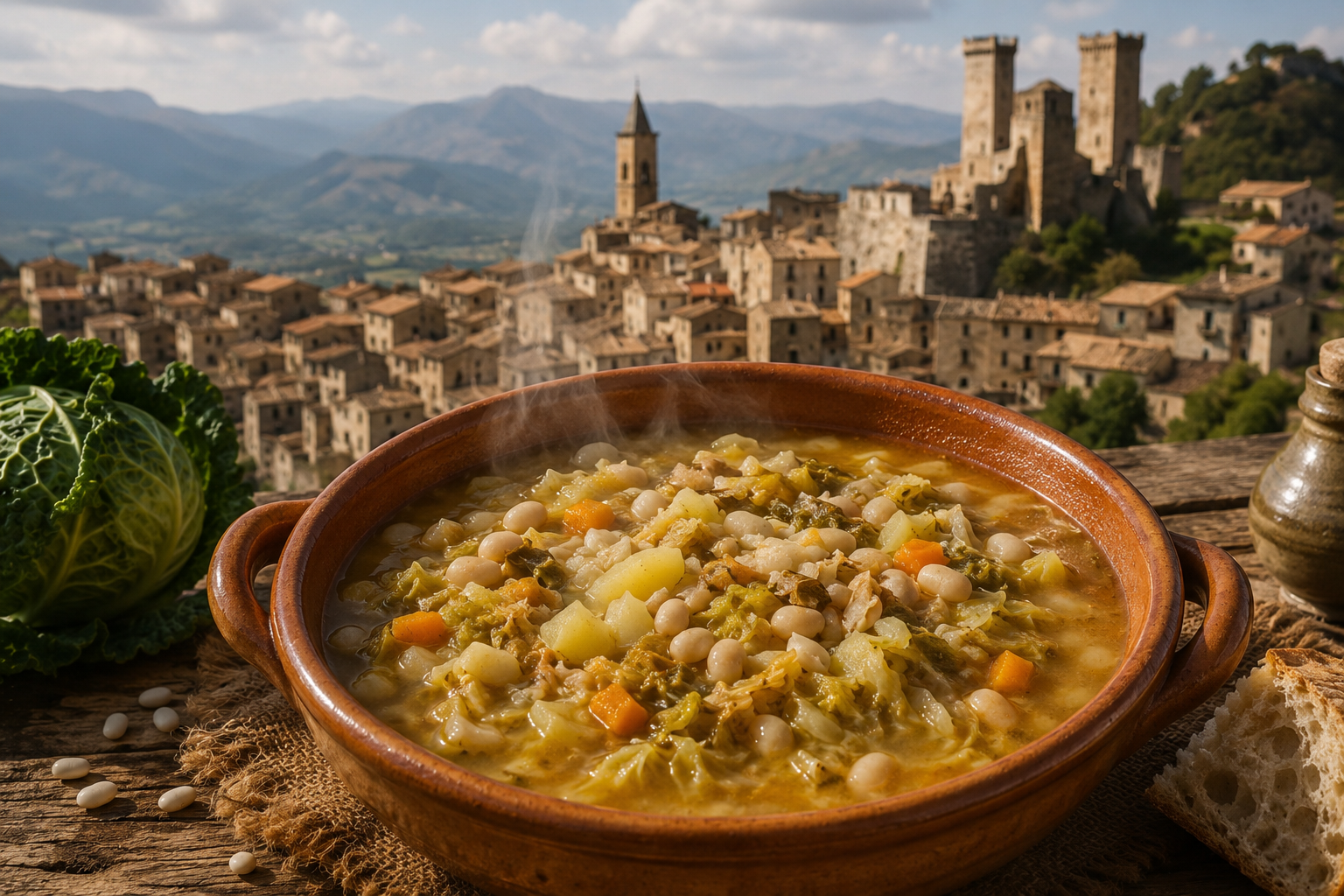 Recipe: Polta di Pacentro, the peasant dish that symbolises the traditions of Abruzzo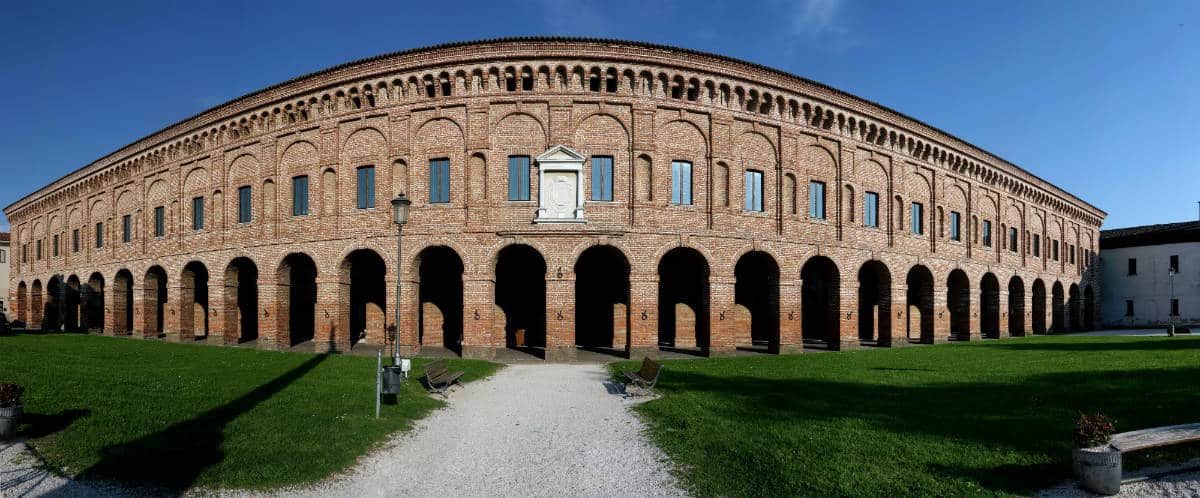
In the heart of Sabbioneta stands one of the most extraordinary buildings of the Italian Renaissance: the Galleria degli Antichi, also known as the Corridor Grande. Commissioned by Duke Vespasiano Gonzaga and built between 1584 and 1586, it was intended to house the ruler’s prestigious archaeological and artistic collections.
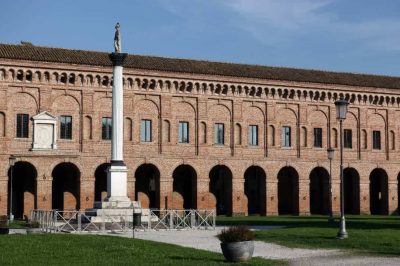
At almost 97 metres in length, the Galleria degli Antichi is one of the most imposing galleries in Europe and the second largest in Italy after the famous Uffizi Gallery. The building is spread over two levels: on the ground floor is an elegant portico featuring twenty-six round arches, whilst the upper floor houses the grand hall that once displayed the ducal collections.
The gallery began as the personal museum of Vespasiano Gonzaga, who, on his return from the Spanish court, assembled an extraordinary collection of statues, busts, bas-reliefs and inscriptions, mainly from Rome and Venice. These artefacts were later supplemented by precious hunting trophies donated by Emperor Rudolf II of Habsburg, a testament to the international prestige achieved by the small Gonzaga capital.
The interior still impresses today with the magnificence of its decorations. The walls were frescoed in 1587 by the brothers Giovanni and Alessandro Alberti, Tuscan artists specialising in perspective paintings. The paintings create a refined interplay of optical illusions and feature numerous female allegories dedicated to the duke’s civic and moral virtues. Among these, Victory, Peace, Harmony, Moderation and Mercy stand out, set within a complex iconographic programme designed to celebrate the good governance and grandeur of the Gonzaga dynasty.
The building’s architecture evokes Roman monumentality: exposed brickwork, large arches, pilasters and rhythmically arranged windows lend the façade an elegant yet austere appearance. Inside, the long wooden coffered ceiling and the painted perspectives amplify the sense of depth, making a visit particularly evocative.
In the 18th century, the precious archaeological collection was transferred to Mantua at the behest of the Austrian administration. Today, the artefacts are housed between the Ducal Palace in Mantua and Palazzo San Sebastiano, whilst the Gallery continues to convey Vespasiano Gonzaga’s cultural and political vision through its extraordinary frescoes and monumental architecture.
A visit to the Galleria degli Antichi means stepping into the heart of the ideal Renaissance town of Sabbioneta, a UNESCO World Heritage Site, and discovering one of the most fascinating examples of a princely museum in sixteenth-century Europe.