 Passignano sul Trasimeno
 Montefeltro
 Palio delle Barche
 The Ca’ Rossa Experience: from vineyard to glass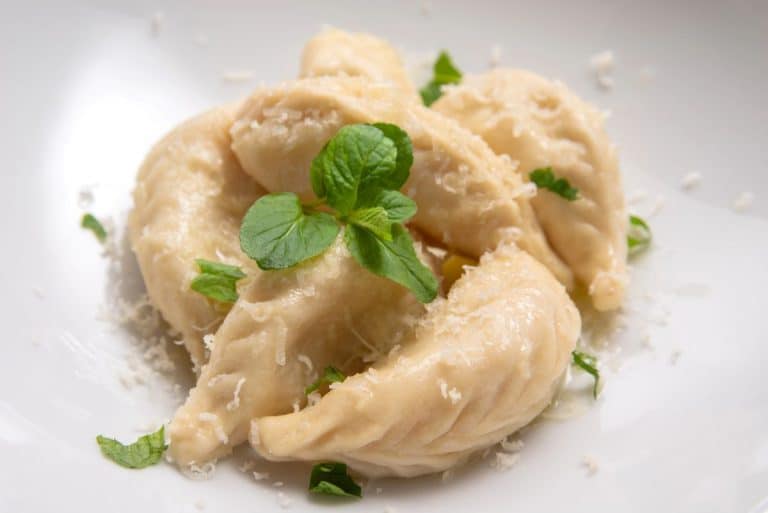
There are places where food is not merely sustenance, but a veritable compendium of stories, skilled hands and the sea breeze crashing against the rocks. One such place is Ogliastra, a wild and proud land in eastern Sardinia, guardian of the secret of longevity. And it is precisely here, amongst the hilltop villages and silent valleys, that Culurgiones are born – the famous pasta parcels that encapsulate the island’s most authentic essence.
Today we take you on a journey to discover this exceptional first course, offering you a variation that combines Ogliastra tradition with a Sardinian dairy excellence: Pecorino Romano PDO.
Ogliastra: where the land is steeped in history
Before we get cooking, it’s essential to understand where we are. Ogliastra is one of the world’s five “Blue Zones”, an area with an exceptionally high concentration of centenarians. The secret? A slow-paced lifestyle, fresh air and, undoubtedly, a wholesome diet.
The culurgiones (or culurgionis) are the symbol of this land. Historically regarded not merely as a meal, but as a gift, a talisman against misfortune and a dish for special occasions, they are instantly recognisable by their characteristic ‘spighitta’ (wheat ear) shape. This hand-sewing, which requires almost magical dexterity, symbolises fertility and hope for a good harvest.

Cala Goloritzé – Ph. Depositphotos
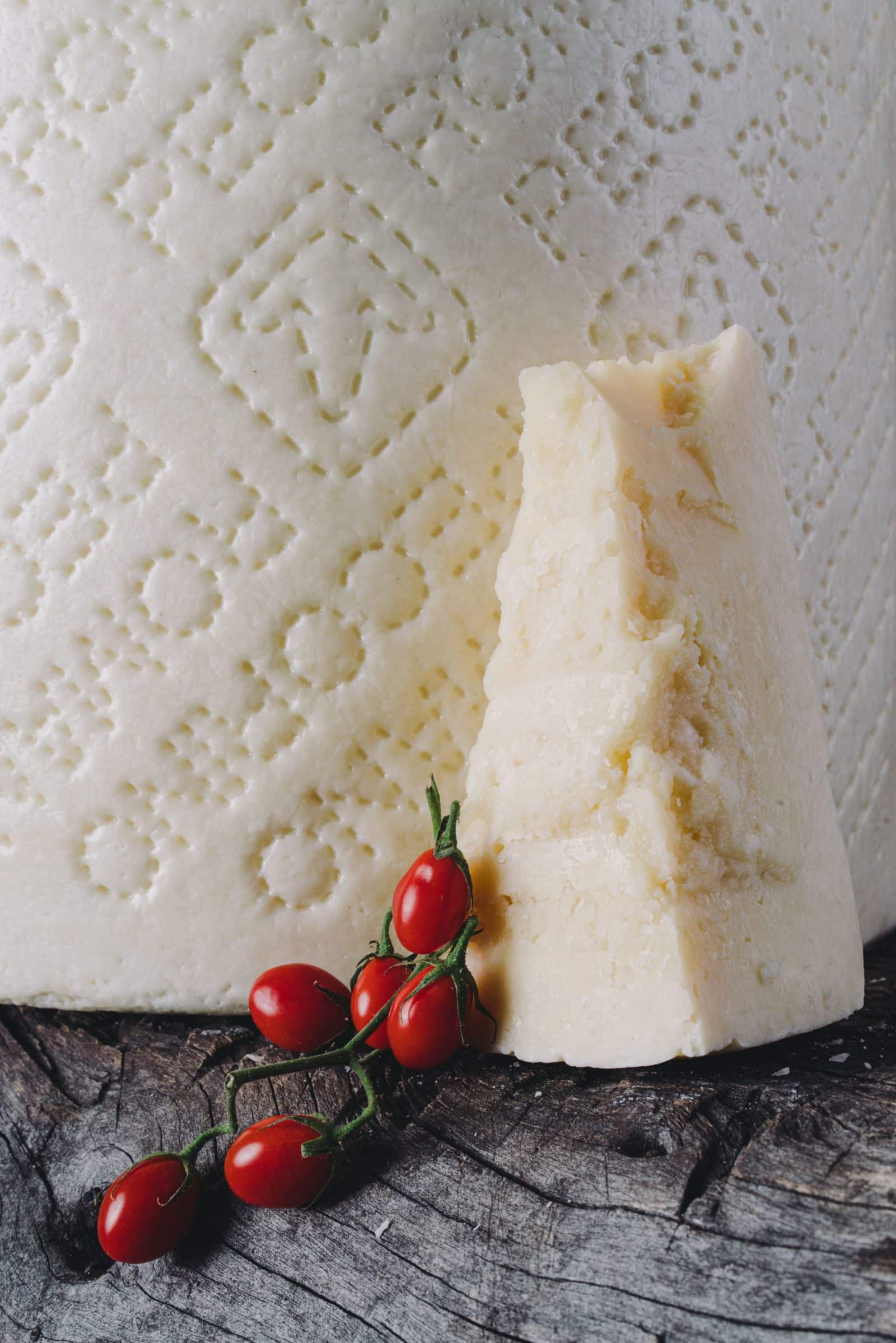
The Star: Pecorino Romano PDO
Whilst the classic Ogliastra recipe often calls for fresh or mature Sardinian pecorino and fiscidu (a typical salted cheese), the use of Pecorino Romano PDO (almost 95% of which is produced on the pastures of Sardinia) gives this dish an extraordinary boost of flavour and character.
This ancient, aromatic and slightly tangy cheese blends with the sweetness of the potatoes, creating a perfect contrast that enhances the filling without overpowering the scent of fresh mint.
The Recipe: Ogliastra-style Culurgiones with Pecorino Romano PDO
Difficulty: Medium (it takes a bit of practice to fasten it!)
Preparation time: 1½ hours
Ingredients
for 4 people
For the pastry
300 g of durum wheat semolina
100 g of plain flour
Approximately 150 ml of lukewarm water
1 tablespoon of extra virgin olive oil
A pinch of salt
For the filling (Su Sabori)
500 g white-fleshed potatoes
200 g grated Pecorino Romano PDO
1 clove of garlic (infused in oil)
10–12 finely chopped fresh mint leaves
3 tablespoons extra virgin olive oil
Salt to taste
Process
- The Filling (to be prepared in advance)
Boil the potatoes in their skins. Once cooked, peel them and mash them whilst still hot.
In a small saucepan, heat the extra virgin olive oil with the crushed garlic clove; let it infuse over a very low heat for a few minutes, then remove the garlic.
Add the flavoured oil, the chopped mint and, a little at a time, the Pecorino Romano PDO to the potatoes.
Knead well with your hands until the mixture is firm and dry. Leave it to rest in the fridge: the filling is easier to work with when cold.
- The Pastry
On a work surface, mix the flours together, then add the lukewarm water, oil and salt.
Knead vigorously until you have a smooth, elastic dough. Wrap it in cling film and leave to rest for 30 minutes.
Roll out the dough thinly (to about 1–2 mm) and cut out circles about 6–8 cm in diameter.
- The Closure in Spighitta
Take a small disc of dough in the palm of your hand and place a small amount of filling in the centre.
Fold the disc in half and, starting from the base, pinch the dough first on one side and then on the other, bringing the edge towards the centre. Continue in this way until you reach the end, sealing the culurgione into its classic ear-of-wheat shape.
- Cooking and Seasoning
Cook the culurgiones in plenty of boiling salted water. When they rise to the surface, leave them to cook for another 2–3 minutes, then drain them gently.
How to serve them: Advice from the e-borghi chef
To bring out the flavour of Pecorino Romano PDO in the filling, we recommend two types of seasoning:
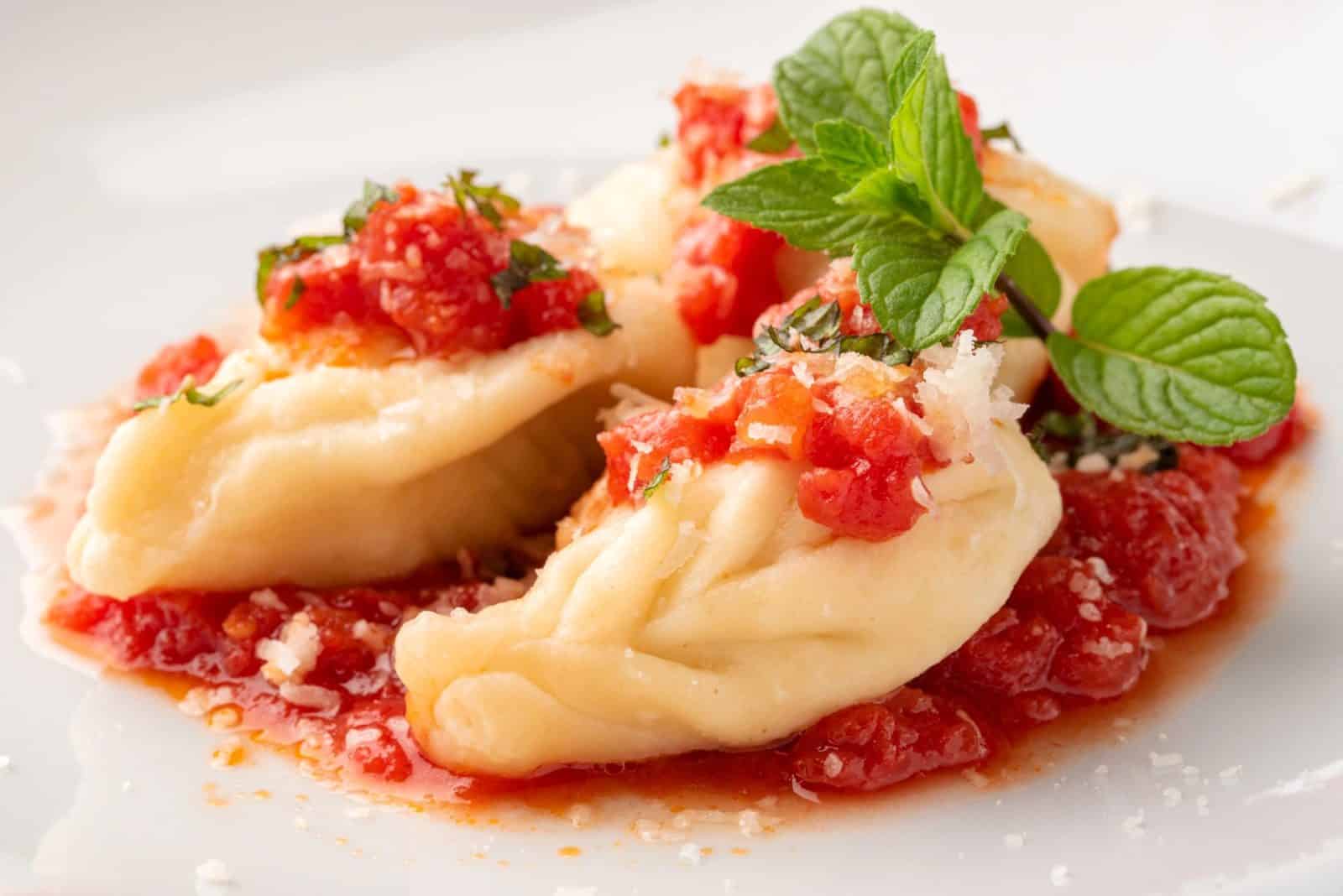
- Traditional: A light sauce made with fresh tomatoes and basil, finished with a generous sprinkling of grated Pecorino Romano PDO.
- In Bianco (Celebrating the local area): Simply tossed in a pan with melted butter, a drizzle of Ogliastra olive oil and fresh mint leaves.
Pair this dish with a glass of Cannonau di Sardegna DOC, preferably from a small producer in Jerzu or Baunei. A warm, full-bodied red wine that will transport you, from the very first sip, to the scents of the Mediterranean scrub.
Ph. Depositphotos
Have a lovely trip to Ogliastra!
Do you want to promote your business on e-borghi?
Reach travellers interested in villages, authentic experiences and quality tourism.
Discover how to become a partner