
 San Martino di Castrozza
 White Night in Città Sant'Angelo
 Tandem paragliding flights in Tirolo and Merano: the thrill of flying over the Alps
 Cultural sites in the Piana Rotaliana Königsberg: a journey through the history, art and traditions of Trentino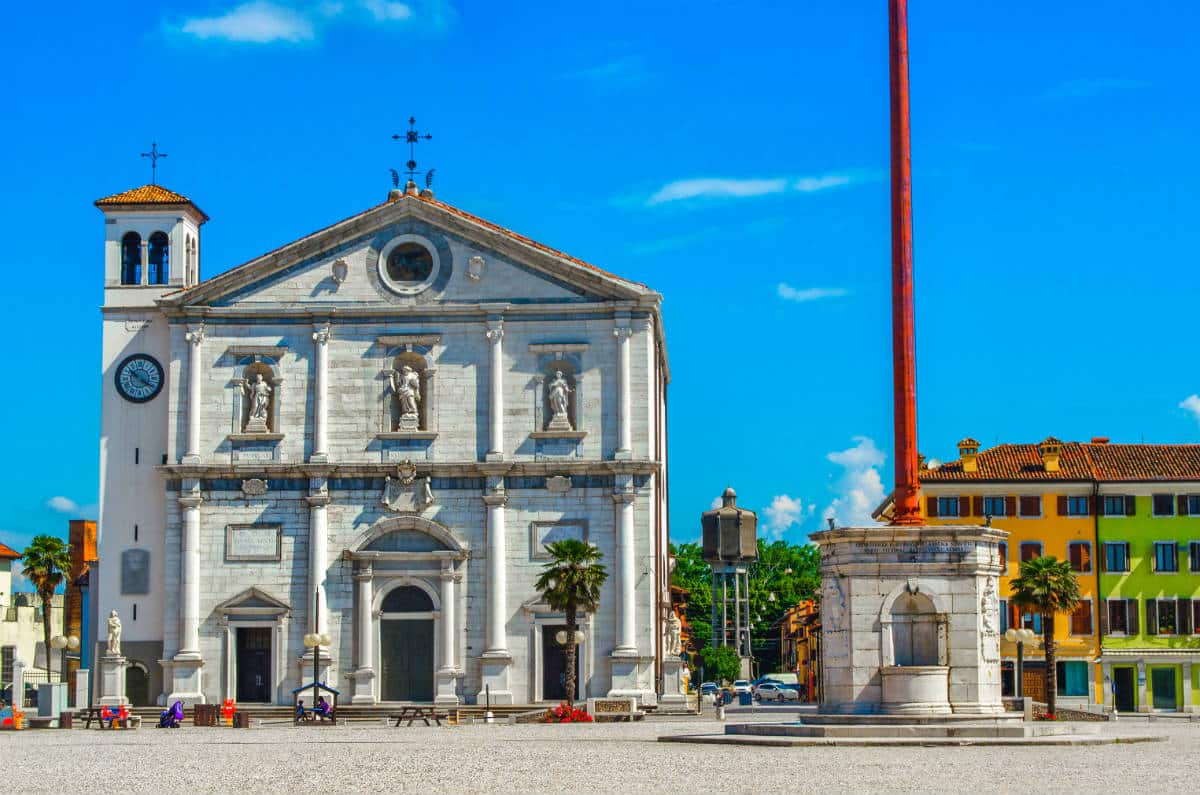
The Duomo Dogale of Palmanova, also known as the Cathedral of the Most Holy Redeemer, dominates the spectacular Piazza Grande in Palmanova with its imposing façade. Regarded as the principal religious building in the famous Venetian fortress town, it stands as one of the most significant examples of 17th-century sacred architecture in Friuli.
Construction of the cathedral began in the early 17th century, a few years after the star-shaped city of Palmanova was founded in 1593 by order of the Republic of Venice. The church was dedicated to the Most Holy Redeemer, St Mark the Evangelist and St Justina, a patron saint symbolically linked to the victory at the Battle of Lepanto in 1571.
According to tradition, the design is attributed to Vincenzo Scamozzi, although more recent studies suggest it was developed by the Venetian Office of Fortifications. The architecture clearly reflects Venetian classicism inspired by Palladio, whilst the interiors feature elegant Baroque-style decorations.
The facade, created with a refined contrast between the white stone of Orsera and the grey stone of Aurisina, is divided into two superimposed orders punctuated by large half-columns. In the upper section, there are niches housing statues of the Redeemer, Saint Mark and Saint Justina. At the centre of the pediment stands the lion of Saint Mark, symbol of the power of the Most Serene Republic.
Next to the cathedral stands the distinctive bell tower, deliberately built lower and more massive than the church itself. This choice was no accident: as Palmanova was a military fortress, the aim was to prevent towers that were too tall from serving as landmarks for enemies during any sieges.
The interior houses numerous works of art of great value. Among these, the famous Pala delle Milizie (Altarpiece of the Militias) from 1641 stands out, a masterpiece by Alessandro Varotari, known as ‘il Padovanino’, alongside works by Pomponio Amalteo and the precious wooden Madonna attributed to Domenico da Tolmezzo.
Also of particular interest are the baptismal font from 1614 in Aurisina stone, the 19th-century wooden reliquary and the weekday chapel with mosaics and relics of Saint Justina. The wooden ceiling with larch trusses from Slavonia also bears witness to the ancient Venetian mastery of construction.
The history of the cathedral was also marked by structural difficulties during its construction: in 1619, the façade suffered a serious collapse, necessitating major consolidation work entrusted to renowned architects of the Venetian Republic, including Baldassarre Longhena.
Today, the Duomo Dogale remains the spiritual and architectural heart of Palmanova, captivating visitors and worshippers alike with its architectural grandeur, artistic richness and strong connection to the history of the Venetian fortress town.