 San Martino di Castrozza
 White Night in Città Sant'Angelo
 Tandem paragliding flights in Tirolo and Merano: the thrill of flying over the Alps
 Cultural sites in the Piana Rotaliana Königsberg: a journey through the history, art and traditions of Trentino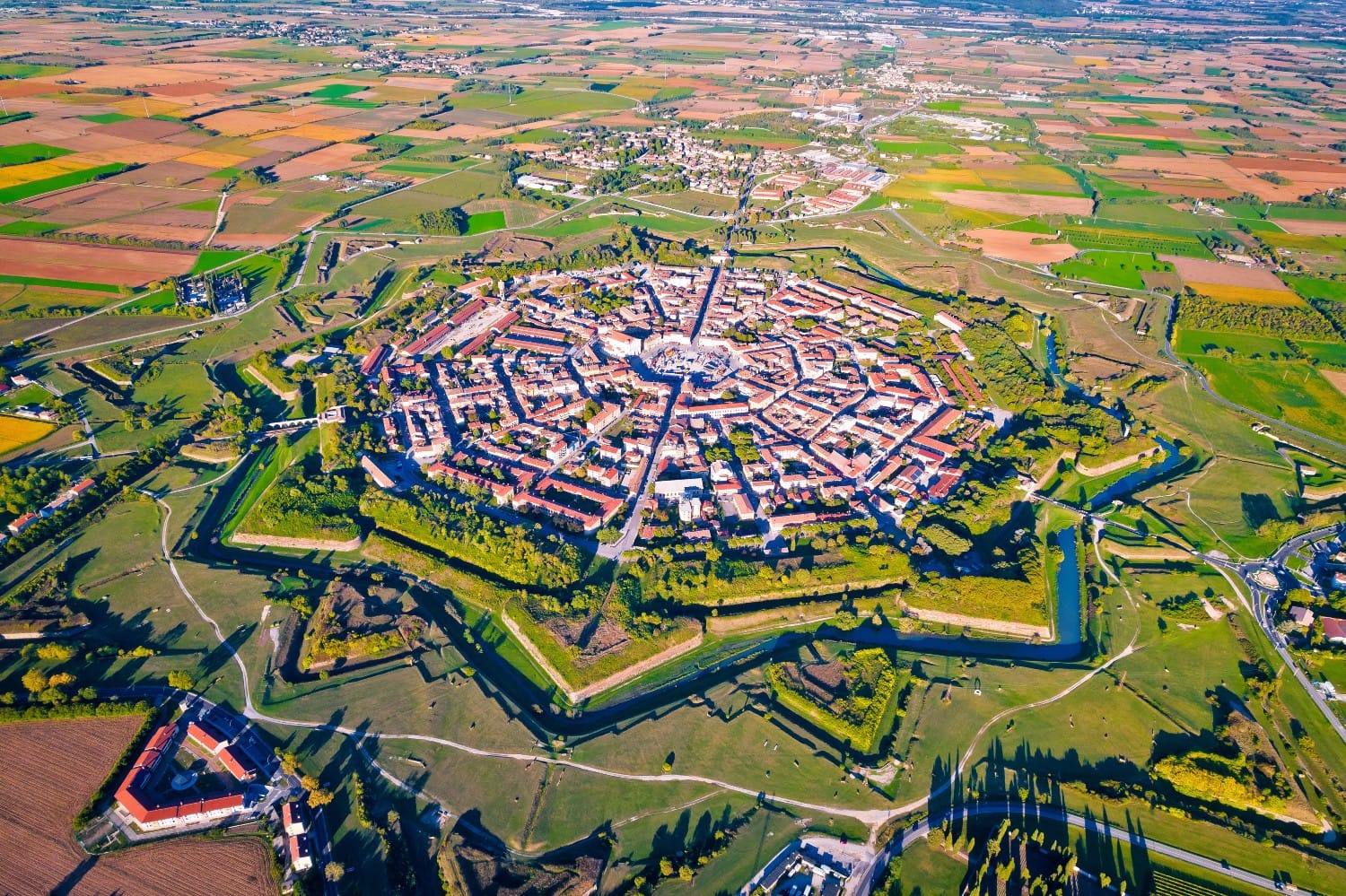
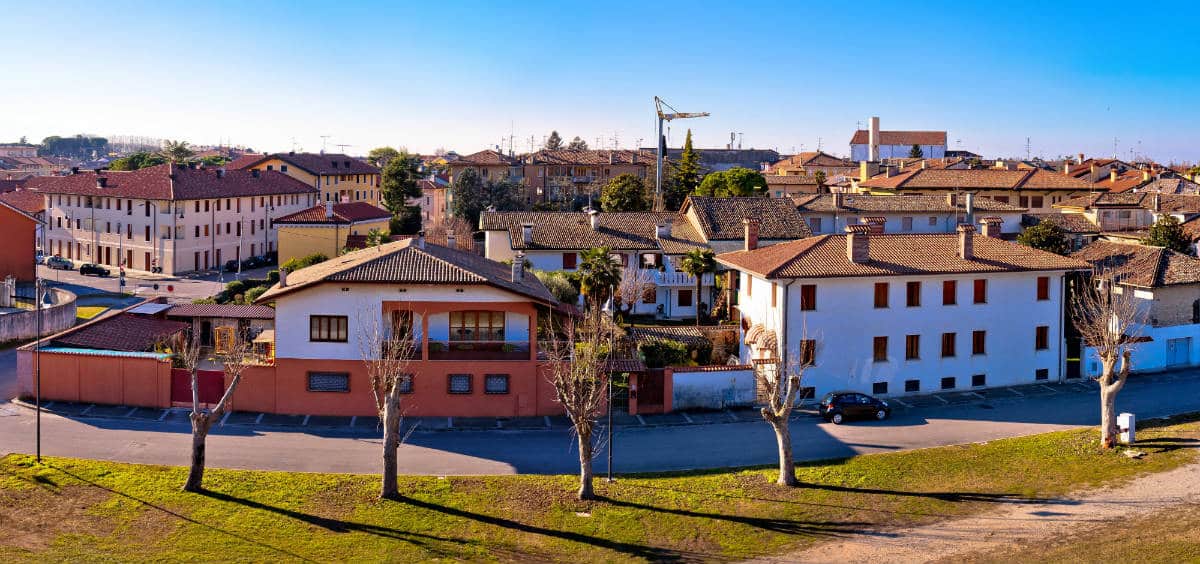
Palmanova is one of Europe’s most fascinating fortified towns, a masterpiece of Renaissance military engineering that still amazes visitors today with its perfect star shape. Founded by the Republic of Venice in 1593 to defend the eastern borders of the Serenissima, this extraordinary fortress town combines architectural harmony, history and culture in a setting that is unique in the world. Strolling amongst its monumental walls, underground tunnels and elegant squares is like taking a journey back in time, discovering one of the most evocative UNESCO sites in Friuli Venezia Giulia.
Photo gallery

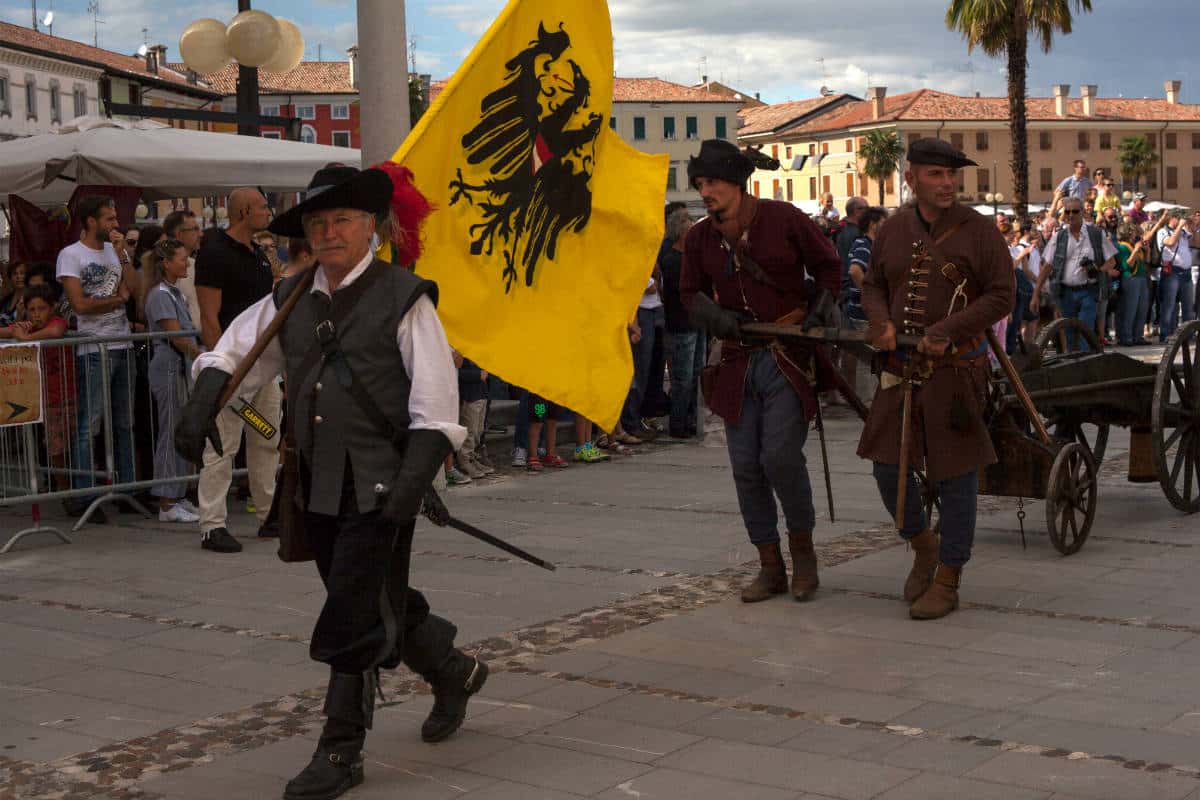
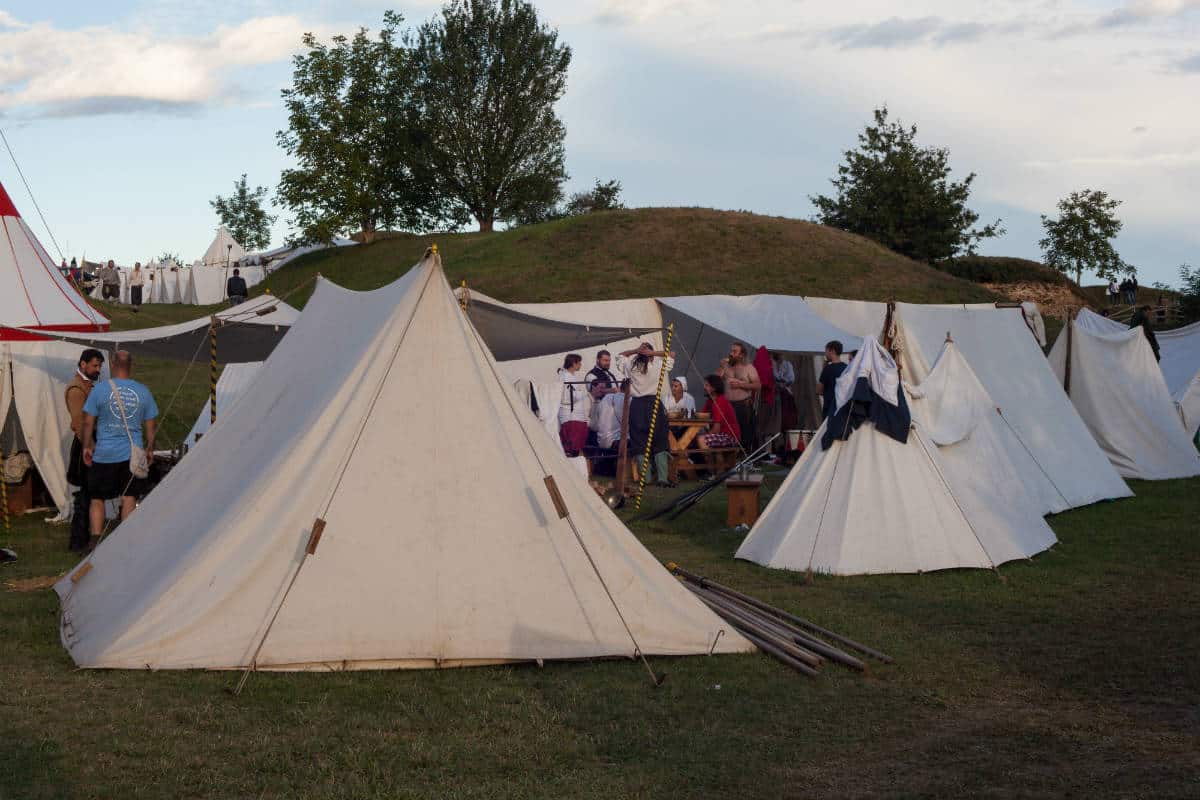
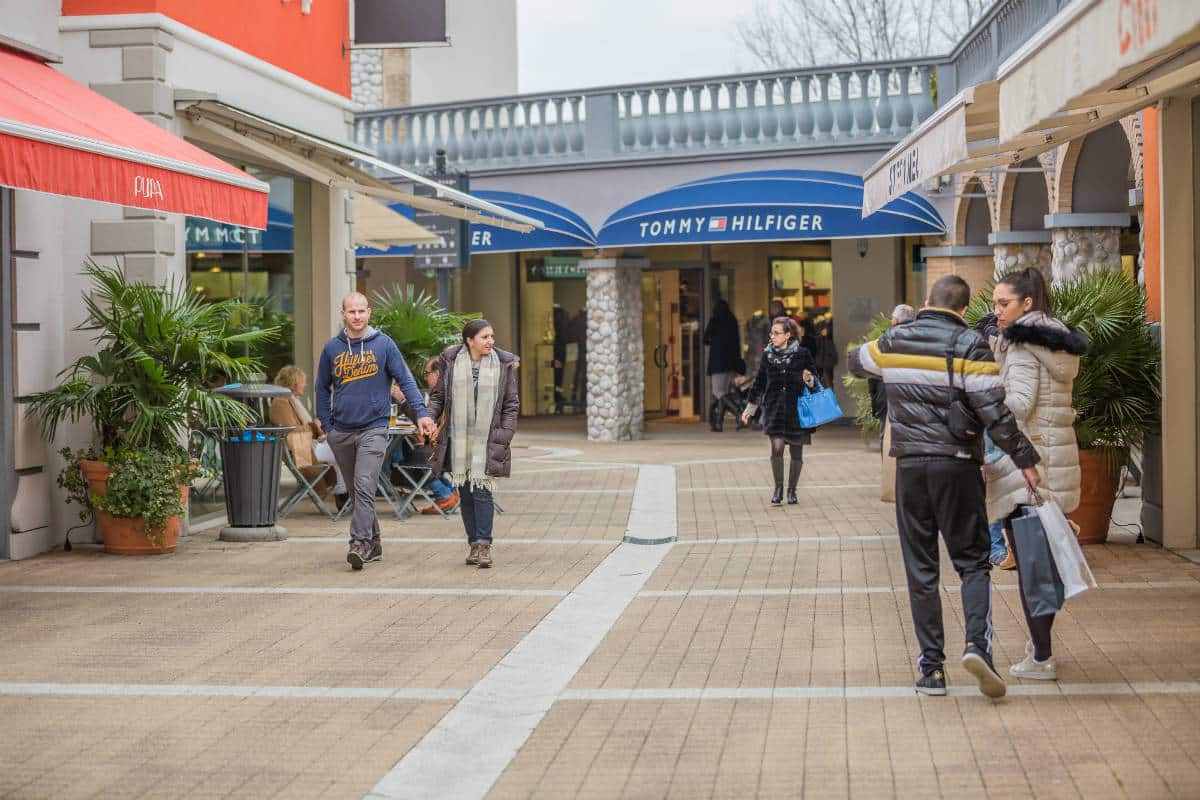
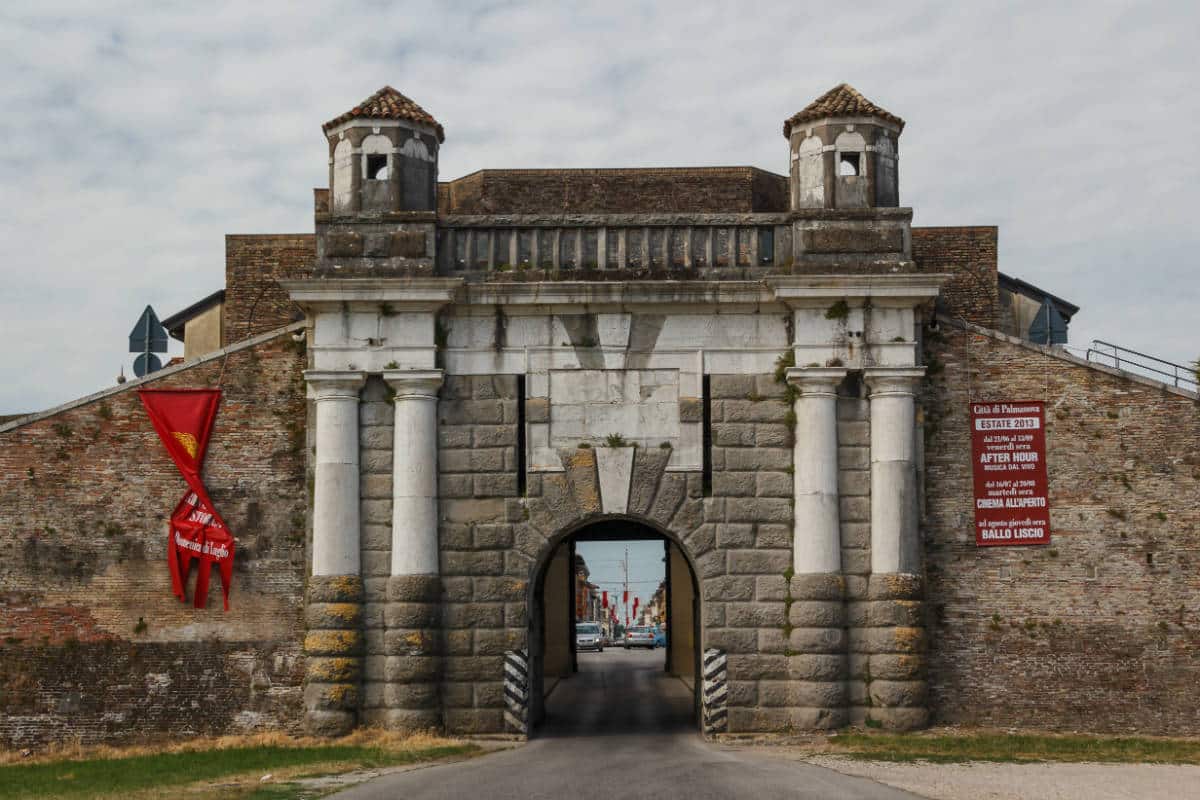
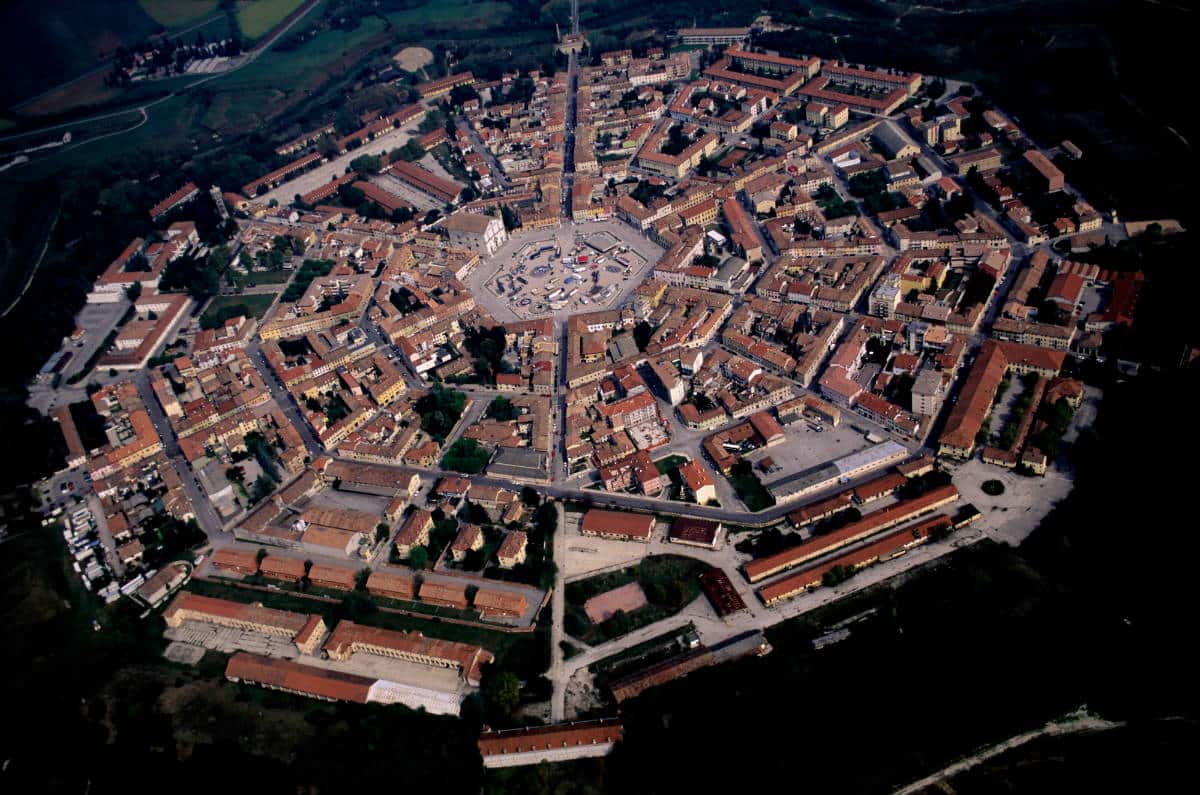
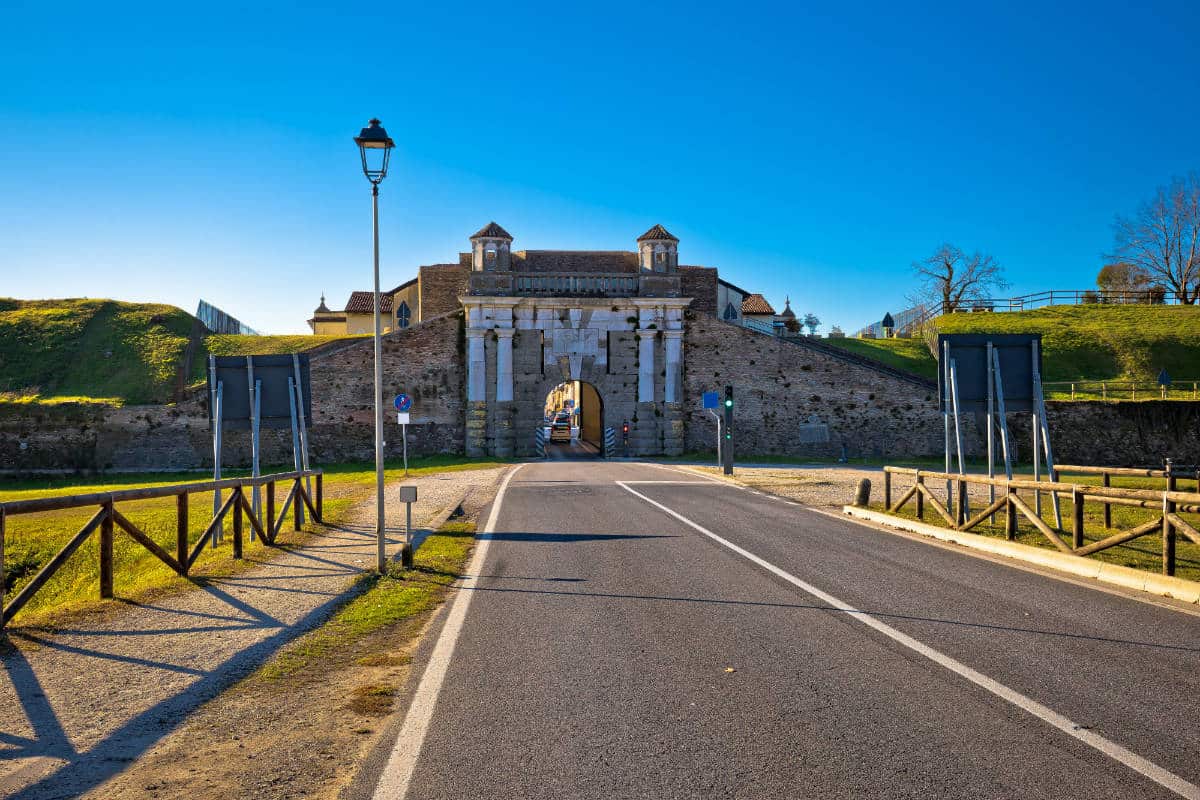
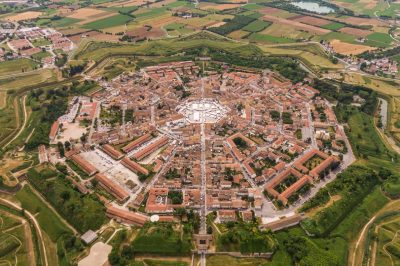
Situated in the heart of Friuli Venezia Giulia, Palmanova is a fortress town of extraordinary beauty, a striking example of Renaissance military architecture that has survived to the present day in excellent condition. Founded by the Republic of Venice on 7 October 1593, Palmanova is instantly recognisable thanks to its highly distinctive star-shaped polygonal layout, characterised by its nine points. This layout is not merely aesthetic, but holds fundamental strategic significance: the town was designed to counter the expansionist ambitions of the Habsburgs of Austria and Turkish incursions, thereby contributing to the security and stability of the Most Serene Republic.
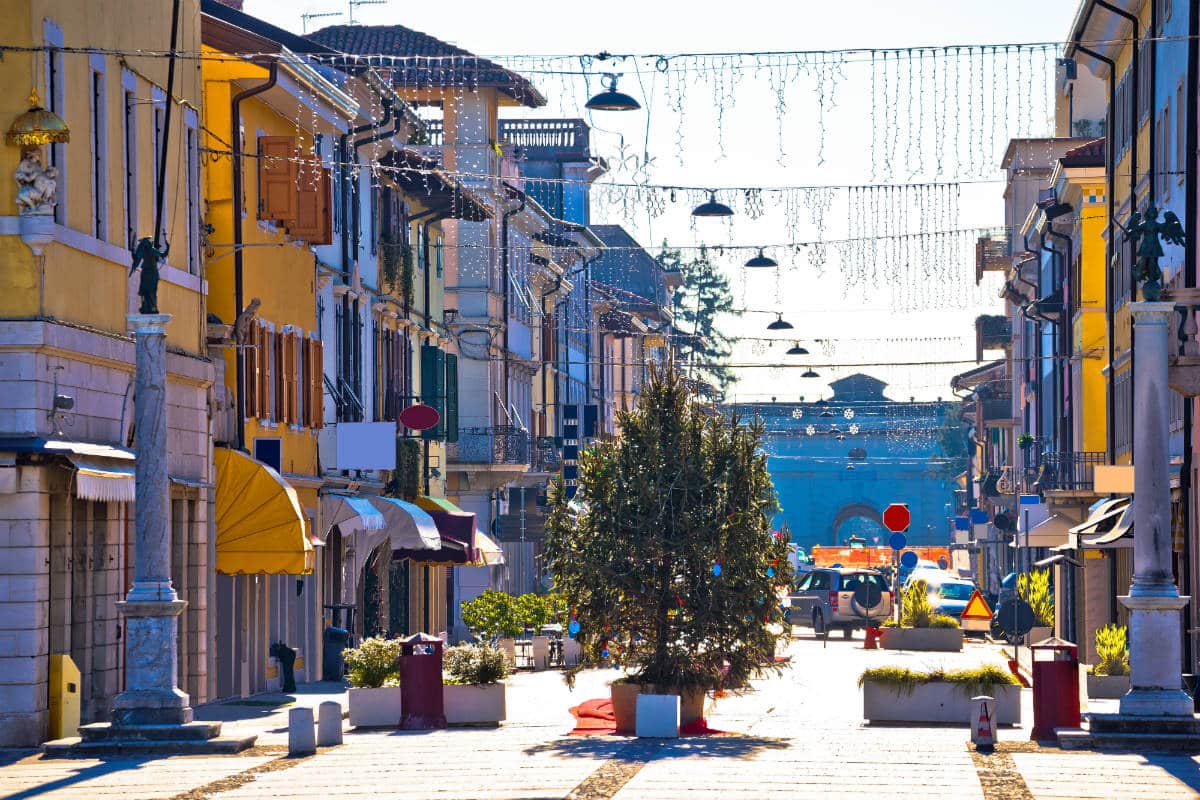
The design of the city was as bold as it was innovative, the result of the vision of the engineers and architects of the time, among whom Giovanni Sergio stands out. The high, majestic walls of Palmanova have witnessed the passage of the centuries and are still shrouded in an aura of mystery. Notably, the town’s urban layout is based on a strict numerical order, in which the number three and its multiples play a predominant role: there are three gates leading into the town, namely Porta Udine, Porta Cividale and Porta Aquileia; there are eighteen radial streets branching elegantly out from the town centre, six of which are the main thoroughfares.
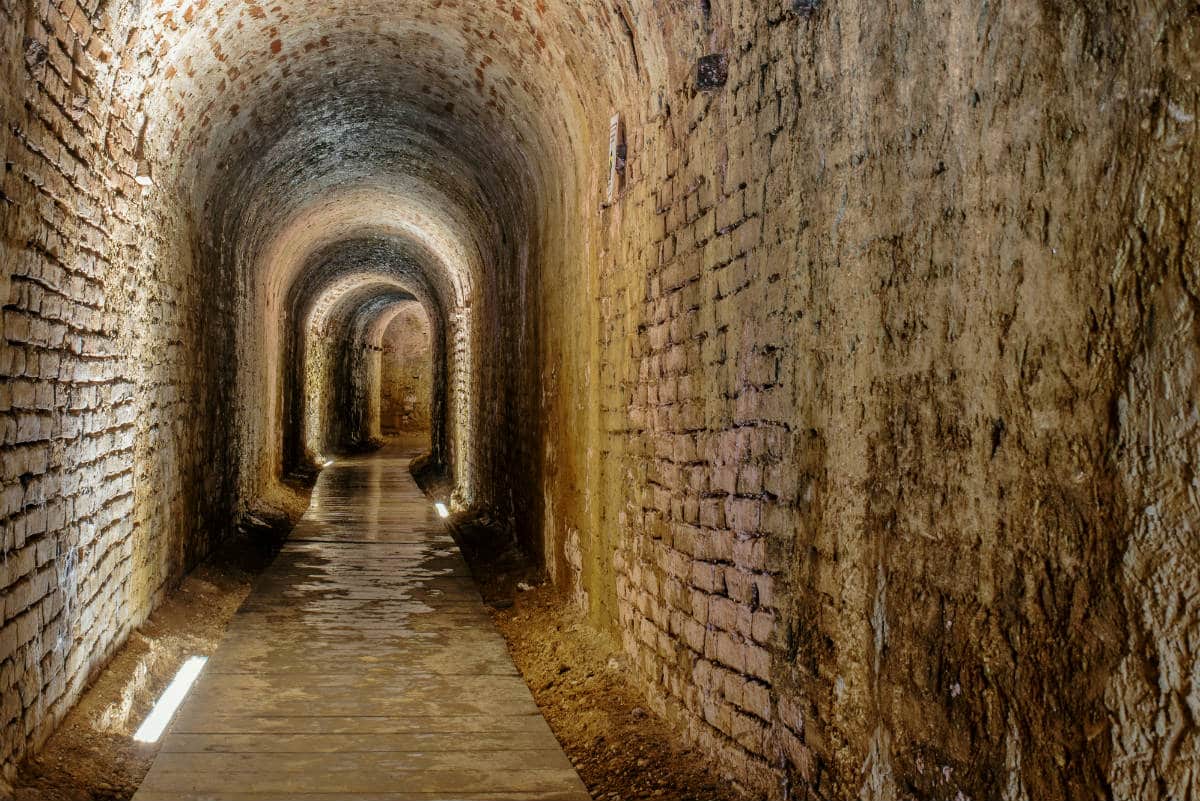
Palmanova’s vast city walls are not merely an impenetrable defence, but conceal, beneath the ground, an intricate system of tunnels, some of which are open to the public for guided tours, thus offering a fascinating glimpse into military life of the era. Walking along the streets of this star-shaped town, visitors can enjoy an immersive experience that takes them back in time, bringing the stories of battles and military strategy to life.
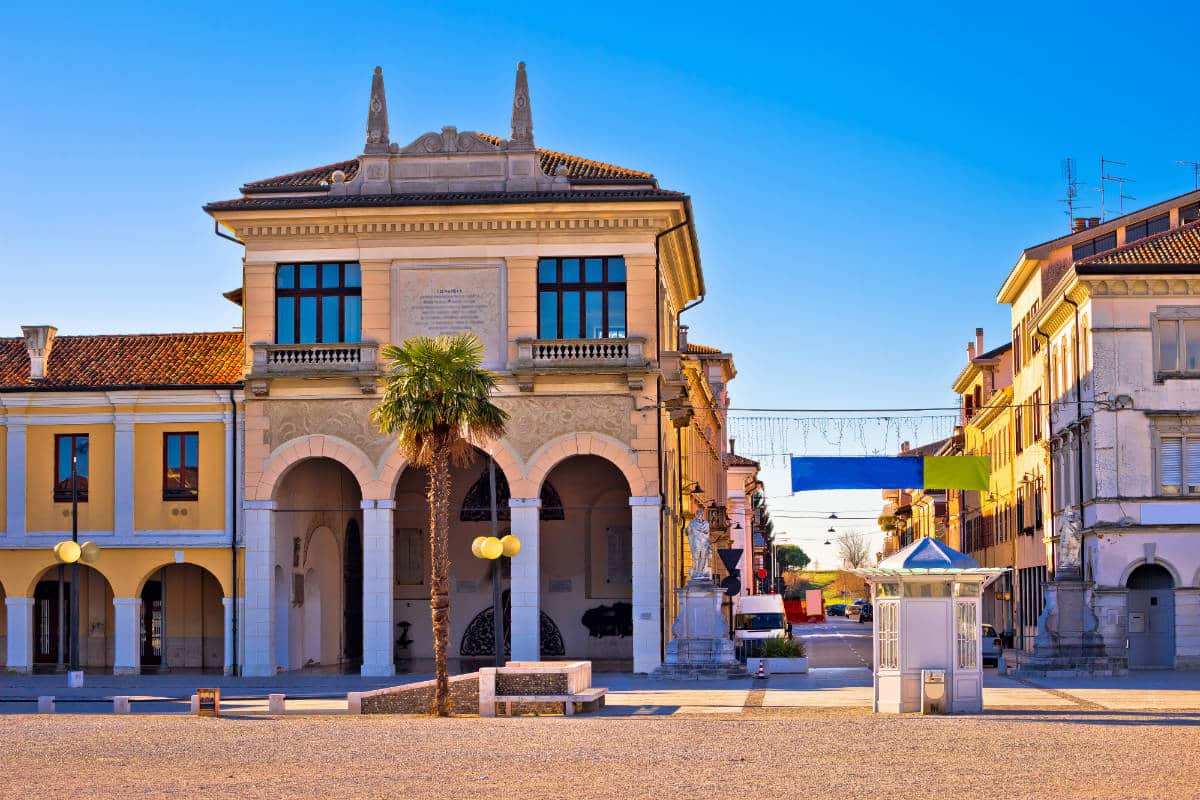
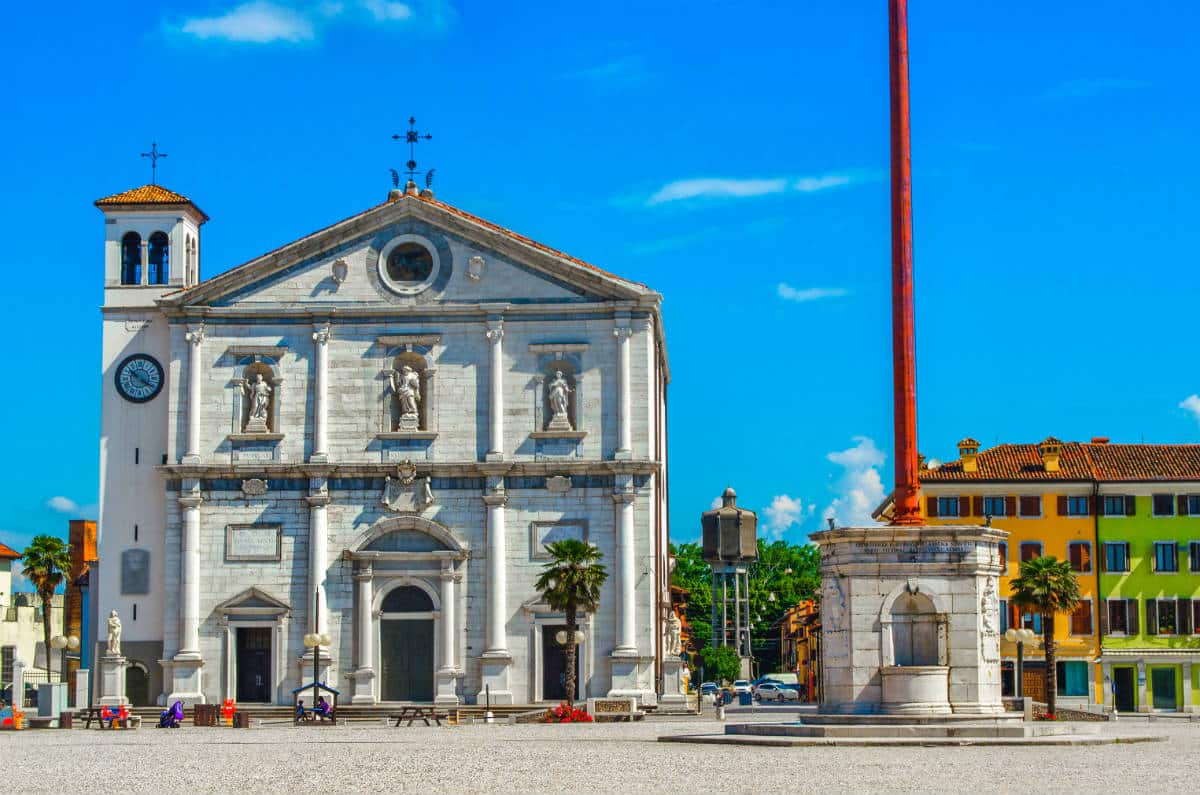
Palmanova’s central square is one of the town’s most evocative spots, a spacious area that serves as the beating heart of the community. Here, the unique star-shaped layout reveals itself in all its splendour, with the six streets extending like the spokes of a wheel before converging at its centre. Crowning the square, Palmanova Cathedral stands out with its neoclassical façade and elegant bell tower, enriching the panorama with its solemn presence. Next to the cathedral is the Loggia dei Mercanti, a building of considerable historical importance that bears witness to the city’s commercial fervour in centuries past.
On the opposite side of the square stands the Palazzo del Provveditore Generale, built in 1598, which today houses the Town Hall. Next to it, the Palazzo del Governatore alle Armi, another gem of history and architecture, is home to the Military History Museum, where visitors can admire exhibitions recounting the military vicissitudes of various eras, paying tribute to the city’s rich historical heritage.
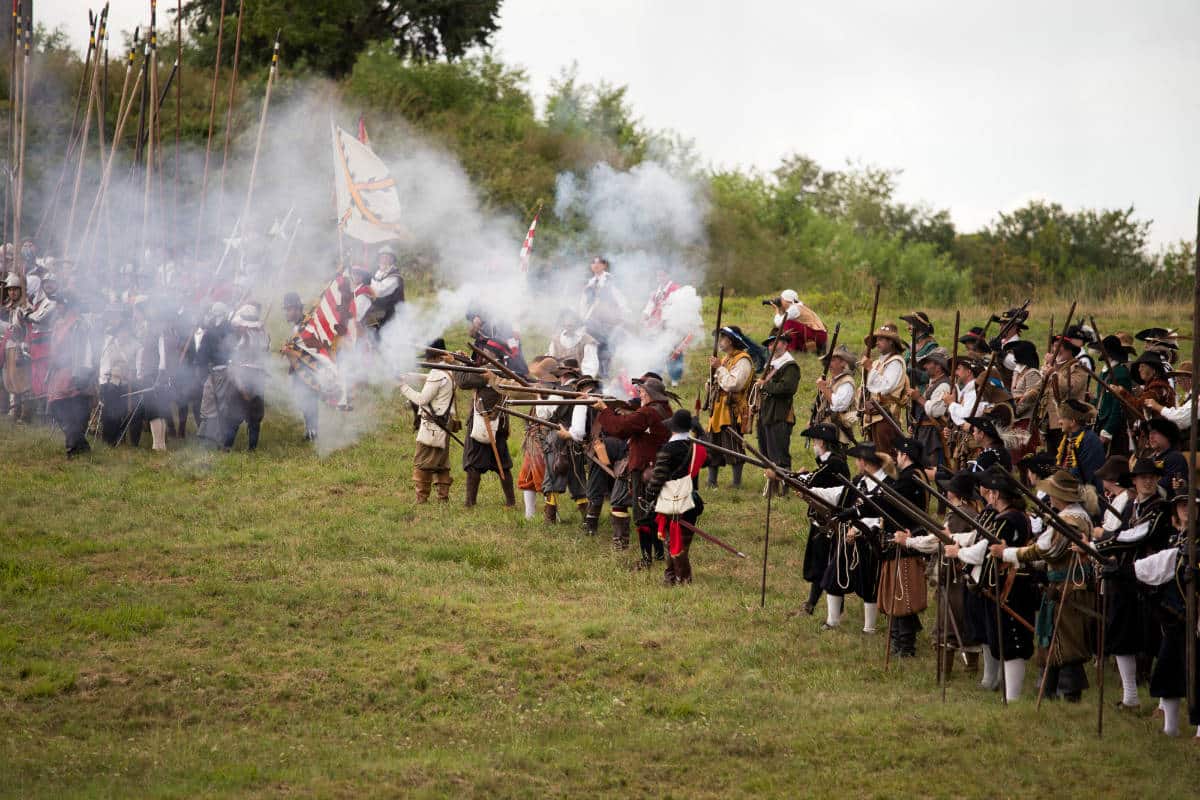
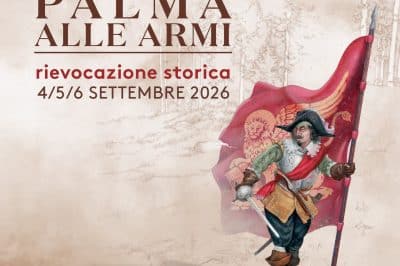
Palmanova is not only a testament to engineering and architecture, but also a venue for culturally significant events that bring the town to life throughout the year. Among these, the A.D. 1615 Palma alle Armi historical re-enactment, held on the first weekend of September, transports visitors back in time with re-enactments of historic battles, shows and entertainment, actively involving the local community. Similarly, The Game Fortress Comic & Movie Festival, which takes place on the first weekend of July, attracts fans of comics, cinema and games, creating a vibrant and festive atmosphere that brings together different generations and cultures.
In 1960, Palmanova was declared a national monument and, in 2017, it was recognised as a UNESCO World Heritage Site, included in the transnational serial site ‘Venetian Defence Works of the 16th and 17th Centuries: Western Stato da Terra-Stato da Mar’. These accolades bear witness to the historical and cultural significance of this place, making it an unmissable attraction for anyone wishing to immerse themselves in the history and architecture of a bygone era.
Palmanova is, therefore, not only a fascinating example of military engineering, but also a symbol of human resilience and creativity in crafting structures that combine beauty and functionality, whilst keeping alive the memory of a rich and complex past. With its unique heritage and atmosphere steeped in history, Palmanova remains a magical place where time seems to have stood still, enchanting every visitor who steps through its gates.
Municipality of Palmanova
Province of Udine
Region of Friuli-Venezia Giulia
Center altitude: 27 m s.l.m.
I Borghi più belli d’Italia
Strada del Vino Aquileia
Città e siti patrimonio mondiale Unesco
Piazza Grande 1 – tel. 0432922135
BY CAR
- From Venice-Trieste: take the A4 highway and exit at Palmanova, take the SS 352 to Palmanova
- From Udine-Tarvisio: take the A23 motorway towards Trieste; then take the A4 and exit at Palmanova along the SS 352
ON THE TRAIN
- Udine – Cervignano del Friuli railway line: Palmanova station
BY PLANE
- Ronchi dei Legionari airport
What to see in Palmanova
Discover what to see in Palmanova among monuments, scenic views, museums, churches and symbolic places of the village. A useful selection to plan your visit and explore the area.
Events in Palmanova
Upcoming events, festivals and initiatives.
News and stories about “Palmanova”
Insights and stories from the area, to keep discovering.
Continue the journey
Palmanova is only one of the treasures of the area. Use the interactive map to discover what to visit nearby, how far the other villages are and which experiences you can enjoy along the route.
Explore the area