 Passignano sul Trasimeno
 Montefeltro
 Festival of St John
 The Ca’ Rossa Experience: from vineyard to glass
 Romantic Night 2026: on 20 June, over 230 Italian villages will be aglow with love
Nestled amongst the mountains of the Biella area, surrounded by the lush greenery of the Cervo Valley, lies Rosazza, one of the most charming and mysterious villages in Piedmont. Part of the I Borghi più Belli d’Italia circuit, this small Alpine village captivates visitors with its elegant architecture, monumental fountains, esoteric symbols scattered throughout its streets, and the charm of a history deeply linked to the figure of Senator Federico Rosazza Pistolet.
Strolling through the narrow cobbled streets of the village means immersing oneself in a place where every stone tells a story. From the 19th-century palaces to the famous Castello di Rosazza, via the Casa Museo dell’Alta Valle Cervo and the ancient mule tracks climbing towards the mountain pastures, everything speaks of a community that has managed to preserve its identity over time.
It is precisely in this mountain setting that one of the most representative dishes of Biella’s cuisine was born: Polenta Concia, a simple yet extraordinarily flavourful dish that tells the story of the daily lives of the families who have inhabited these valleys for centuries.
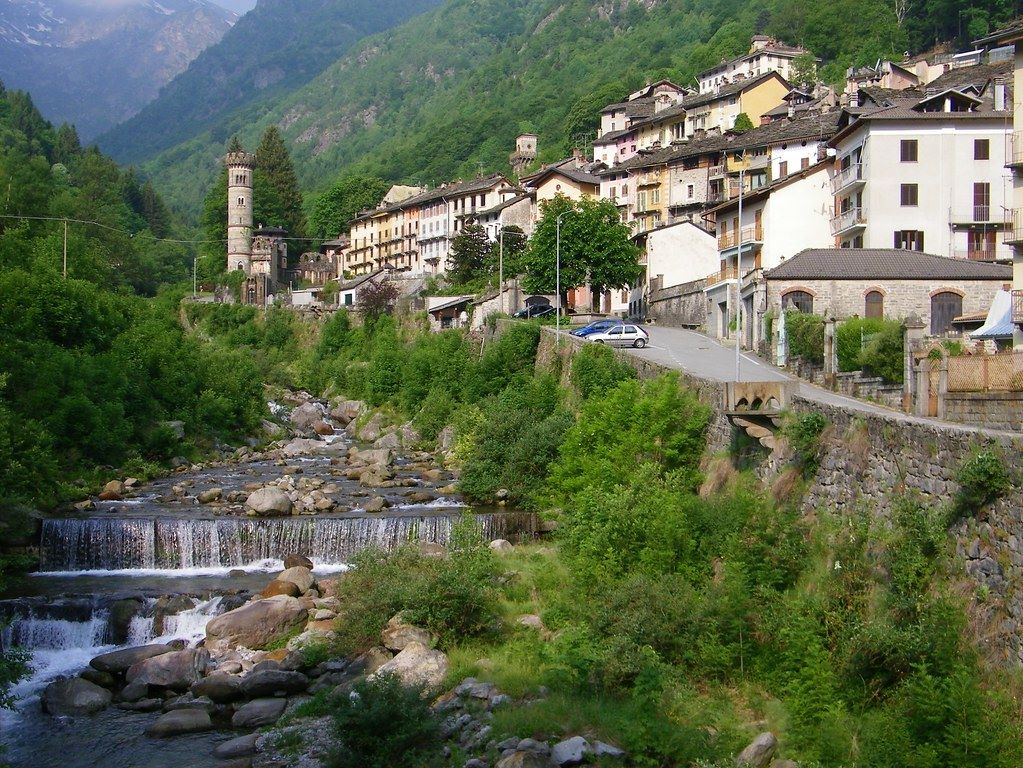
Rosazza – PH. mpvicenza/flickr
The rural tradition of polenta concia
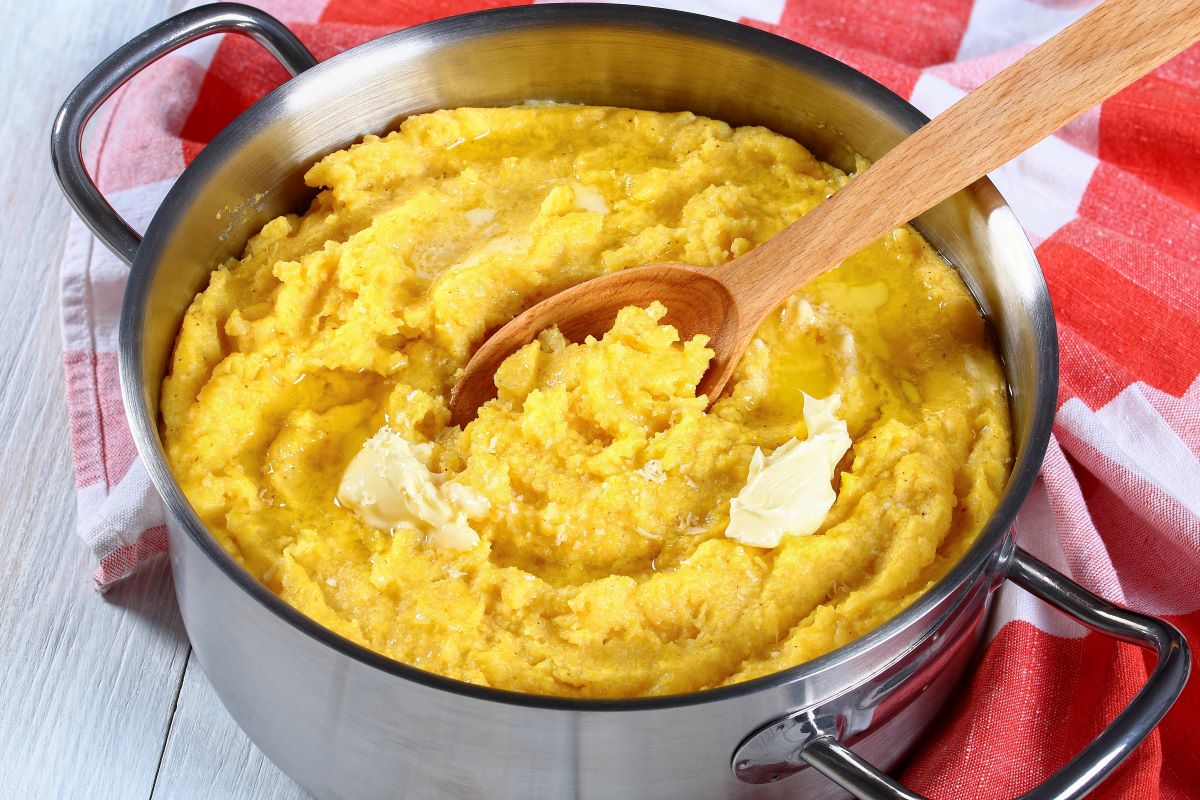
Polenta Concia Biellese is one of the most authentic symbols of Piedmontese Alpine cuisine. Its origins lie in the farming traditions of the Biella mountains, where maize, introduced to Europe in the 16th century, quickly became a staple of the daily diet.
In the valleys of the Biella area, characterised by a strong pastoral tradition, polenta was not eaten on its own. The presence of high-altitude pastures and mountain dairies encouraged the production of excellent local cheeses, which naturally ended up enriching this humble dish. Thus was born the ‘concia’ version, a term that literally means ‘seasoned’, achieved by adding generous amounts of butter and melted cheese directly to the freshly cooked polenta.
What was initially a simple dietary necessity soon became a culinary tradition destined to become the very symbol of the Biella mountains. Nutritious, high in calories and substantial, polenta concia was the ideal meal for coping with the harsh Alpine winters and the hard labour of working in the fields, woods and pastures.
The cheeses featured in the recipe
The secret of authentic Polenta Concia Biellese lies in the quality of the cheeses used. The star ingredients are Toma Biellese and Maccagno, two exceptional cheeses produced in the local mountain pastures that retain all the character of the Cervo Valley mountains. These are often complemented by Toma Fontinata or Fontina, which help to create an irresistibly creamy and stringy texture.
Butter, also traditionally produced in local mountain dairies, completes the dish, adding a smoothness and a rich flavour that makes every mouthful an authentic experience.
Every family has its own version of the recipe, and there are numerous local variations. The proportions of the cheeses, the maturing times used and even the order in which they are added during preparation vary. It is precisely this variety that bears witness to the vitality of a tradition handed down from generation to generation.
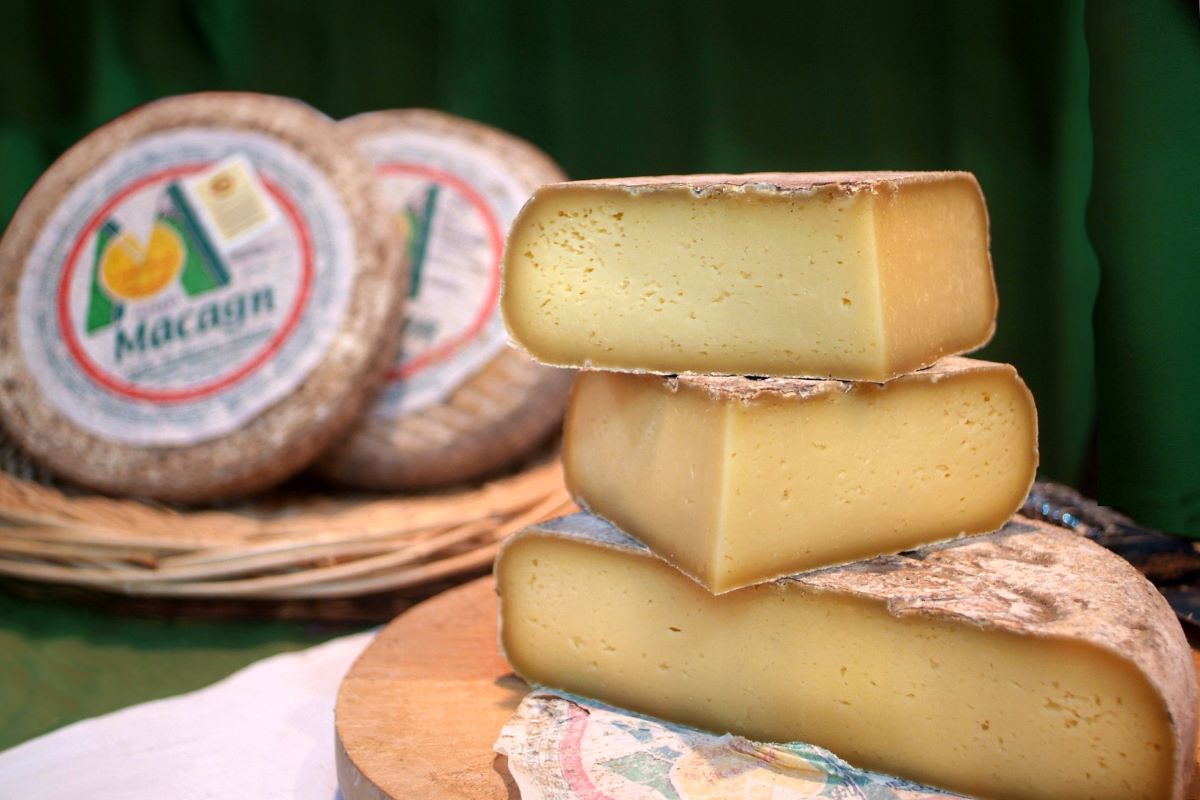
Maccagno – Depositphotos
Ingredients
Serves 6
500 g polenta cornmeal
2 litres of water
250 g Toma Biellese
250 g Maccagno Biellese
150 g Fontina or Toma Fontinata
150 g butter
Salt to taste
Process
Bring the water to the boil in a large pot and add the salt. Slowly pour in the cornmeal, stirring constantly to prevent lumps from forming.
Cook the polenta for about 45–50 minutes, stirring continuously until it reaches a soft, smooth consistency.
Meanwhile, cut the cheeses into small pieces and melt the butter in a small saucepan.
When the polenta is ready, transfer a layer to an ovenproof dish or directly into the traditional serving bowl. Spread some of the cheeses and melted butter over the top. Continue alternating layers of polenta, cheese and butter until all the ingredients are used up.
Stir gently so that the cheeses melt completely and blend with the polenta, creating the typical creamy, stringy texture that characterises authentic Biella-style polenta concia.
Serve piping hot.
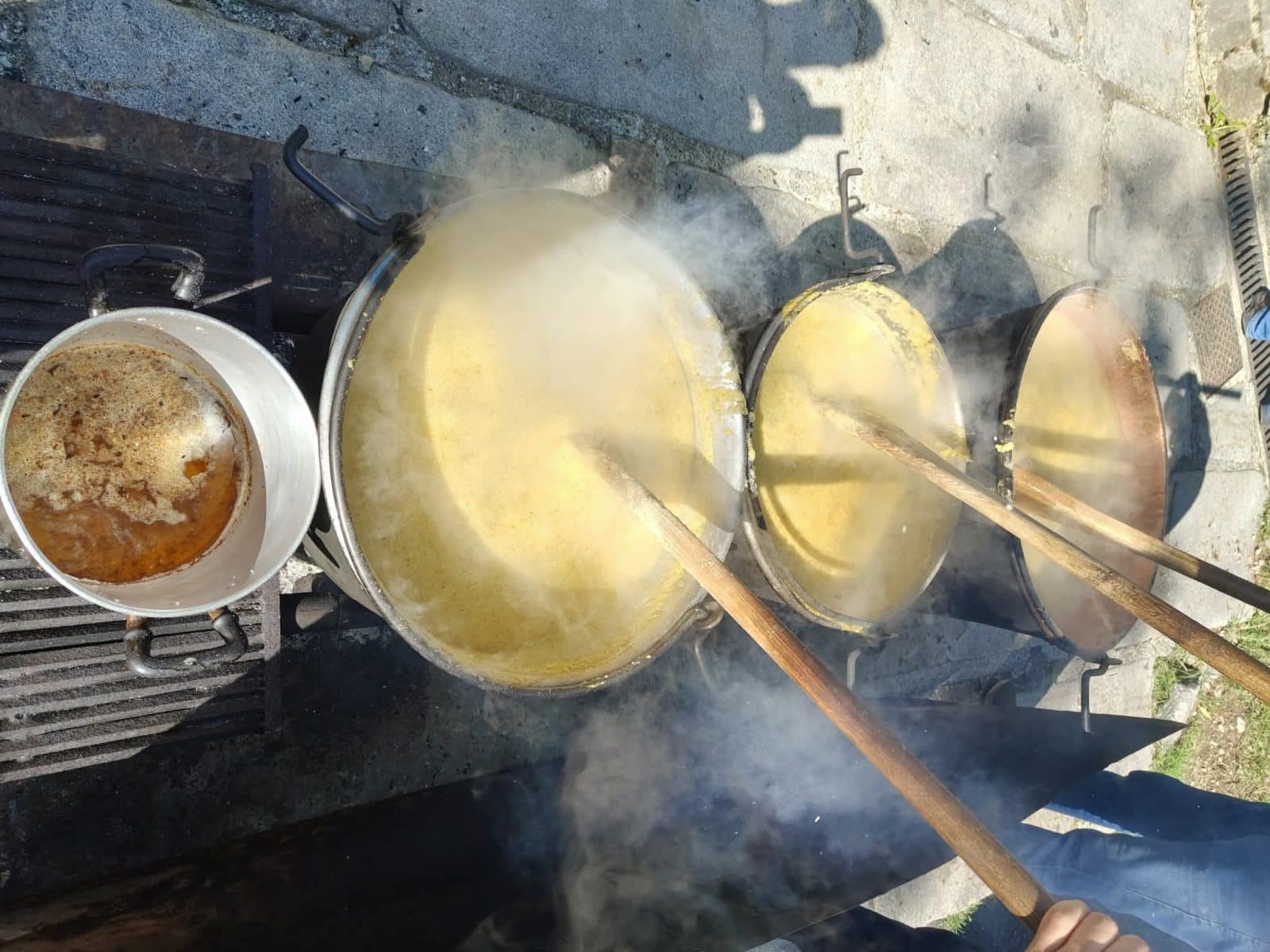
The Feast of Saint Roch and the tradition of Alpe Desate
Although polenta concia is now served all year round in mountain huts, trattorias and at local festivals, there is one occasion in Rosazza that is particularly dear to the community.
Tradition dictates that this dish is prepared on 16 August to mark the Feast of San Rocco at Alpe Desate, a celebration that combines spirituality, conviviality and Alpine culture. On this day, polenta concia becomes much more than just a recipe: it represents a moment of gathering, sharing and collective memory that binds the younger generations to the roots of the Cervo Valley.
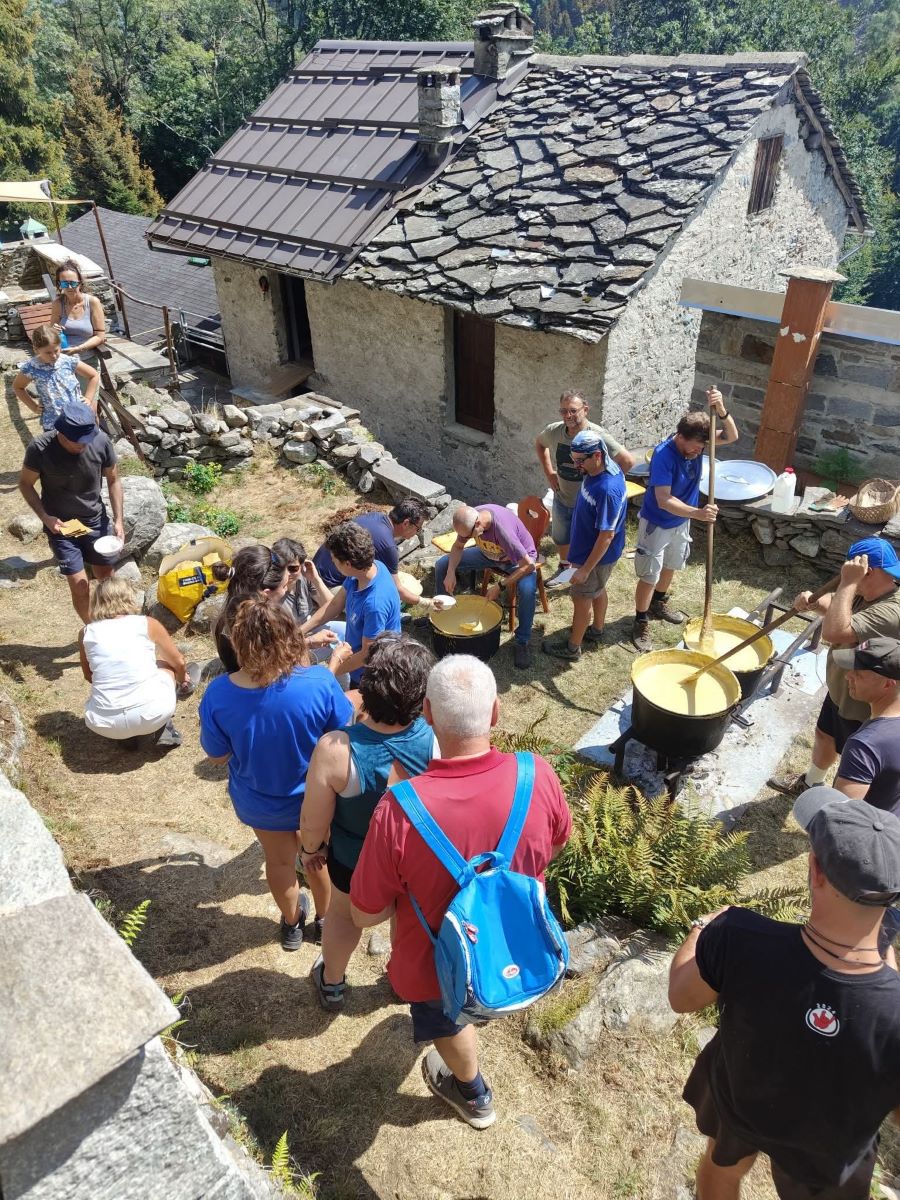
A symbol of Biella’s identity
Polenta Concia Biellese is much more than just a traditional dish. It is the perfect embodiment of the history, labour and culture of the mountains surrounding Rosazza. It encapsulates the expertise of the herdsmen, the quality of the mountain cheeses, the simplicity of peasant cuisine and the ability of mountain communities to transform basic ingredients into true culinary masterpieces.
Savouring it in the streets of Rosazza, perhaps after a stroll amongst its mysterious architecture, the paths of Gragliasca or the rooms of the Casa Museo dell’Alta Valle Cervo, means enjoying an experience that goes beyond taste: a journey through history and into the very soul of the Biella area.
In collaboration with Pro Loco Rosazza A.P.S.
Do you want to promote your business on e-borghi?
Reach travellers interested in villages, authentic experiences and quality tourism.
Discover how to become a partner