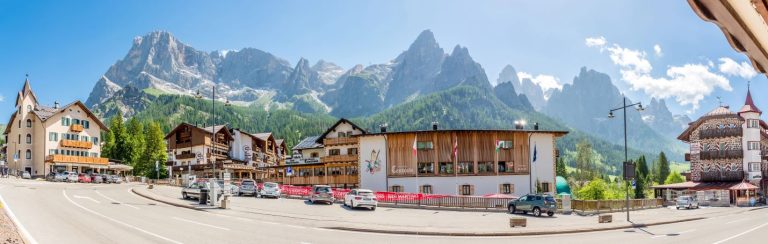
 San Martino di Castrozza
 Ascolana Olive Festival 2026
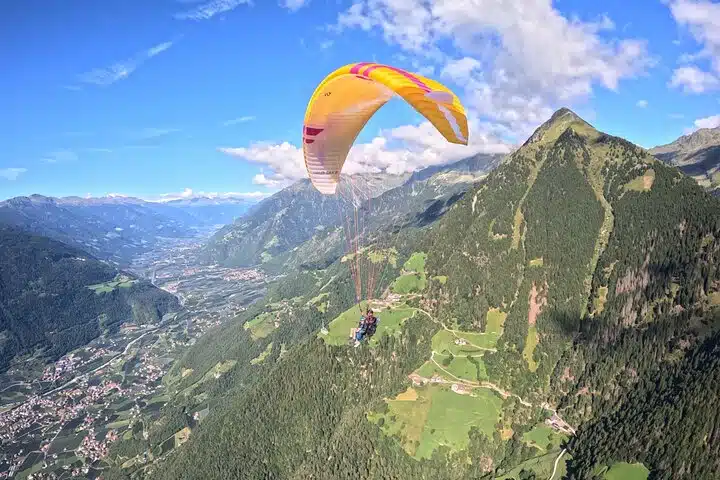 Tandem paragliding flights in Tirolo and Merano: the thrill of flying over the Alps
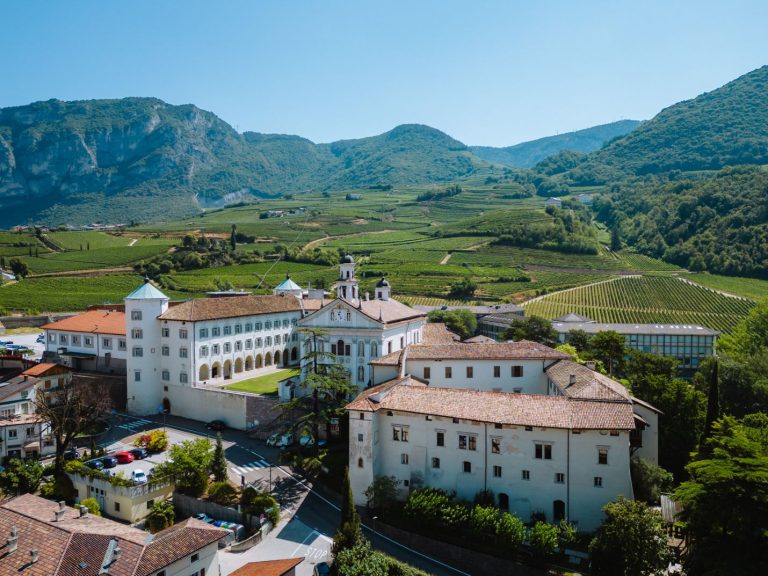 Cultural sites in the Piana Rotaliana Königsberg: a journey through the history, art and traditions of Trentino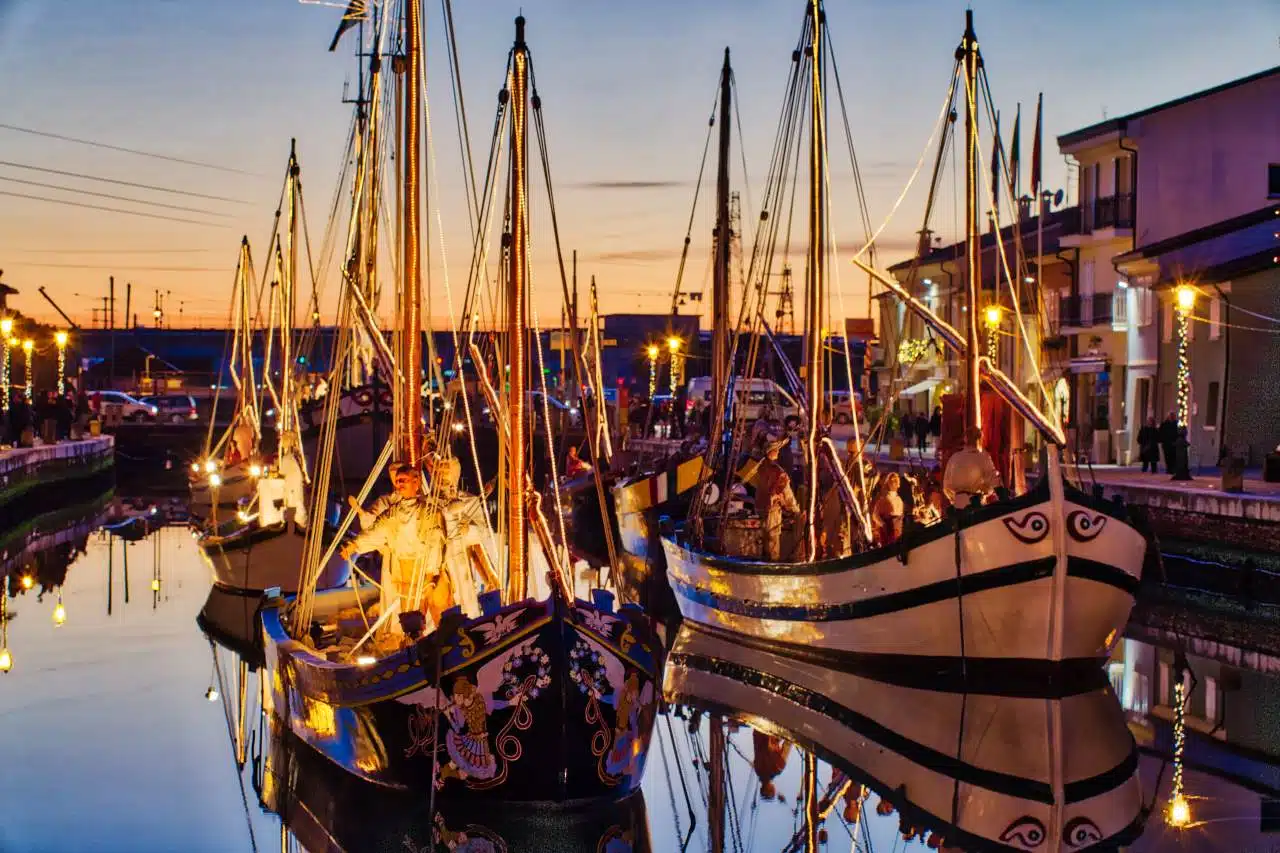
Romagna and its sea are inseparable. Bellaria-Igea Marina, Borgo San Giuliano, Cattolica, Cervia, and Comacchio are the main seaside villages where, over the centuries, knowledge and techniques have been refined, reflecting a deep relationship with the Adriatic Sea. This living bond has stood the test of time and continues to manifest itself in the traditions shared by local communities: from “alla tratta” fishing, a typical collective activity in the Rimini area, to the culture of Cervia’s sails, an ancient recognition system that allowed families to identify their boats as they returned to port, reassuring them that the journey had been successful.
Discovering maritime traditions
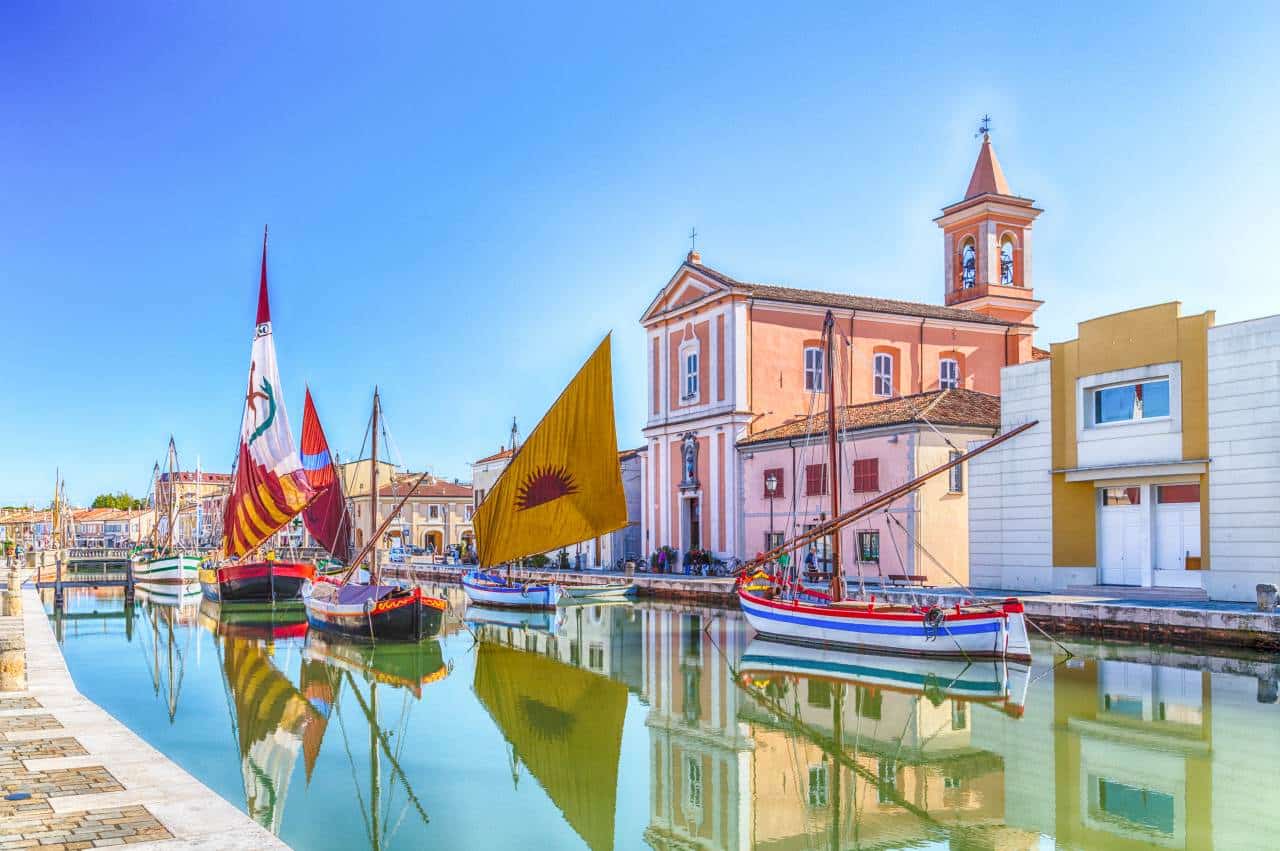
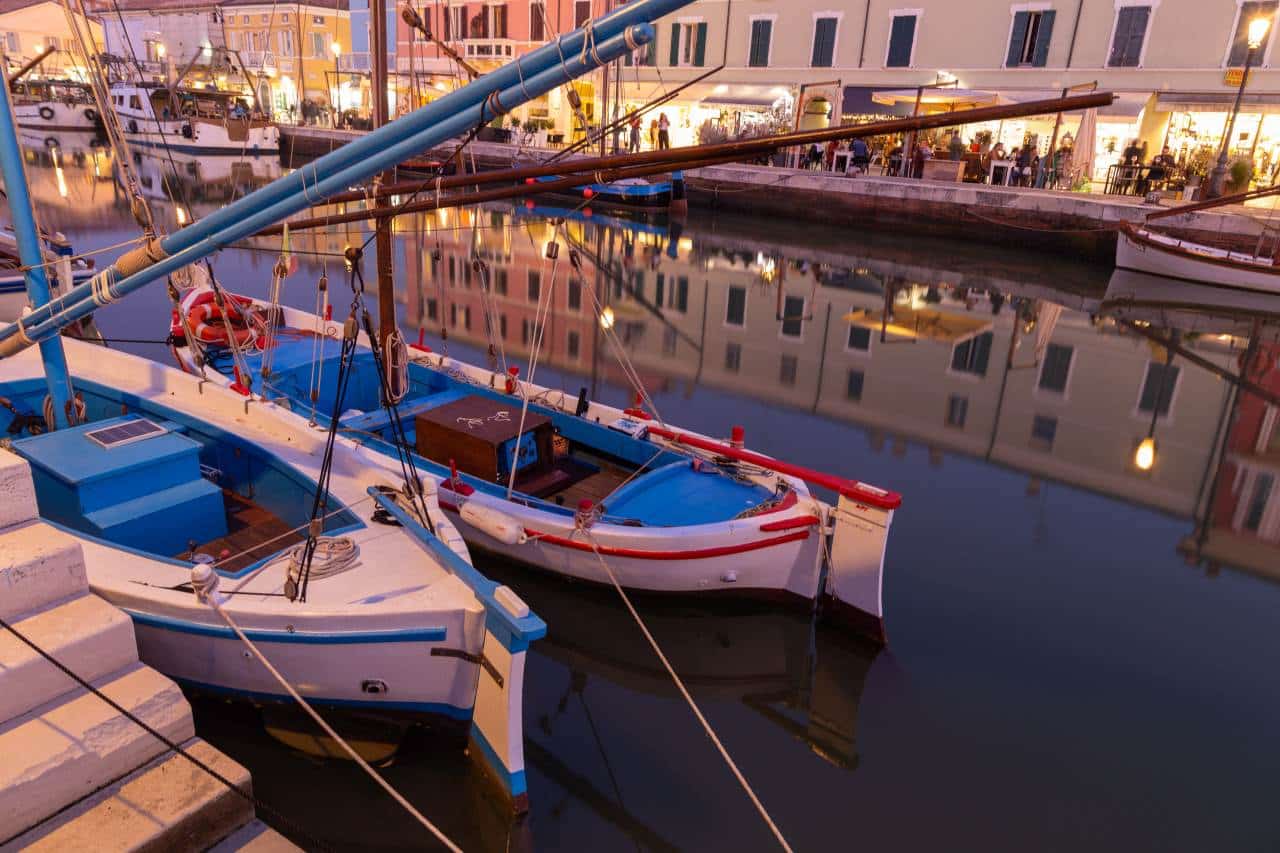
To truly immerse yourself in this history, simply visit the Maritime Museum in Cesenatico, a unique museum because it is largely floating. Here you will find traditional boats that sailed the northern Adriatic until the early 20th century: fishing boats and sailing ships that, in addition to recounting the harshness of life at sea, allow visitors to experience ancient seafaring skills up close, such as lowering a sail or understanding the maneuvers necessary to set sail.
The section on land welcomes visitors with a monumental boat: the trabaccolo, the symbol par excellence of Romagna’s seafaring tradition. A sturdy, practical, and extraordinarily efficient ship, whose history continues to fascinate scholars and enthusiasts alike.
The trabaccolo: identity of a seafaring people
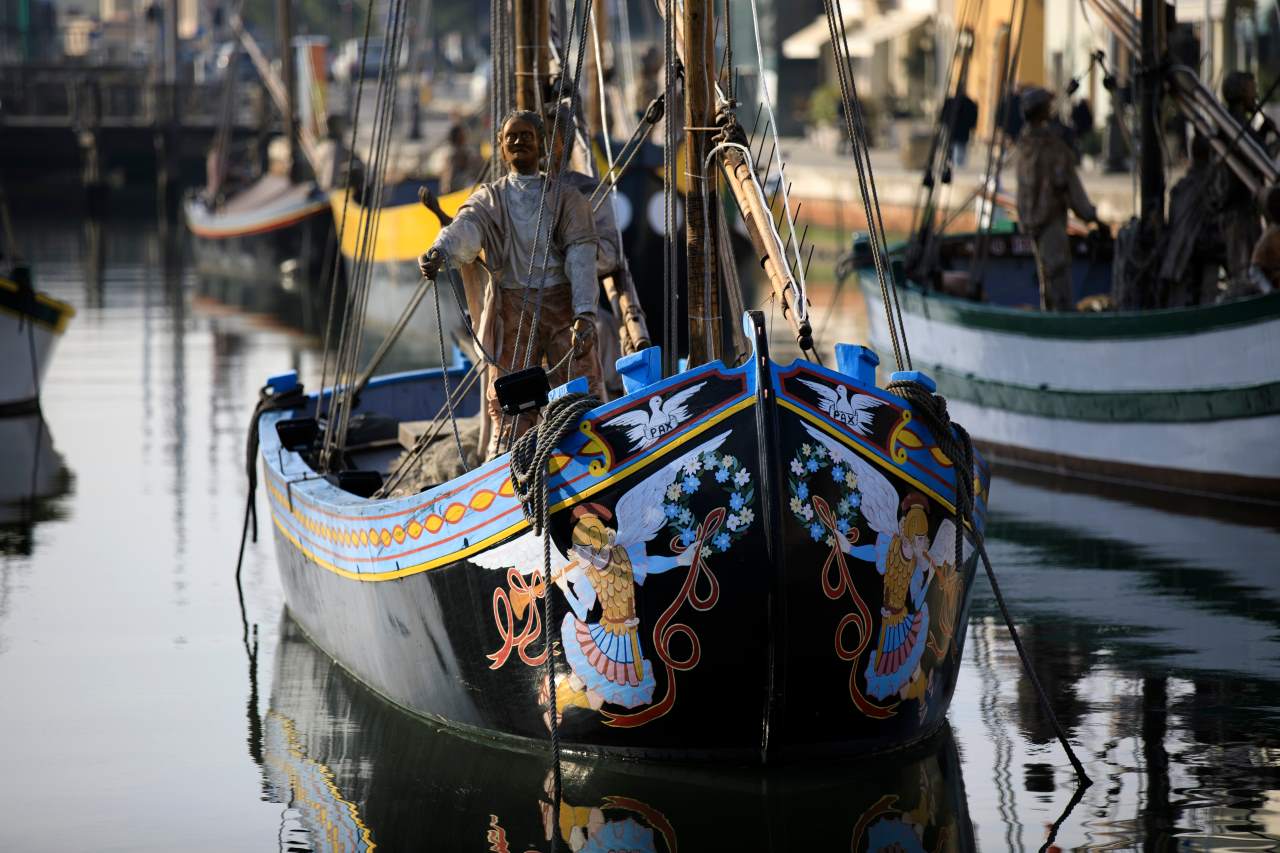
Described by historian Alberto Guglielmotti as a “small vessel” with a squat but powerful profile, the trabaccolo was a fishing and cargo ship with two mizzen masts, capable of carrying up to 150 tons. Its origin remains uncertain, but many believe it descended from medieval round ships. The first records date back to the 18th century, when these vessels became the protagonists of intense commercial traffic between the Adriatic ports.
For almost two centuries, trabaccoli sailed the Adriatic, loading goods into every available space, guided by captains of extraordinary skill, able to tackle complex seas thanks to the maneuverability and stability of the ship. In Romagna, they were affectionately called “barchet”, especially in their fishing version. They were distinguished by their “duck-billed” bow, their uniformly colored sails, and the two large stylized eyes painted on the bow, an apotropaic symbol but also a mark of recognition of the shipowner’s family.
The charm of the trabaccolo even captivated artists such as Canaletto, who immortalized its silhouette in some of his paintings. Its fame spread beyond the Adriatic Sea, reaching the eastern Mediterranean and even, according to some accounts, as far as New Caledonia. After World War II, the trabaccolo remained in use for transporting sand, but with the economic boom, most of the old boats were abandoned. The surviving examples are now a precious heritage, authentic testimony to the “maritime DNA” of Romagna.
The Maritime Nativity Scene: when boats become the stage for tradition
Cesenatico does not only preserve the memory of the trabaccolo in museums: every year it reaffirms it through one of its most evocative events, the Presepe della Marineria (Nativity Scene of the Seafaring Community), an installation that is unique in the world. The ancient boats moored in Leonardo’s Porto Canale—including historic trabaccoli and other traditional vessels—become the stage for a floating Nativity scene, animated by life-size wooden statues.
The nativity scene, which began in the 1980s, is not just a Christmas event, but a true tribute to the history of Romagna’s seafaring tradition. The illuminated boats, with their sails, colorful hulls, and details that were once functional to the lives of fishermen, transform the port into a suspended scene, where past and present dialogue in perfect harmony. Here, the trabaccolo symbolically returns to what it has always been: a ship carrying stories, faces, and hopes.
A heritage that defies time
Today, observing a trabaccolo—whether in the Maritime Museum or in the Maritime Nativity Scene—means recognizing the strength of a community that has never stopped engaging with the sea and drawing its identity and culture from it. These boats, once essential tools for survival, are now silent witnesses to a journey that lives on in the collective memory, in the stories of fishermen, in rediscovered traditions, and in events that still celebrate Romagna’s seafaring heritage.
Do you want to promote your business on e-borghi?
Reach travellers interested in villages, authentic experiences and quality tourism.
Discover how to become a partner