
 San Martino di Castrozza
 Ascolana Olive Festival 2026
 Tandem paragliding flights in Tirolo and Merano: the thrill of flying over the Alps
 Cultural sites in the Piana Rotaliana Königsberg: a journey through the history, art and traditions of Trentino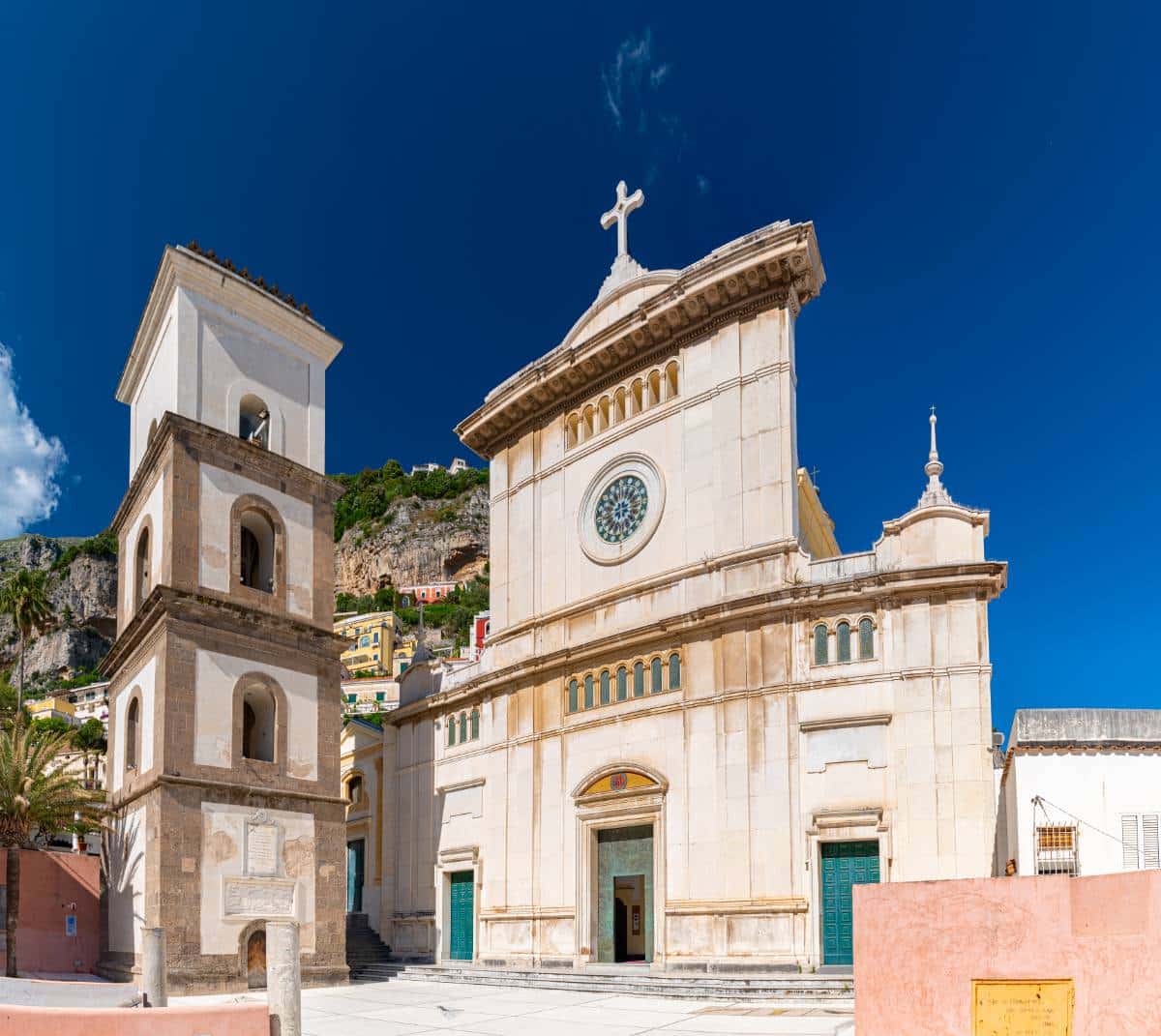
The Church of Santa Maria Assunta in Positano is one of the most famous landmarks of the Amalfi Coast, situated in the heart of the village, just a short walk from Marina Grande beach. Founded in the second half of the 10th century, probably by Benedictine monks, it is one of the oldest and most important places of worship in the area.
What makes it instantly recognisable is its spectacular dome, clad in polychrome yellow, green and blue majolica tiles, which dominates the landscape and helps make it one of the most photographed churches in Campania.
The history of the church is closely linked to that of the ancient Benedictine abbey, mentioned as early as the 11th century. After a period of great prestige, the abbey entered a phase of decline from the 15th century onwards, until the major restoration work carried out between 1777 and 1783, which restored the church to its present appearance.
The interior, with its three naves separated by arches, houses numerous works of art. At the centre of the high altar stands a small shrine housing the famous Byzantine icon of the Madonna and Child, the focal point of local devotion. According to tradition, the icon arrived miraculously in Positano aboard a ship, which was held at sea by a calm until it was brought ashore, an event interpreted as the Virgin’s wish to remain in that place.
Notable works include Fabrizio Santafede’s painting of the Circumcision (1599), a painting of the Madonna del Carmine from the Certosa di Serra San Bruno, a Christ at the Column by Michele Trillocco (1798), and a precious reliquary bust of Saint Vitus, the village’s original patron saint, dating from the 16th century. Along the aisles are numerous chapels dedicated to various saints, whilst above the entrance stands the choir loft with the mechanical organ inaugurated in 2000.
Adjacent to the church stands the bell tower, rebuilt in 1707, which retains medieval elements and a plaque dedicated to Flavio Gioia, traditionally regarded as the inventor of the compass.
Today, the Church of Santa Maria Assunta is not only an important place of worship but also a cultural and identity landmark for Positano, capable of uniting history, art, faith and legend within a setting of extraordinary beauty.