
 Passignano sul Trasimeno
 Montefeltro
 The White Night
 The Ca’ Rossa Experience: from vineyard to glass
 Romantic Night 2026: on 20 June, over 230 Italian villages will be aglow with love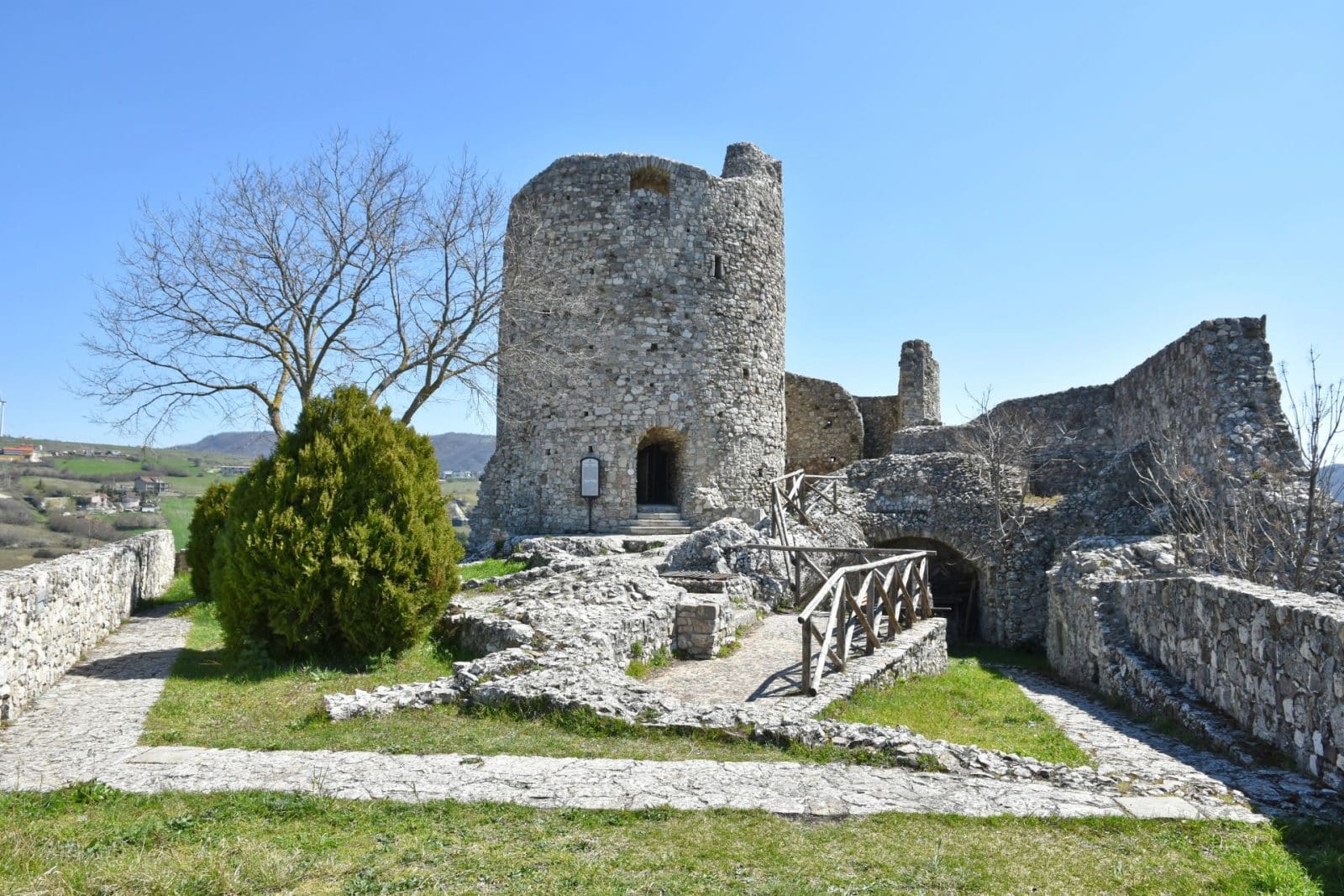
Perched atop the village of Rocca San Felice stands the ancient fortified area of the castle, one of the most fascinating landmarks of Upper Irpinia. Even today, the surrounding walls and the fortified entrances that marked the access to the structure are clearly visible: beyond the first gateway lies an open space once used as accommodation for soldiers and craftsmen, whilst beyond a second entrance lies the main courtyard, dominated by the imposing keep.
The oldest part of the fortification is a cylindrical tower dating back to the 12th century, built on even older foundations. With a diameter of around 10 metres and walls over two and a half metres thick, the tower stands out for the solidity of its structure, built using the ‘sacco’ technique and clad in irregular limestone blocks. Built directly on the rock, it was arranged over four levels, each with specific functions.
The ground floor housed the cistern and rooms used for storing provisions, whilst the first floor, featuring single-lancet windows and niches, was used as a kitchen, as evidenced by the presence of a well and a hearth. The upper floors were reserved for daily life: the third floor, accessible via a raised entrance for defensive reasons, housed living quarters complete with facilities, whilst the top level, now largely lost, led to the roof, used both for lookout purposes and for collecting rainwater channelled into the cistern.
The origins of the fortified site date back to around 850, when it was a military garrison controlling the border of the Principality of Benevento, marked at this point by the River Fredane. With the introduction of feudalism in 1037, the structure was expanded and transformed into a proper castle, assuming a central role in the control of the territory.
Over the centuries, the castle passed under various rulers: from the Normans, under Robert Guiscard, to local feudal lords such as Ruggiero di Castellovetere and Elia di Gesualdo, and finally to the noble families of the Caracciolos, the Reales and, lastly, the Capobiancos, who held the fief until the abolition of feudalism in 1806.
Today, despite its ruins, the castle retains an extraordinary charm. From its commanding position, it offers spectacular views of the surrounding valley and continues to recount, through its stones, centuries of history, wars and transformations in the heart of Irpinia.