 San Martino di Castrozza
 Malvasia in Porto 2026
 Tandem paragliding flights in Tirolo and Merano: the thrill of flying over the Alps
 Recipe: Polta di Pacentro, the peasant dish that symbolises the traditions of Abruzzo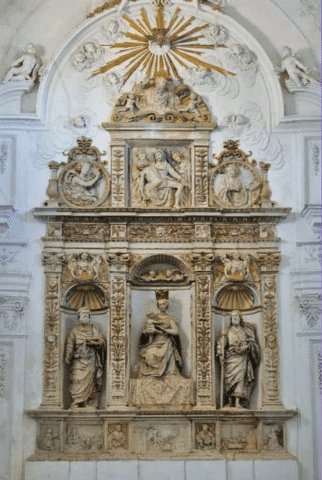
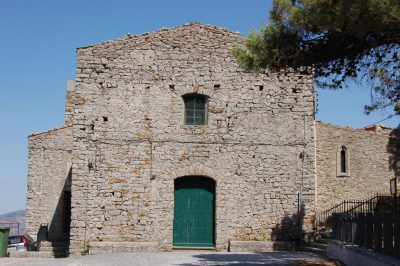
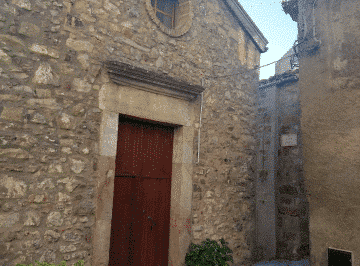
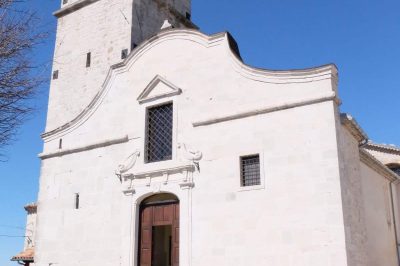
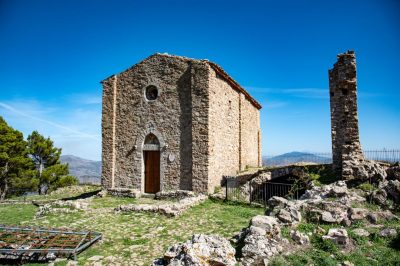
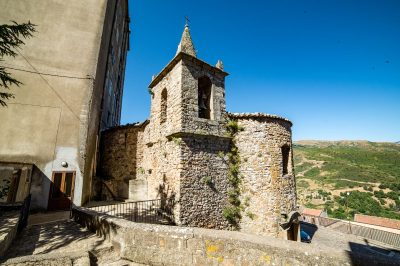
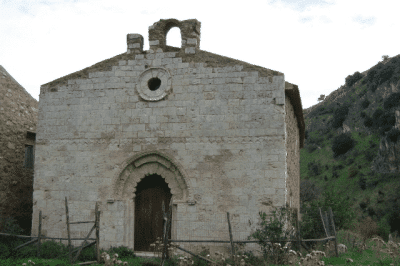
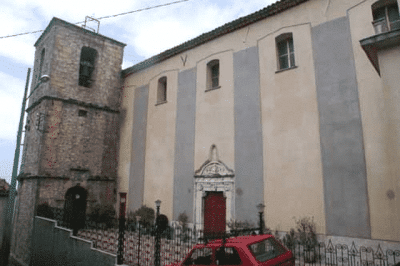
The Church of San Bartolo is located just outside the historic centre of Geraci Siculo and is one of the oldest religious buildings in the village. Although its current appearance dates back to the late 18th century, its origins are much older and can be traced back to the Middle Ages. An important testimony is linked to Count Francesco I Ventimiglia, lord of Geraci, who was buried here in 1338. Ancient chronicles mention the presence of his tomb along the southern wall of the church.
The original building must have been smaller and oriented differently than it is today. The entrance was located at the base of the bell tower through a pointed arch, now walled up and transformed into a sacristy. This architectural layout recalls models that were already widespread in Sicily during the Norman period. On the eastern side, there was also a portico with arches supported by pillars, probably used as a shelter during the fair of St. Bartholomew, a tradition deeply felt in Geraci and officially regulated in 1551 by Marquis Simone Ventimiglia.
In 1769, the church was enlarged and completely reoriented: the back wall was demolished and the internal structure was redesigned. The current stucco decoration, completed in 1794 by master craftsman Francesco Lo Cascio and his sons Rocco and Clemente, displays two different styles: the presbytery features elegant late Baroque motifs, while the nave has simpler neoclassical decorations, particularly visible in the barrel vault punctuated by geometric panels.
Among the most precious works housed in the church is a magnificent Renaissance marble triptych depicting the Madonna and Child between Saints Bartholomew and James, patron and protector of Geraci. The upper part is carved with the Pietà flanked by figures from the Gospel tradition and the Annunciation, while the predella features scenes from the Nativity, the martyrdom of St. Bartholomew and the life of St. James. The work is attributed to the workshop of Antonello Gagini and the masters who worked with his son Antonino, probably between 1536 and 1544.
In the vestibule of the church there are also two elegant white marble columns, decorated with leaf capitals and a relief image of St. Bartholomew. These elements may have belonged to the ancient medieval portico that once flanked the building.
Of particular interest is the wooden statue of Saint Bartholomew, located in a niche on the south wall. The sculpture combines a solemn style, inspired by Sicilian Renaissance models, with a typically Baroque dynamism. The work is attributed to the workshop of Li Volsi di Tusa, probably to Giuseppe Li Volsi, and dates back to the early decades of the 17th century.
In the 17th century, the church was entrusted to the Augustinians of the Congregation of Centorbi, who founded a small convent there in 1627. The monks, devoted to prayer and work in the fields, lived on alms and inhabited a complex consisting of cells, a refectory, a kitchen, storerooms and stables.
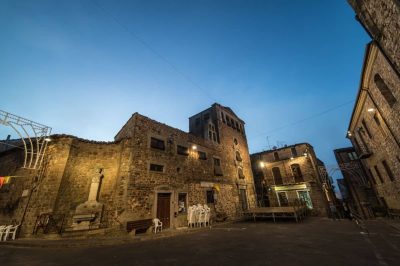
Today, the Church of San Bartolo still retains the charm of its long history, intertwined with the events of the powerful Ventimiglia family and the religious and popular traditions of Geraci Siculo, one of the most evocative villages in the Madonie mountains.