
 Passignano sul Trasimeno
 Montefeltro
 The White Night
 The Ca’ Rossa Experience: from vineyard to glass
 Romantic Night 2026: on 20 June, over 230 Italian villages will be aglow with love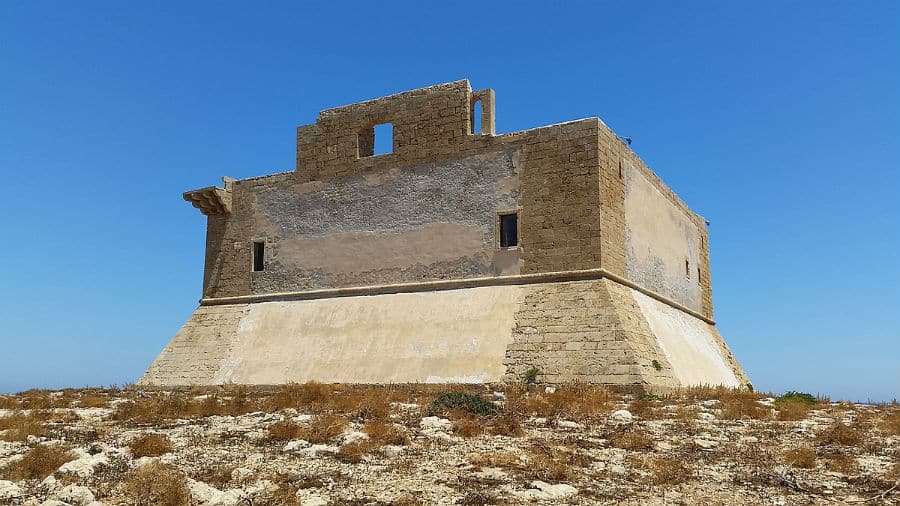
The Fort of Capo Passero, also known as the Fortress of Charles V, overlooks the island of Capo Passero and is one of the most significant examples of Sicilian coastal fortifications from the Spanish period. Overlooking the sea from a strategic and panoramic position, the fort was built to defend the territory from the constant raids by Turkish-Barbary pirates who, between the 16th and 17th centuries, plundered the coasts of southern Sicily.
The fortress was commissioned by the Spanish Crown and the Deputation of the Kingdom of Sicily to protect this stretch of coastline, which was particularly vulnerable to attack. The pirates used Capo Passero as a landing and supply point, often plundering the coastal villages and capturing the inhabitants to enslave them.
Work began in 1599 but was suspended almost immediately due to a lack of funds. It was not until 1603, thanks to a fundraising campaign organised by the Sicilian Parliament and intended for King Philip III of Spain, that the construction site was reopened and finally completed in 1607. The royal coat of arms, carved in sandstone, was placed above the entrance portal and is still clearly visible today.
The structure is built on a massive square base with sides measuring approximately 35 metres, constructed directly onto the island’s limestone bedrock. The base, which is about four metres high and completely devoid of openings, gives the fortress an austere and imposing appearance. Originally, the entrance could only be reached via a drawbridge connected to an external staircase.
The entire complex is organised around a square inner courtyard, at the centre of which stands a large cistern designed to collect rainwater, channelled through an ingenious system of gutters. On the lower level are fifteen vaulted rooms and a chapel dedicated to the Virgin of the Annunciation, used for the garrison’s religious services. The rooms housed soldiers and the chaplain, whilst the upper level was reserved for the officers and the garrison commander.
Over the centuries, the fort retained its defensive function until the 19th century, when it was converted into a military prison. In 1871, a small lighthouse was installed on the upper terrace, which was subsequently automated in the 1950s.
Among the historical figures associated with the fortress, one stands out: Ensign Lope Medrano, who served as castellan of the fort from 1623 to 1631, the year of his death, which was likely caused by the plague. His tombstone is still preserved in the chapel today.
Today, the Fort of Capo Passero is one of the most evocative sites in south-eastern Sicily. From the terrace, visitors can enjoy a spectacular view of the sea, the island of Capo Passero and the village of Portopalo di Capo Passero, offering a experience rich in charm, history and Mediterranean beauty.