 San Martino di Castrozza
 VIVA! Festival 2026
 Tandem paragliding flights in Tirolo and Merano: the thrill of flying over the Alps
 Recipe: Polta di Pacentro, the peasant dish that symbolises the traditions of Abruzzo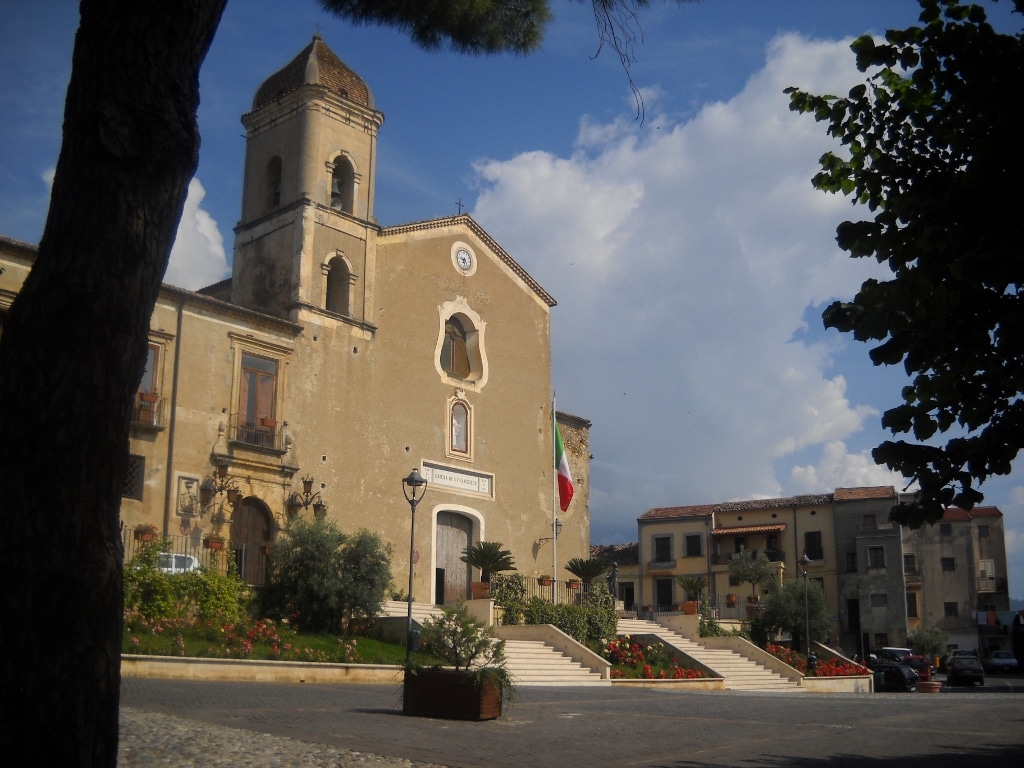
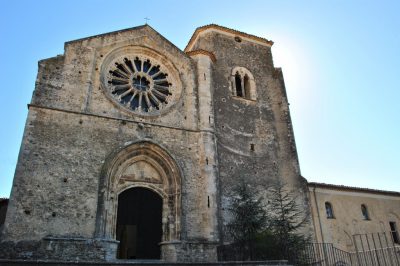
The Complex of San Francesco di Paola in Altomonte is one of the village’s most important historical and artistic landmarks, a place where spirituality, art and civic memory intertwine. Its origins probably date back to 1363, but it was mainly thanks to the generosity of the Sanseverino family, feudal lords of Bisignano, that work on the church and the adjoining convent resumed in 1728, being completed in 1770, the year in which the decorative stucco work was also carried out.
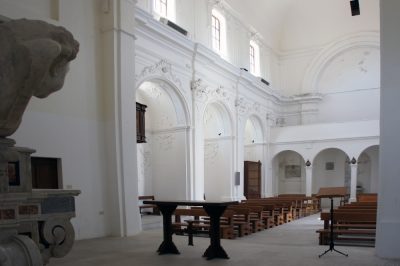
The church has a Latin cross plan with a single nave, flanked by three chapels on each side. The interior is made particularly striking by the elegant 18th-century white stucco cornices, created in 1770 by the Neapolitan stucco artist Pasquale Gesumaria in collaboration with Innocenzo Sassone and Raffaele Morelli. The nave leads to a spacious chancel area, comprising the presbytery and choir, separated by an elegant stuccoed marble altar that incorporates side entrances to the sacristy.
The interior still houses important works of art, including the frescoes depicting the Miracles of Saint Francis of Paola, painted by Genesio Galtieri between the 18th and early 19th centuries. The scenes, rich in movement and symbolic meaning, depict famous episodes from the saint’s life, flanked by paintings by the same artist depicting the Annunciation, the Adoration of the Shepherds and the Adoration of the Magi. These are complemented by wooden sculptures, including a striking Ecce Homo, and paintings preserved in the sacristy attributed to artists such as Giovan Battista Rossi and Matteo Sicara. Of particular note is also the wooden choir dating from 1775, situated in the apse area.
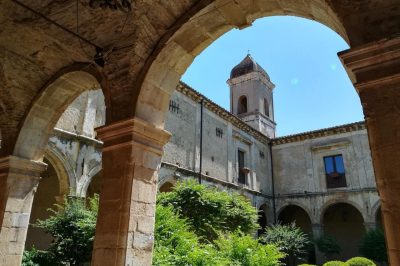
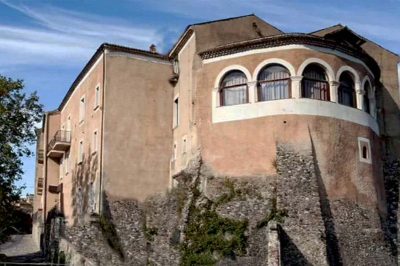
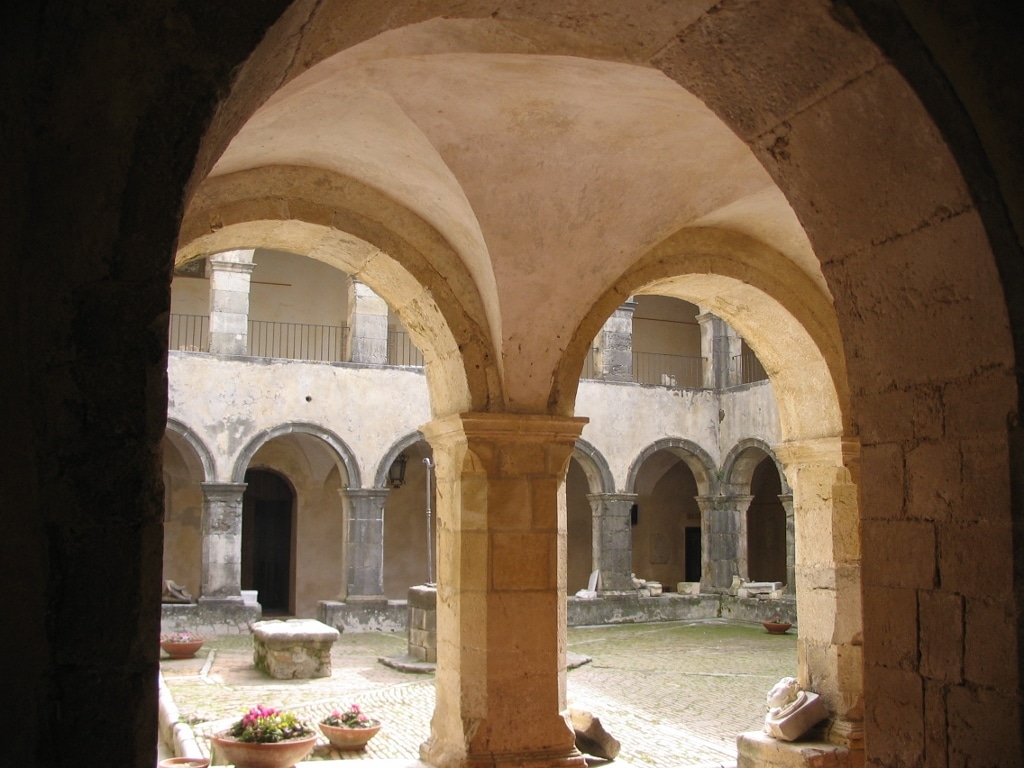
Externally, the complex is distinguished by an elegant 18th-century window with a mixtilinear frame that illuminates the nave, and by the bell tower, characterised by a double belfry and a bulbous roof covered in majolica. The entire convent complex, covering approximately 2,400 square metres, is arranged around a central square cloister with round arches, accessible through an 18th-century portal.
Throughout its history, the complex has been home to the Minims of St Francis of Paola, but it has also undergone periods of transformation: suppressed during the French occupation in 1809, it was subsequently used as a residence by General Desvernois, before being returned to the religious order in 1855 and finally acquired by the municipality after 1861.
Today, the building has taken on a new role as Altomonte Town Hall. Inside, the Council Chamber houses an important painting by Domenico Purificato dedicated to the theme of emigration, whilst the rooms feature wooden furnishings from various periods, keeping the link between past and present alive.
The Complex of San Francesco di Paola thus represents a unique place, where religious history blends with civil history, offering an authentic insight into the cultural identity of Altomonte.