
 Passignano sul Trasimeno
 Bread Festival
 Tandem paragliding flights in Tirolo and Merano: the thrill of flying over the Alps
 Cultural sites in the Piana Rotaliana Königsberg: a journey through the history, art and traditions of Trentino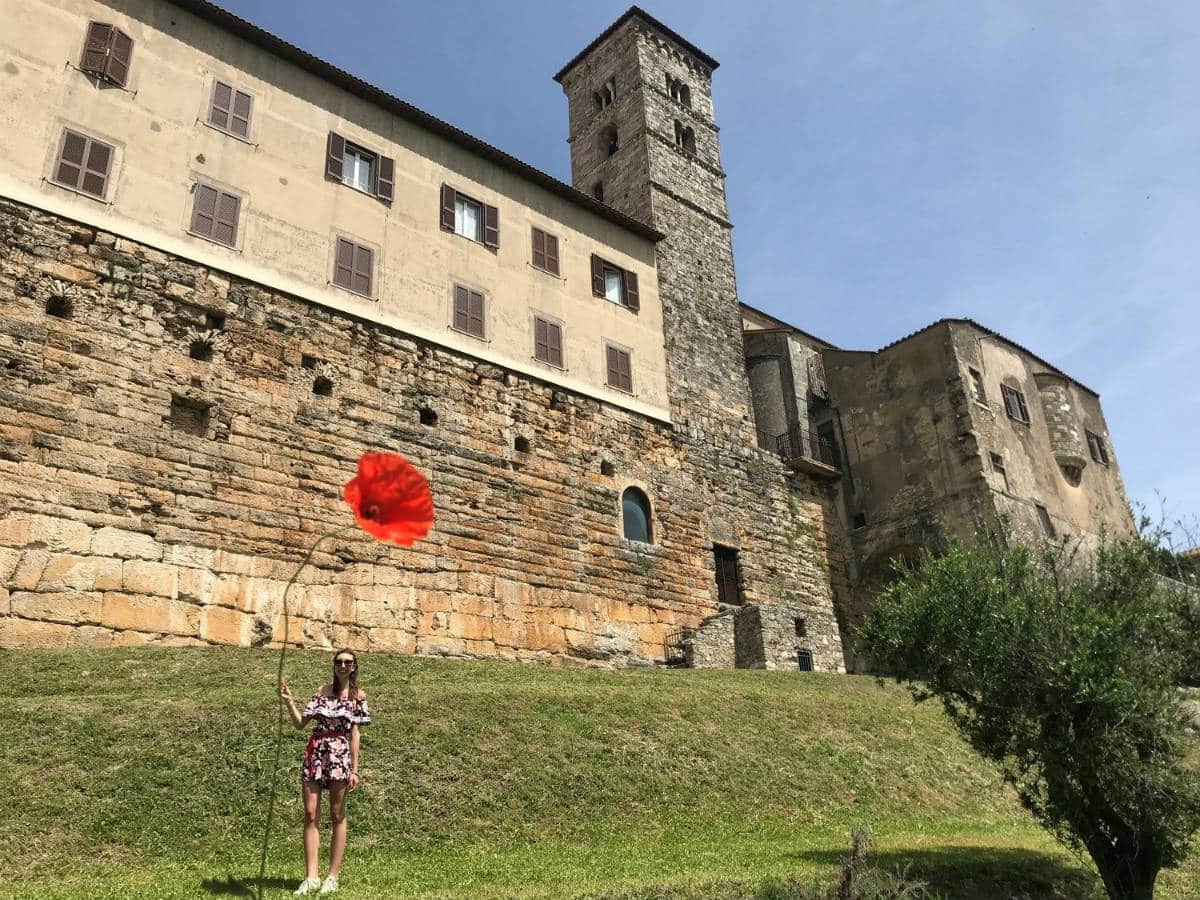
The historic heart and symbol of the town, the Acropolis of Ferentino overlooks the town from the top of a rocky outcrop in the north-western part of the village. This extraordinary monumental complex is one of the most important examples of military and urban engineering in ancient Lazio, the result of a long process of development spanning the pre-Roman, Roman and medieval periods.
The Acropolis covers a vast quadrangular area measuring approximately 140 by 95 metres, supported by imposing walls built using two different techniques. The lower section is constructed from enormous limestone blocks perfectly fitted together using the polygonal technique, whilst the upper section consists of large, squared blocks of travertine. This dual structure has fuelled debate amongst archaeologists for centuries: some believe it bears witness to two distinct construction phases – one pre-Roman and one dating to the Sullan era (2nd–1st centuries BC) – whilst others maintain that the entire complex was built in a single major construction project.
The imposing bastion, known as the Avancorpo, was designed not only to defend the city but also to stabilise the sandy soil of the hill. Inside, there are vaulted galleries and underground chambers, including an impressive cryptoporticus, which supported the large upper terrace on which monumental buildings from the Roman period once stood.
The inscriptions still visible on the walls today commemorate the censors Aulus Hirtius and Marcus Lollio, who oversaw the construction of the site during the Sullan era, confirming the strategic importance that Ferentino held along the Via Latina.
Over the centuries, the Acropolis changed its function several times. In Roman times, it housed public buildings and fortified structures; later, it became the town’s main religious centre. Today, its summit is home to the Cathedral of Saints John and Paul, consecrated in 1108, the Bishop’s Palace and the ancient Episcopium, which was extended between the 17th and 18th centuries when Ferentino was the seat of the Rectory of Campagna and Marittima.
Walking around the Acropolis, one can clearly sense the extraordinary historical continuity of the site: the monumental megalithic walls, the Roman structures, the medieval buildings and the views over the Sacco Valley recount over two thousand years of history within a single archaeological complex. Even today, it remains the most spectacular vantage point from which to admire Ferentino and to understand the strategic role the town has played since ancient times in controlling the main transport routes of central Italy.