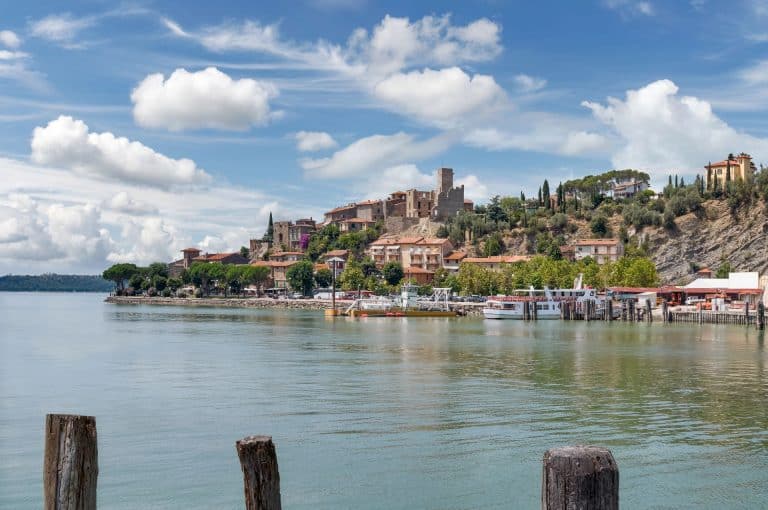
 Passignano sul Trasimeno
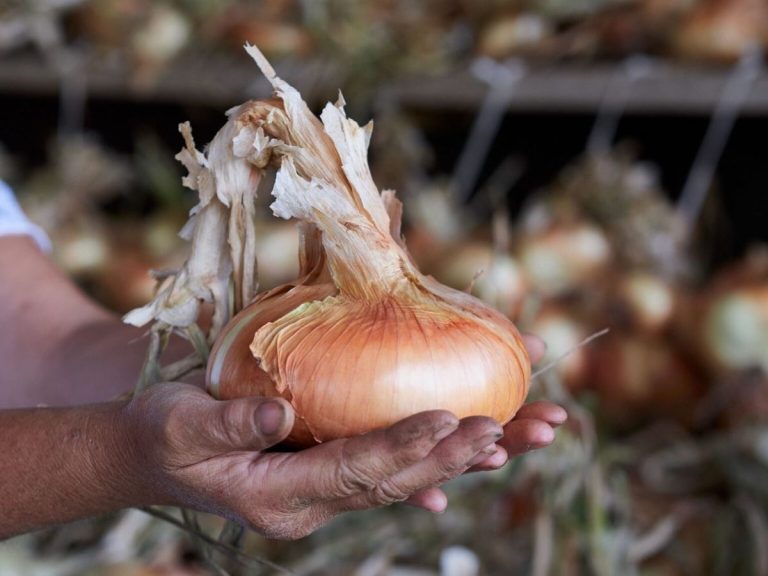 La Bionda in Tavola: Drubiaglio Onion Festival
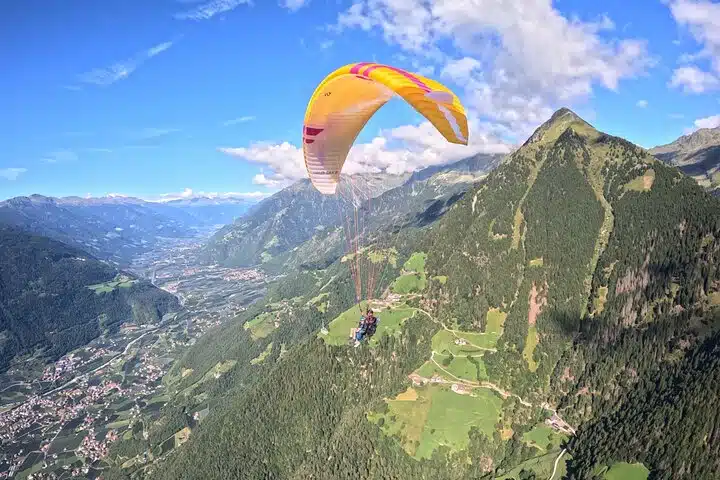 Tandem paragliding flights in Tirolo and Merano: the thrill of flying over the Alps
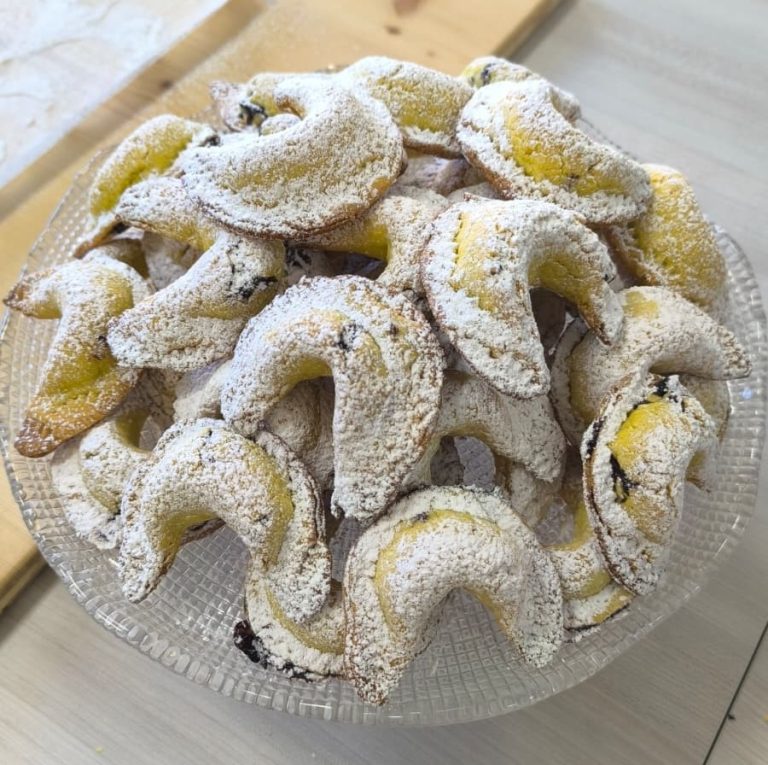 Recipe: Cippillato, Trivento’s iconic sweet treat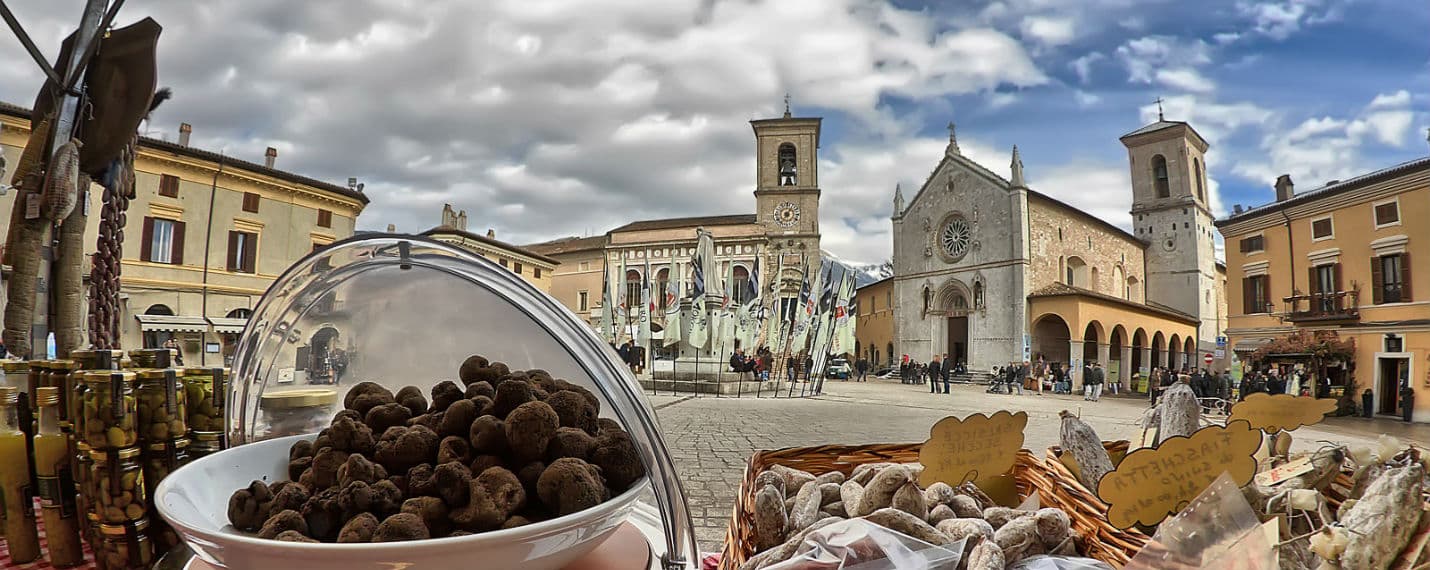
Nestled in the mountains of the Monti Sibillini National Park, Norcia is one of Umbria’s most charming villages, famous for being the birthplace of St. Benedict, for its artisanal cured meats and prized black truffles. Despite severe damage from the 2016 earthquake, the town continues to tell its thousand-year story of spirituality, culture and gastronomic traditions, offering visitors an intense and authentic experience.
Photo gallery
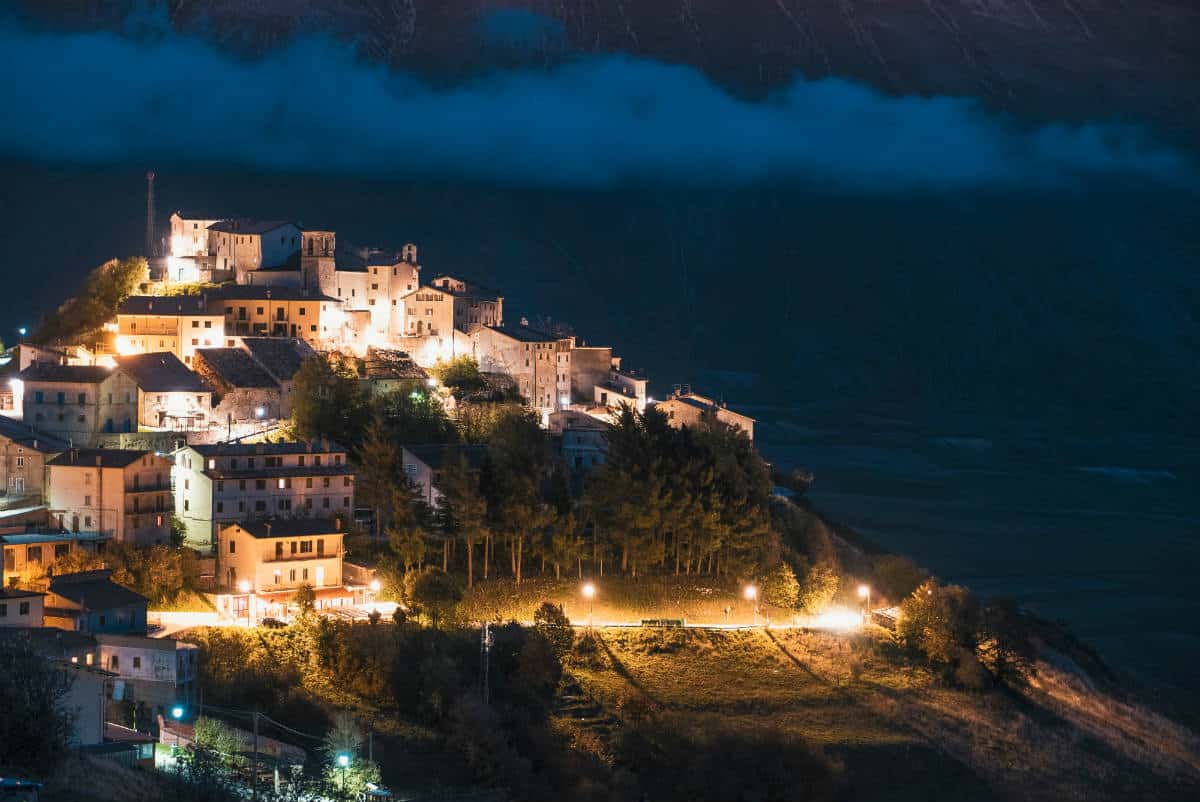
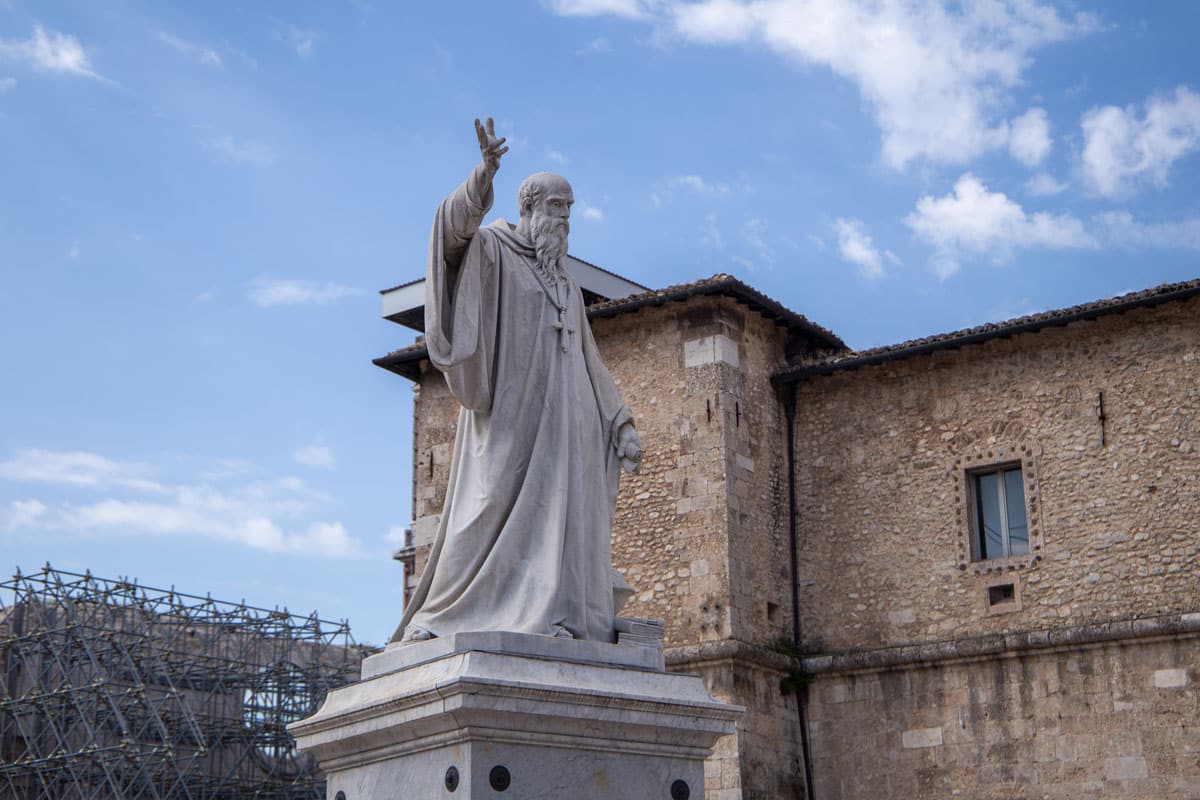
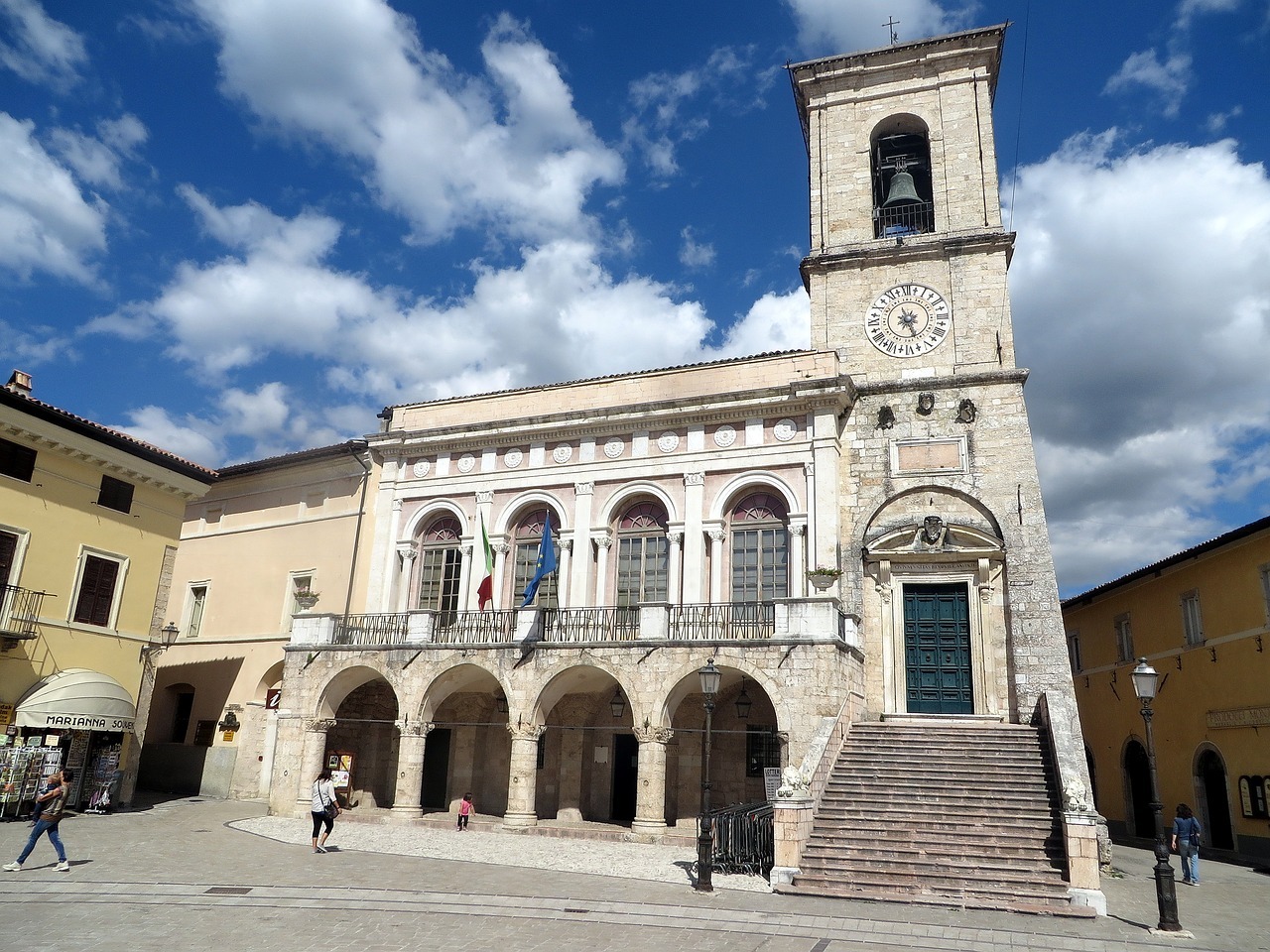
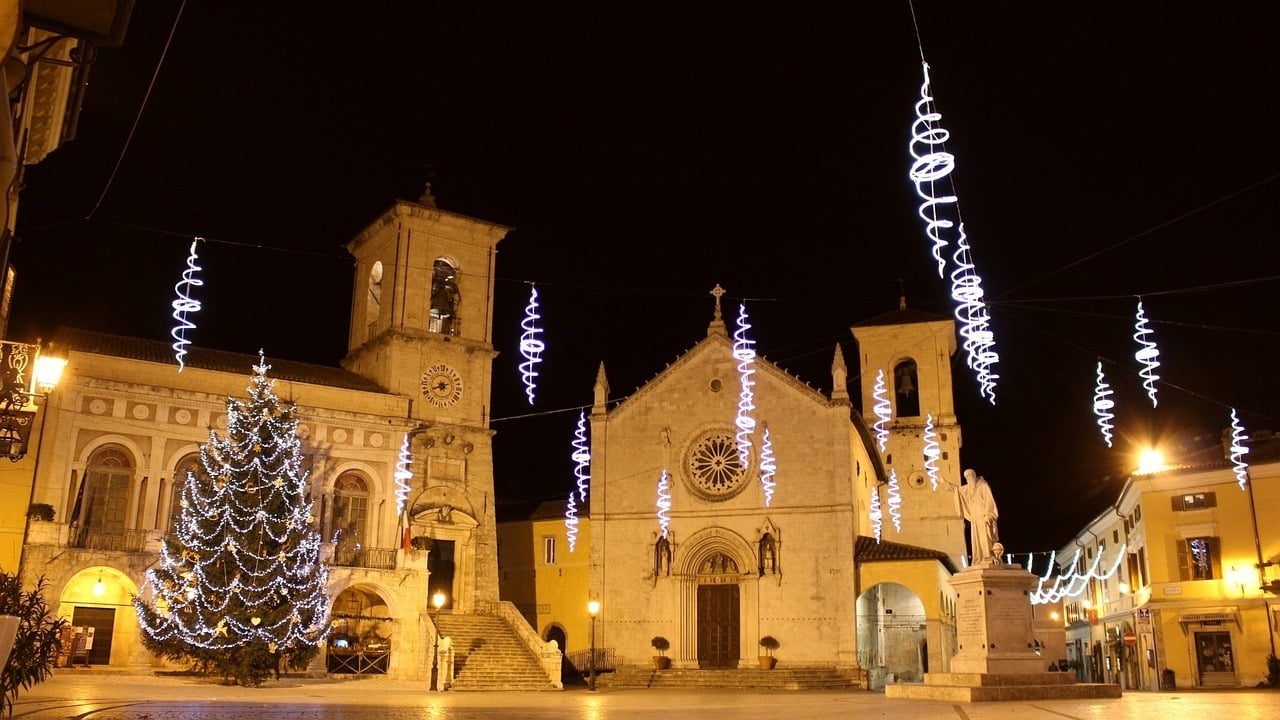
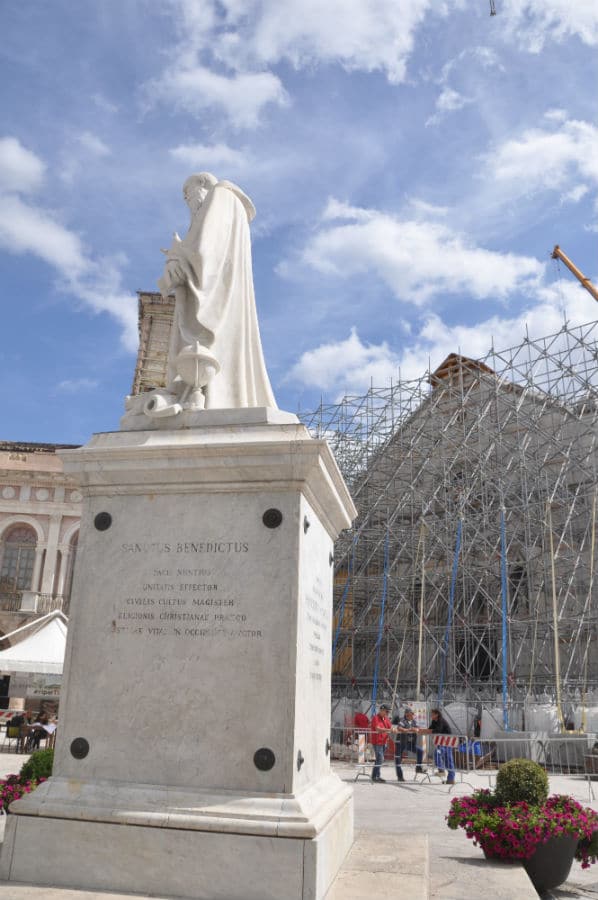
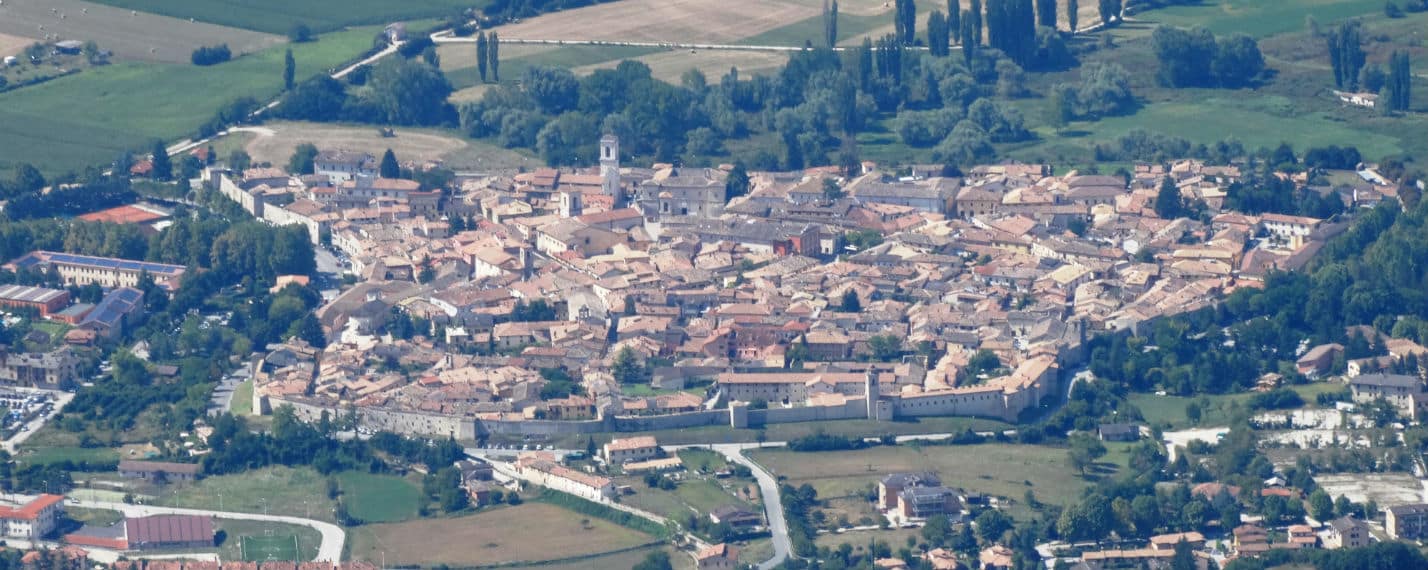
In the green heart of Umbria, at the foot of the Sibillini Mountains, stands Norcia, a village steeped in history, spirituality and centuries-old traditions. An ancient Sabine center, known since antiquity as Nursia, this town has been able to face with courage and determination the many wounds inflicted by earthquakes – most recently that of 2016, which devastated much of its artistic and religious heritage – yet revealing an astonishing capacity for rebirth.
A millennial history between spirituality and art
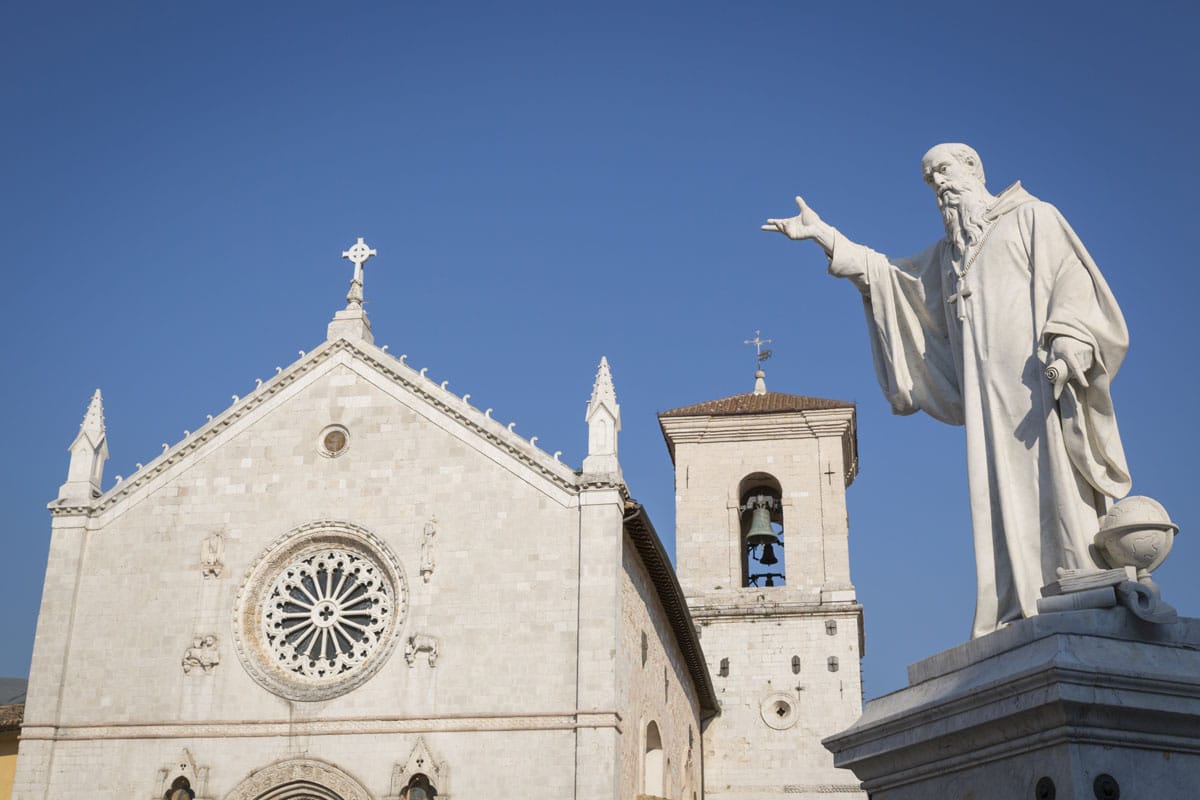
Norcia traces its roots back to pre-Roman times, founded by the Sabines and later conquered by the Romans in the 3rd century BC. The city’s importance grew due to its strategic location, fertile surrounding land and the presence of distinguished Roman citizens. However, it was in the 5th century that Norcia wrote one of its most glorious pages: St. Benedict and St. Scholastica, central figures in Western monasticism, were born here. Benedict founded the Benedictine Order and his motto Ora et Labora spread throughout Europe, transforming Norcia into the cradle of medieval Christian culture.
During the Middle Ages, Norcia became a free commune, endowing itself with a mighty city wall and establishing itself as a political and commercial center. In 1569, with the creation of the Mountain Prefecture, an artistic flowering began, enriching the town with churches, palaces and works of art. Unfortunately, the earthquakes of 1703, 1859 and, more recently, those of 2016, have repeatedly undermined the town’s monumental heritage.
The heart of the city: St. Benedict Square
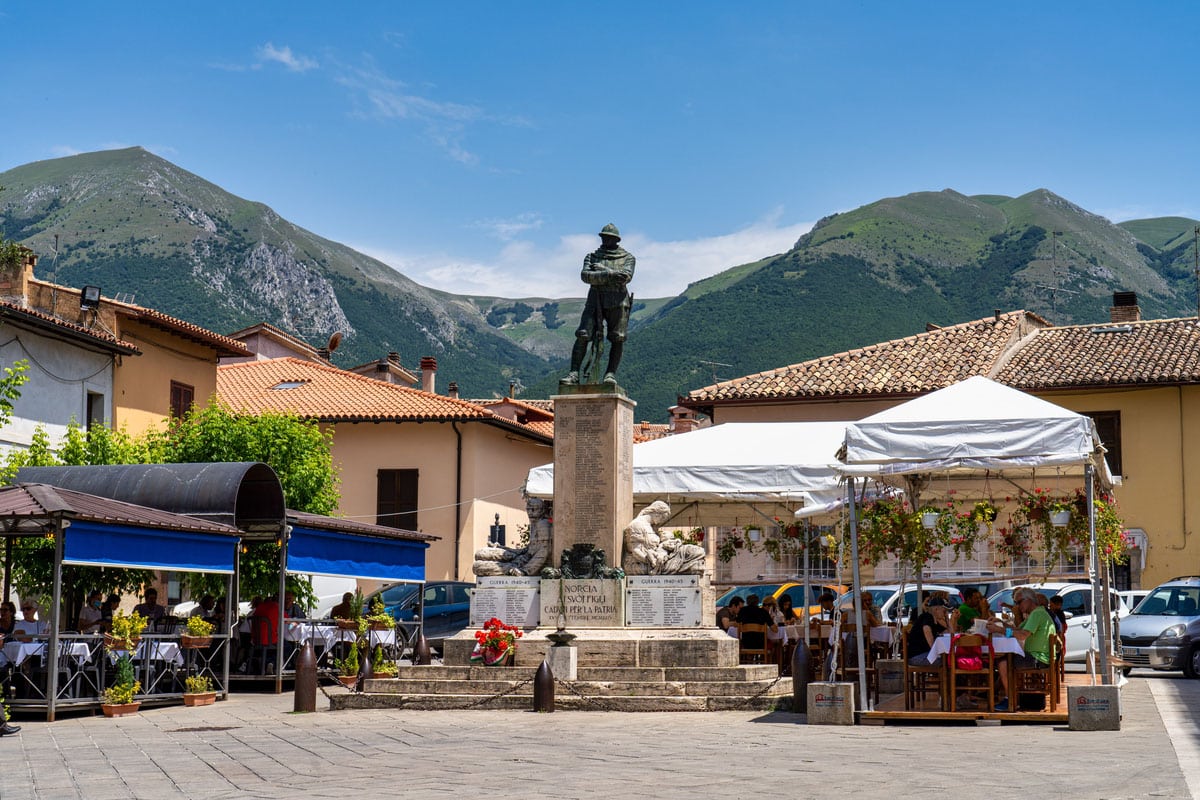
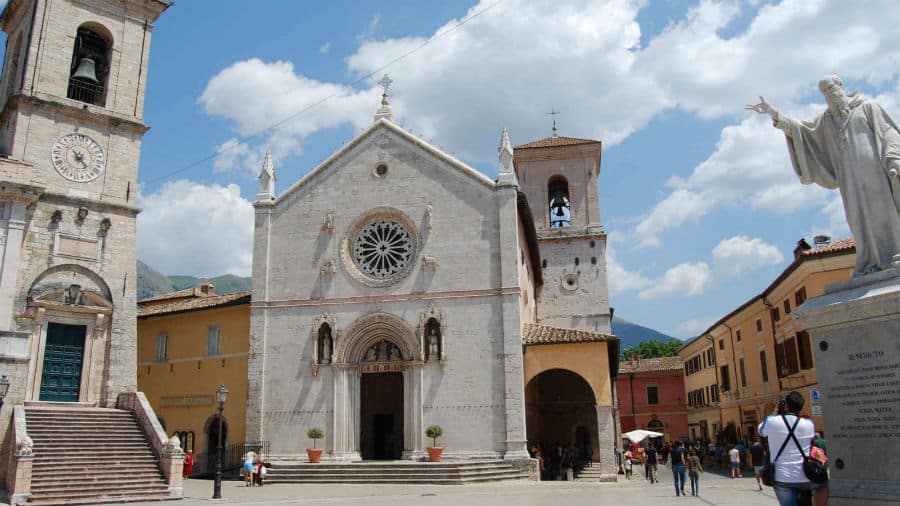
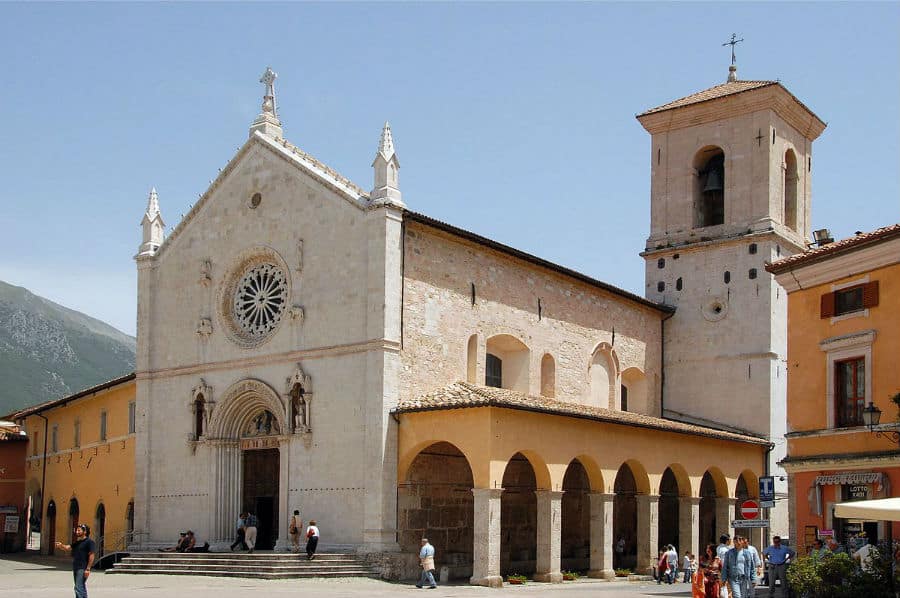
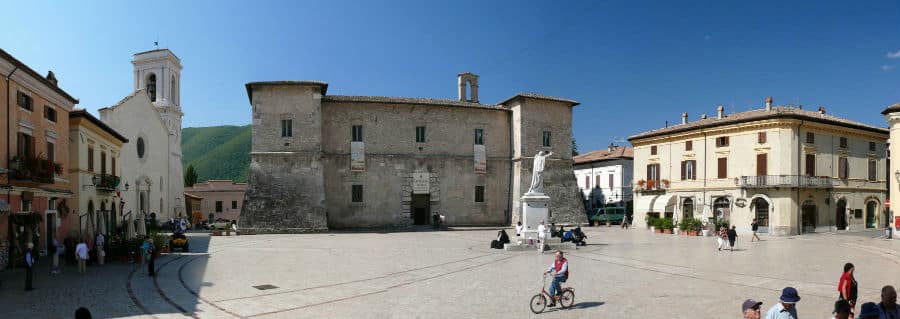
The focal point of the historic center is Piazza San Benedetto, Norcia’s true urban living room. The city’s main landmark buildings are concentrated here: Basilica of St. Benedict, erected above the house where the saint was born, with its striking Gothic facade and crypt with Roman remains. Collapsed in 2016, it is now the subject of a major reconstruction; Palazzo Comunale, with its loggia and civic tower, evidence of the ancient medieval civic splendor; La Castellina, a 16th-century fortress designed by Vignola, former residence of the papal governor and now home to the Civic and Diocesan Museum; Co-cathedral of Santa Maria Argentea, an elegant Renaissance building, badly damaged but a symbol of Norcia’s spirituality; Portico delle Misure, a place of agricultural trade in the 16th century, where grains were weighed according to standardized measurements.
The “yelps” and the popular soul of the village
Norcia is divided into historic neighborhoods called guaite, with an eighteenth- to nineteenth-century urban layout strongly influenced by papal earthquake regulations. The low buildings, with sloping (scarp) perimeter walls, tell a long story of adaptation and resilience.
Among the many religious buildings worth mentioning: Church of St. Augustine, with 14th-century frescoes; Tempietto di San Benedetto, a Gothic jewel dating from 1354; Church of the Crucifix and Church of St. Lawrence, precious testimonies to popular faith.
Nature, sports and spirituality
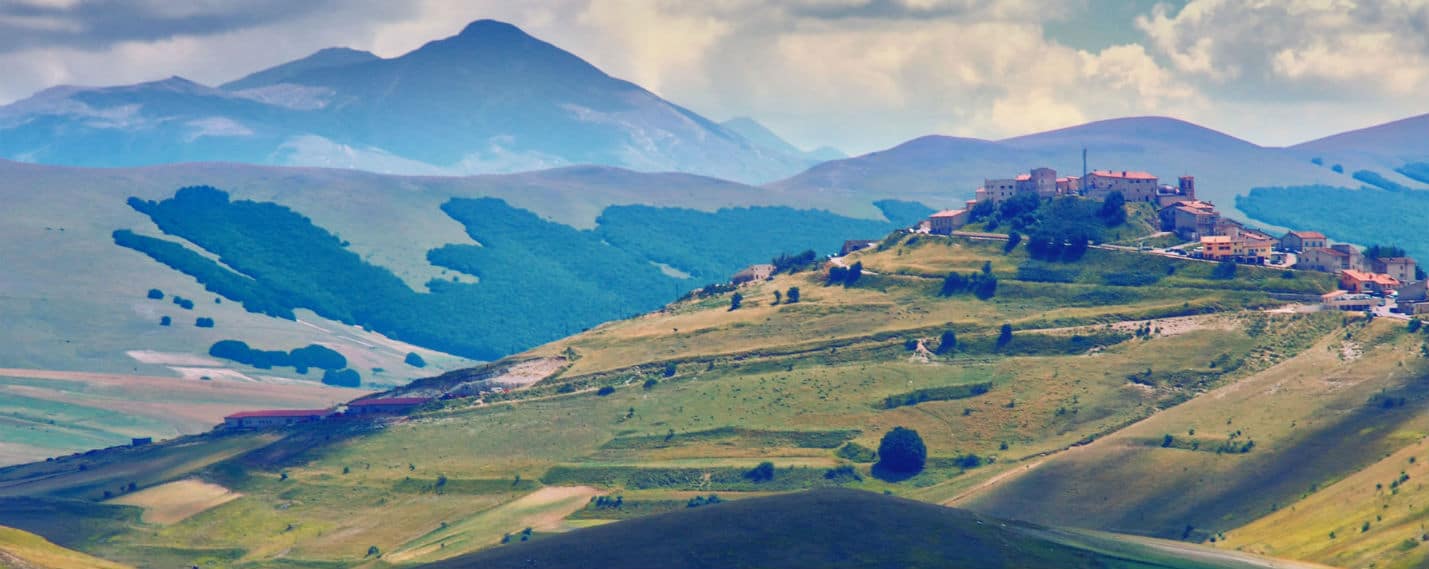
Nestled in the Monti Sibillini National Park, Norcia is also a favorite destination for lovers of nature and outdoor activities. The nearby Castelluccio Plains offer breathtaking scenery, particularly in spring with the spectacular flowering. Trekking, cycling, horseback riding, hiking, rafting and free flight: the Valnerina is a true natural paradise.
Places not to be missed in the surrounding area: Forca Canapine, a center for winter sports and trekking; Monte Vettore (2476 m), with the striking Lake Pilato; Grotta della Sibilla, linked to mysterious legends; Cascia, birthplace of Santa Rita, not far away.
A city wounded but alive
The 2016 earthquake hit Norcia hard. However, the strength of its people, combined with public and private support, has sparked a slow but determined process of reconstruction and rebirth, which is restoring dignity and future to the village.
Norcia is now a destination that moves, fascinates and enriches. Visiting it means touching the deep history of Italy, savoring its most authentic soul and being inspired by the tenacity of those who, despite everything, have chosen to stay, rebuild and welcome.
Village of Norcia
Municipality of Norcia
Province of Perugia
Umbria Region
Population: 4.981 norcini
Altitude centre: 604 m s.l.m.
the Municipality is part of:
I Borghi più belli d’Italia
Città dei sapori
Città del tartufo
Città dell’infiorata
Acknowledgments
Orange Flag – Italian Touring Club
Protected Natural Areas:
Monti Sibillini National Park
Municipality
Via Alberto Novelli 1 – Tel. +39 0743 828711
BY CAR
- From the North: A1 motorway in the direction of Perugia, Assisi and Spoleto; take the Spoleto-Norcia road; from Spoleto take the gallery “Forca di cerro”; Sant’Anatolia di Narco exit; direction of Norcia and Cascia SS 209 della Valnerina
- From the south: A1 motorway; Orte exit; continue towards Spoleto
BY PLANE
- Perugia airport
- Rome Fiumicino Airport
Gastronomic excellence: capital of pork products
Norcia is also a sanctuary of taste. The term norcineria, used today throughout Italy to refer to quality delicatessens, originated here. The cured meats, the result of centuries-old artisanal techniques, are famous throughout the world:
-Prosciutto di Norcia IGP
-Cured sausages and salamis
-Coppa, capocollo and ciauscolo
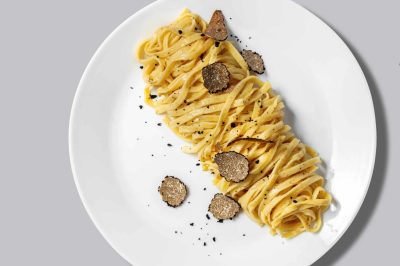
Next to cured meats, the prized black truffle of Norcia is the other great protagonist of the local cuisine. Every year, between February and March, “Nero Norcia” is held, a truffle market exhibition, a reference point for truffle enthusiasts.
There is no shortage of other products of excellence such as:
-Castelluccio lentils PGI
-Cheeses such as pecorino and caciotta, also flavored with truffles
-Soups, cereals, mushrooms and honey
Events in Norcia
Upcoming events, festivals and initiatives.
News and stories about “Norcia”
Insights and stories from the area, to keep discovering.
Continue the journey
Norcia is only one of the treasures of the area. Use the interactive map to discover what to visit nearby, how far the other villages are and which experiences you can enjoy along the route.
Explore the area