 San Martino di Castrozza
 VIVA! Festival 2026
 Tandem paragliding flights in Tirolo and Merano: the thrill of flying over the Alps
 Recipe: Polta di Pacentro, the peasant dish that symbolises the traditions of Abruzzo
In the heart of Valsesia, in the village of Varallo, Carnival is not just about confetti and popular traditions: it is also the time when one of the oldest and most symbolic dishes of the local cuisine is prepared: Paniccia. This hearty soup made with rice, vegetables, legumes and meat is cooked slowly in large pots and distributed free of charge to the population on the morning of Shrove Tuesday, in a gesture of sharing and solidarity that has its roots in the history of the village.
The origins of Paniccia: between charity and community
The Paniccia di Varallo has its roots in the popular tradition of Varallo and is linked to a profound philanthropic value. According to stories handed down by the village elders, it was prepared in the days leading up to Lent and offered to prisoners held in the ancient prisons located in the Palazzo Pretorio, as well as to the poor of the town.
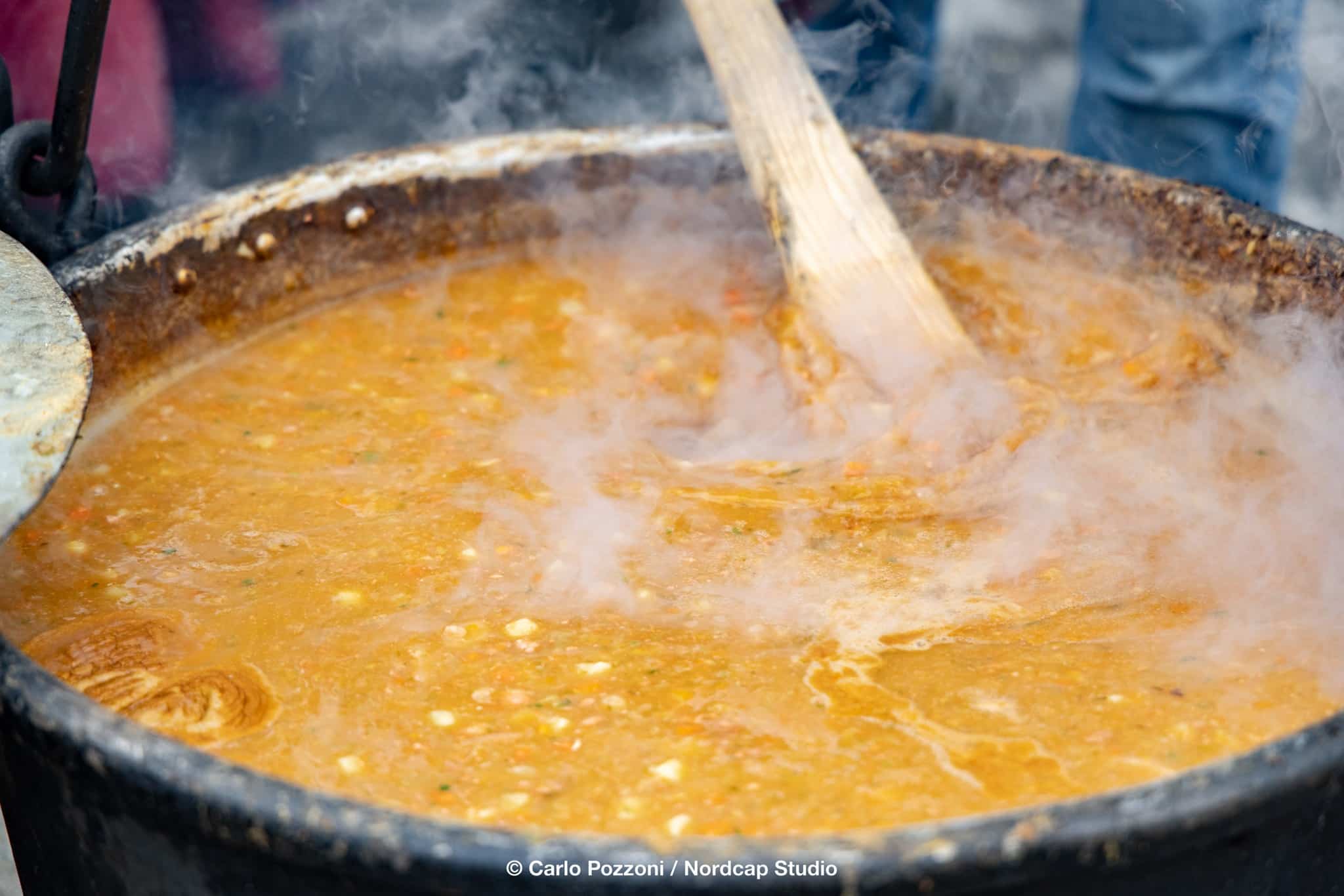
In an era when resources were limited, each family contributed what they had in their pantry: rice, legumes, winter vegetables, a few pieces of cured meat or meat. This spontaneous collection resulted in a large community minestrone, cooked slowly over a wood fire for over six hours in huge pots.
Paniccia is often described as ‘as old as Varallo’: its origins are not precisely documented, but its symbolic value has remained intact over the centuries.
The Shrove Tuesday ritual
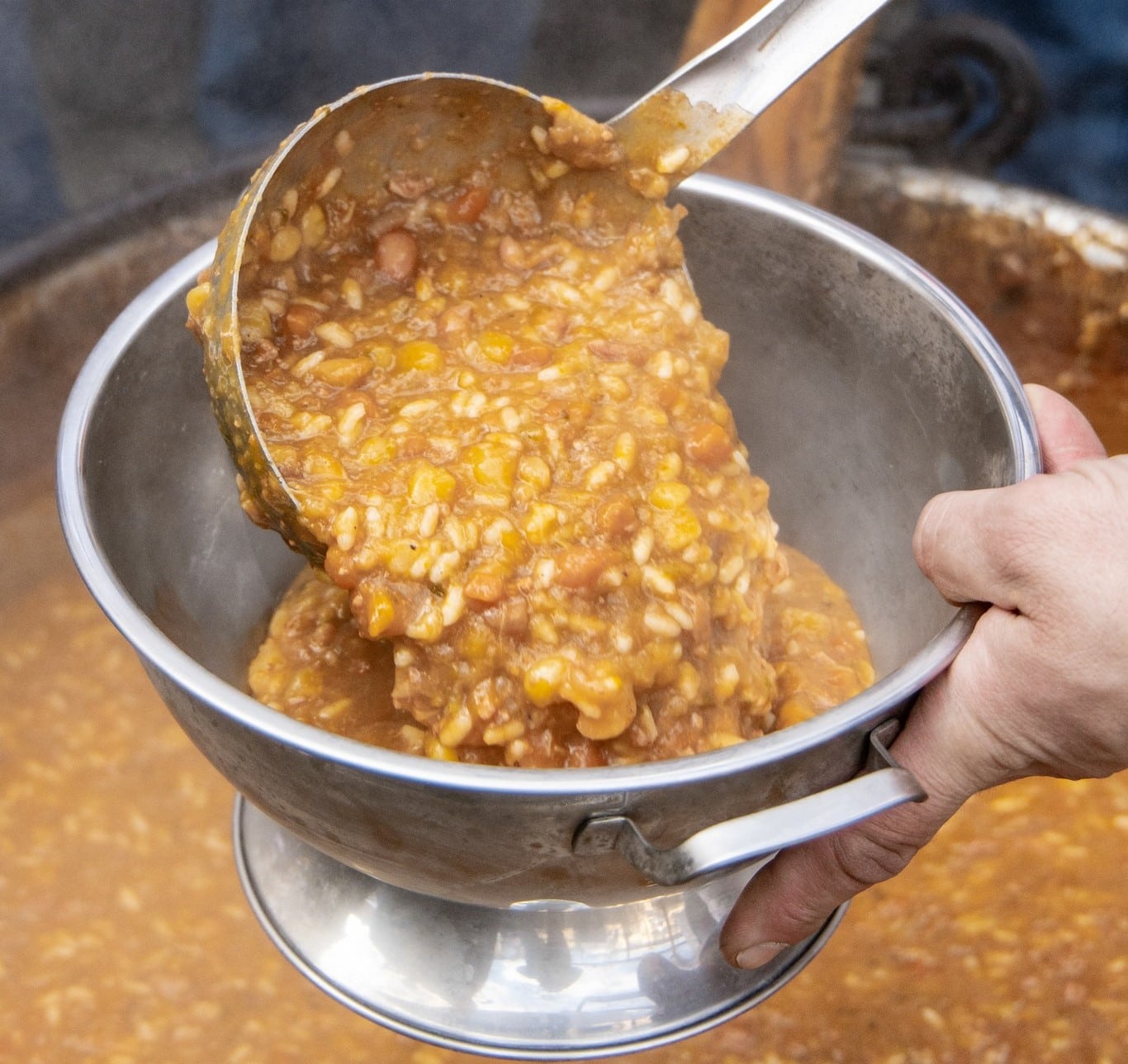
Even today, the tradition lives on during Shrove Tuesday, the last day of celebration before Lent. Early in the morning, volunteers from the Carnival Committee begin the long preparations, while the village is filled with an atmosphere of anticipation.
The Paniccia is then blessed and distributed free of charge to anyone who comes with a pot, renewing an ancient gesture of sharing. With rare exceptions – such as during the Second World War or the Covid period – this tradition has never been interrupted.
It is a moment that unites different generations and makes the Varallo Carnival unique.
La ricetta può variare leggermente da paese a paese in Valsesia, ma gli ingredienti principali sono quelli della tradizione.
Ingredients
for 4 or 6 persons
200 g minced beef
100 g lard
Carnaroli rice (about 50 g per person)
200 g dried beans (e.g. Saluggia beans)
1 tin of peeled tomatoes
Half a small savoy cabbage
3 leeks
4–5 onions
2 stalks of celery
200 g potatoes
200 g carrots
½ glass of Barbera wine (optional)
Meat and bones for broth
Olive oil to taste
Salt to taste
Butter to taste
Peppercorns and bay leaves (to taste)
Procedure
Prepare the beans: Soak the dried beans in cold water for at least 12 hours. Drain them and boil them in fresh water for about an hour, until they are tender but not mushy.
Make the stock: Use the meat and bones to make a tasty stock, adding a browned onion, a stick of celery, a few bay leaves and a few peppercorns. Bring to the boil and simmer gently.
Combine the tomatoes and stock: Add the peeled tomatoes, season with salt and pour in some of the stock. Cover and simmer gently for about an hour, adding more stock if necessary.
Chop the vegetables: Clean and chop the savoy cabbage, leeks, onions, celery, carrots and potatoes. Set aside.
Brown the meat: Heat a little oil in a large pan, add the chopped lard and finely chopped onion. When the mixture is fragrant, add the minced meat and brown well. Add the Barbera wine and allow it to evaporate.
Cook the vegetables: Meanwhile, bring the stock to the boil and add all the chopped vegetables. Cook for about an hour. Then add the potatoes and boiled beans and continue cooking for another 30 minutes.
Add the rice: When the vegetables and legumes are well blended, add the rice (about a handful per person) and cook, stirring occasionally.
Stir and serve: Just before serving, add a knob of butter and, if you like, a sprinkling of pepper. Stir well to melt the butter. Serve the Paniccia piping hot, accompanied by homemade bread.
Curiosities and local variations
The term “Paniccia” derives from the dialect word paniscia and refers to ancient cereal-based dishes. Some scholars hypothesise a link with panissa vercellese or paniscia novarese, similar dishes but more akin to risottos.
In many villages in Valsesia, each committee has its own secret variation: some use Carnaroli rice for a thicker consistency, others add local cured meats, and others use different proportions of vegetables.
This diversity is part of the charm of Paniccia: a dish that defines the local identity, which changes slightly but remains faithful to its spirit of solidarity.
A dish that captures the soul of Varallo
Paniccia di Varallo is not just a historic recipe from the Valsesian tradition: it is a symbol of sharing and solidarity, a gastronomic heritage that has its roots in centuries past and continues to live on thanks to the community.
Preparing it at home means bringing to the table not only a rich and hearty minestrone, but also the authentic spirit of the Varallo Carnival: one that unites, welcomes and leaves no one behind.
In Italian villages, food is never just nourishment: it is memory, identity and collective storytelling. And Paniccia is one of the most beautiful examples of this.
Ph. © Carlo Pozzoni Nordcap Studio
Do you want to promote your business on e-borghi?
Reach travellers interested in villages, authentic experiences and quality tourism.
Discover how to become a partner