 San Martino di Castrozza
 VIVA! Festival 2026
 Tandem paragliding flights in Tirolo and Merano: the thrill of flying over the Alps
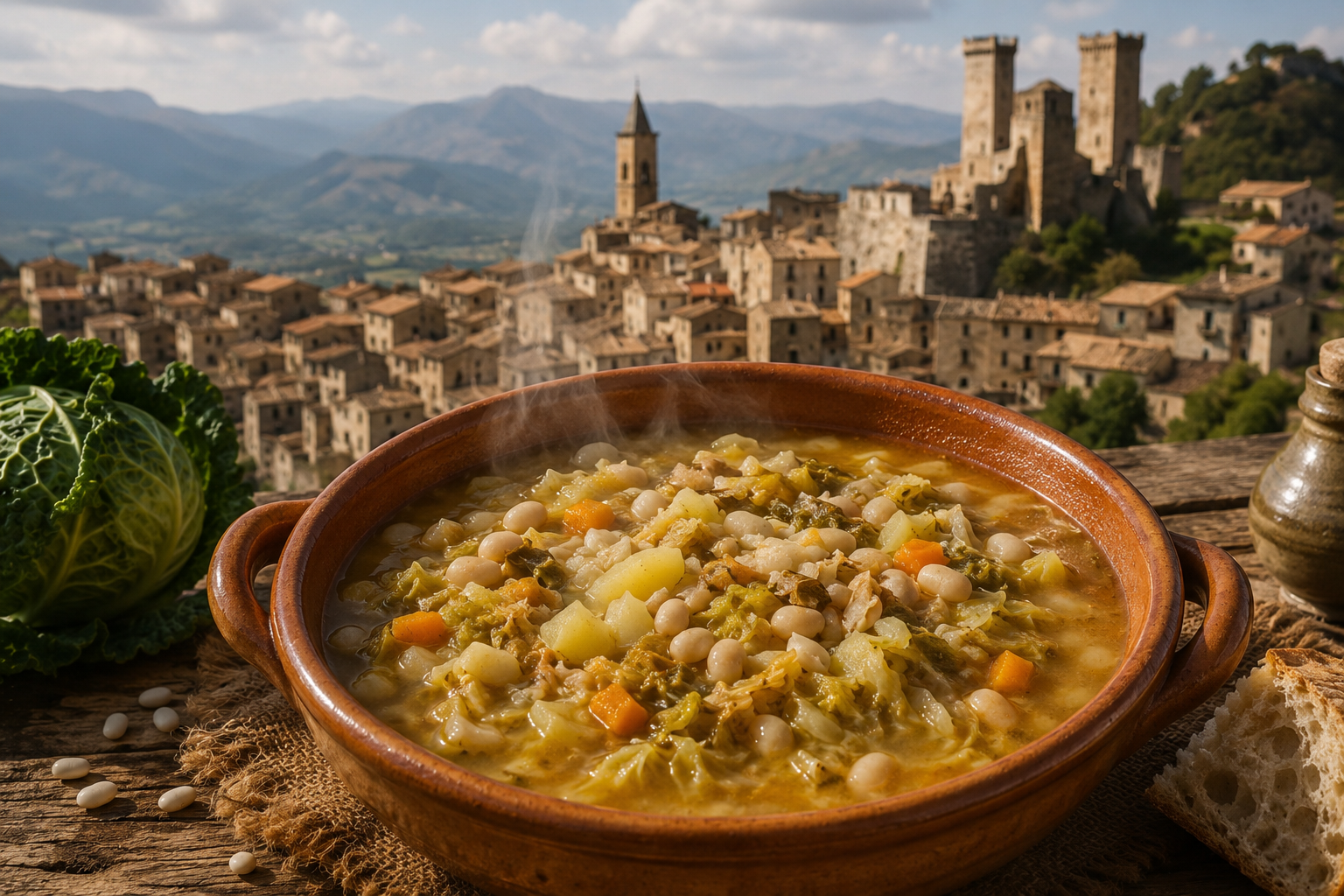 Recipe: Polta di Pacentro, the peasant dish that symbolises the traditions of Abruzzo
In the medieval village of Gromo, nestled in the mountains of the Seriana Valley, Good Friday is not only a time of deep spirituality, but also the day when tradition passes from the church to the table. Here, since ancient times, a single symbolic dish has been eaten: Maiasa. A simple and surprising preparation, it marks the end of Lent and accompanies one of the community’s most intense and evocative rituals.
This truly unique speciality is made from a combination of simple, local ingredients: white and yellow flour, onions, dried figs and, according to some customs, apples. Everything is seasoned with oil and cooked slowly in the oven. Eating Maiasa symbolically announces that the time of deprivation is over. It is a simple but meaningful gesture that links food to the liturgical calendar and the rhythm of rural life.
The Good Friday Procession in Gromo
La Maiasa is inextricably linked to the traditional Good Friday Procession, a deeply evocative ceremony that involves the entire village and culminates in an evening service.
The procession is led by a 16th-century wooden crucifix from the workshop of Pietro Bussolo, followed by the statue of the Dead Christ, the work of Grazioso Fantoni il Vecchio, carried on the shoulders of the village’s thirty-three-year-olds. The procession winds its way along the main street, accompanied by the mournful sound of funeral marches played by the band, between illuminated windows and walls draped in mourning.
Small bonfires made with oil-soaked rags are lit on the surrounding meadows and on the stones of the Serio river, while an ancient wrought-iron artefact depicting the symbols of the Passion is illuminated with snail shells filled with oil. Lights, songs and silence create an intense and almost unreal atmosphere, capable of conveying a profound sense of collective mysticism.
Ingredients
500 g white flour
A handful of yellow flour (to taste)
150 g sugar
400 g dried figs
½ litre milk
25 g brewer’s yeast
Salt to taste
½ glass olive oil or seed oil
2 whole eggs
½ leek
½ onion
Preparation
Gently fry the leek and onion in a little oil, then leave to cool. In a bowl, mix the flour, sugar, milk, eggs and yeast dissolved in a little warm milk until you have a soft dough. After a first rising of about 45 minutes, add the chopped dried figs, oil and sautéed onion and leek.
The dough is then transferred to an oiled cake tin and sprinkled with yellow flour to taste. After a second rising time of another 45 minutes, the Maiasa is baked in a preheated oven at 200°C for about an hour.
When preparing
Maiasa is a ritual dish, linked exclusively to Good Friday. It is not a recipe to be repeated at other times of the year: its value lies precisely in the anticipation and deep connection with this day of transition and reflection.
A dessert that combines ritual, community and memory
Maiasa is not just a gastronomic speciality, but a collective gesture that unites faith, tradition and identity. Preparing and eating it on Good Friday means renewing a silent pact between past and present, between the village of Gromo and its history. An essential food, laden with symbolism, which continues to recount the strength of traditions experienced together.
Ph. Angelo Galani
Do you want to promote your business on e-borghi?
Reach travellers interested in villages, authentic experiences and quality tourism.
Discover how to become a partner