 San Martino di Castrozza
 VIVA! Festival 2026
 Tandem paragliding flights in Tirolo and Merano: the thrill of flying over the Alps
 Recipe: Polta di Pacentro, the peasant dish that symbolises the traditions of Abruzzo
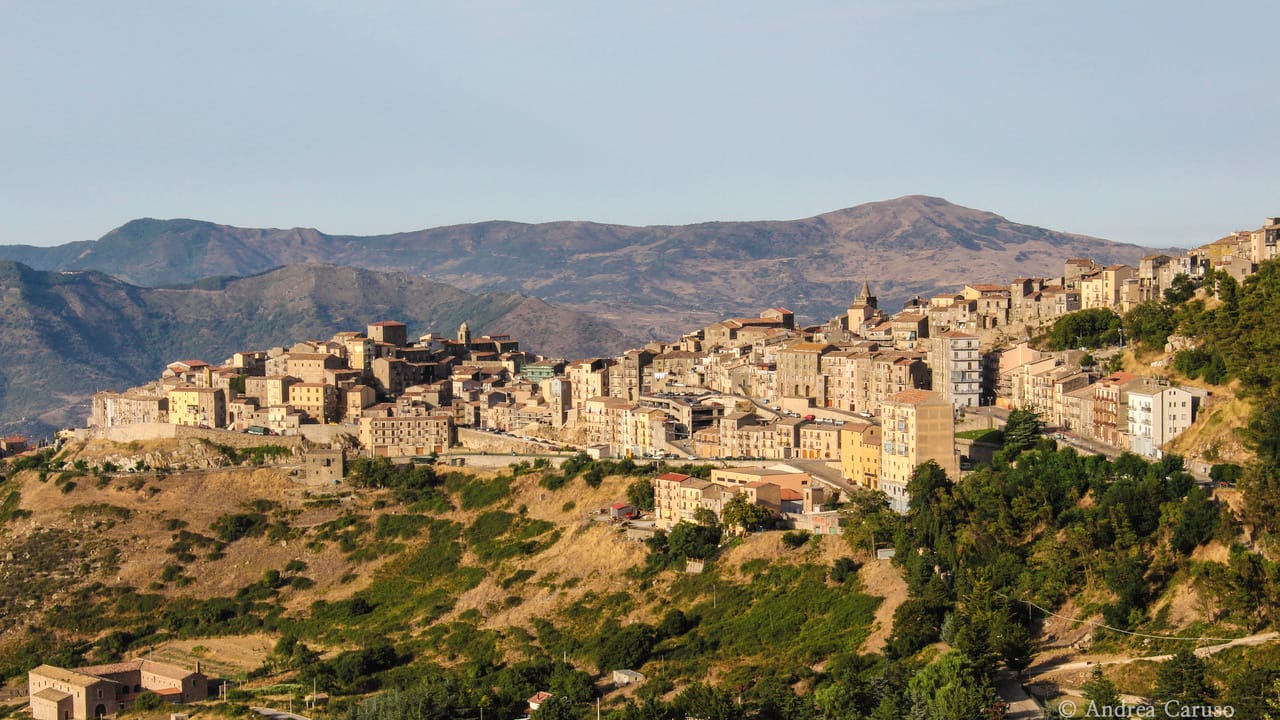
In the heart of the Madonie mountains, among the medieval alleys of Geraci Siculo, Easter smells of freshly whipped icing and biscuits drying in the spring sun. The Agnelli Pasquali, or Easter lambs, known in dialect as Agnìeddru pasquali, are not just simple sweets: they are religious symbols, tales of tradition and small masterpieces of folk art.
In the “In Tavola“ section of e-borghi, we take you on a journey to discover a recipe that combines faith, history and craftsmanship, handed down from generation to generation.
The origins of the Easter Agnìeddru
According to sources from the Municipality of Geraci Siculo, it is an Easter dessert consisting of a biscuit covered with white icing and decorated with delicate floral motifs, symbolising spring rebirth and the very meaning of Easter: the passage from death to life.
Curiously, the shape is not that of a lamb, but of a dove. There are two common interpretations:
-Historical hypothesis: originally, Geraci also prepared almond paste lamb, which was widespread throughout Sicily; when the shape changed, the name remained.
-Religious hypothesis: the name ‘agnello’ (lamb) and the white icing represent the Son, the shape of the dove represents the Holy Spirit, while the decorative flowers symbolise the Father.
The recipe was once kept secret by the cloistered nuns of the village. Legend has it that a nun, forced to leave the monastery for health reasons, began selling them during Easter, thus spreading the secret of their preparation.
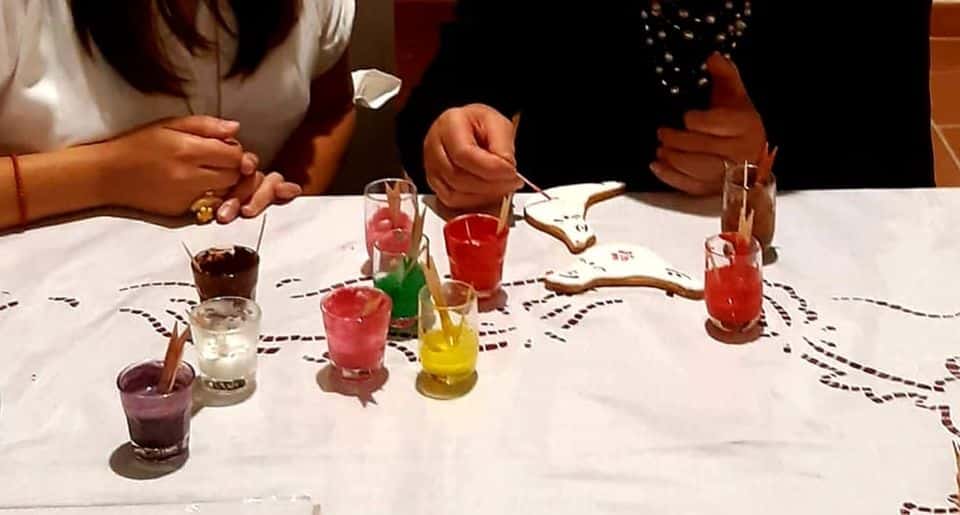
A dessert rich in symbolism
Easter Agnìeddru are not just a traditional dessert, but a true symbolic message that unites faith, community and feelings. The white icing recalls the purity and sacrifice of the Lamb of God, while the shape of the dove evokes the Holy Spirit. The delicate hand-painted floral motifs represent spring and rebirth, recalling the deeper meaning of Easter: the transition to a new life.
But the symbolic value is also intertwined with popular tradition. It was once customary for a fiancé to give his betrothed a large Easter lamb, a gesture full of affection and good wishes. Furthermore, on the evening of Holy Thursday, after the Mass of the Lord’s Supper, this sweet was distributed to the members of the seven confraternities of the village, strengthening the link between religious ritual and community identity.
A biscuit that tells much more than its flavour: it tells the story, spirituality and soul of Geraci Siculo.
Recipe for Easter Lambs from Geraci Siculo
Ingredients for the biscuit
1 kg flour
400 g sugar
4 egg yolks
250 g lard
10 g cream of tartar
15 g bicarbonate of soda
200 ml milk (approximately, to be adjusted according to the dough)
Ingredients for the icing
1 egg white
Icing sugar to taste
Preparation
Mix all the dry ingredients (flour, sugar, cream of tartar and bicarbonate of soda). Add the lard and knead until the mixture resembles breadcrumbs. Add the egg yolks and pour in the milk a little at a time, until you have a compact but soft dough.
Roll out the dough and cut out the typical dove shape. Place on a baking tray lined with baking paper.
Bake in a preheated static oven at 170-180°C for about 20-25 minutes, until the biscuit is golden but not too dark. Leave to cool completely.
Beat the egg white until stiff and gradually add the icing sugar until you obtain a thick, shiny icing. Cover the biscuit and leave to dry.
Using food colouring and a small piping bag, create delicate floral patterns. This is the most artistic stage: each lamb becomes a unique piece.
A work of art to be savoured
The Agnelli Pasquali of Geraci Siculo are proof that, in Italian villages, cuisine is a living culture. A simple biscuit becomes a symbol of faith, love and rebirth.
Tasting them means entering into the authentic spirit of Sicilian Easter, between monastic tradition, popular rituals and spring colours that decorate not only the dessert, but the very identity of the village.
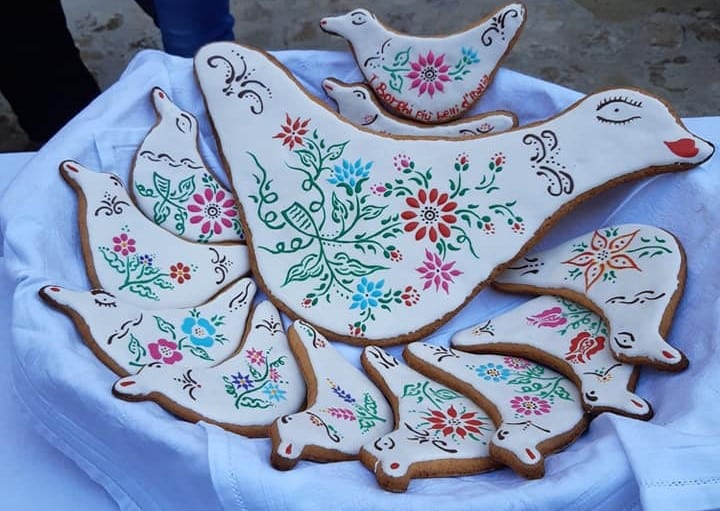
In collaboration with: Comune di Geraci Siculo – Dott.ssa Bartolomea Neglia
Do you want to promote your business on e-borghi?
Reach travellers interested in villages, authentic experiences and quality tourism.
Discover how to become a partner