 San Martino di Castrozza
 VIVA! Festival 2026
 Tandem paragliding flights in Tirolo and Merano: the thrill of flying over the Alps
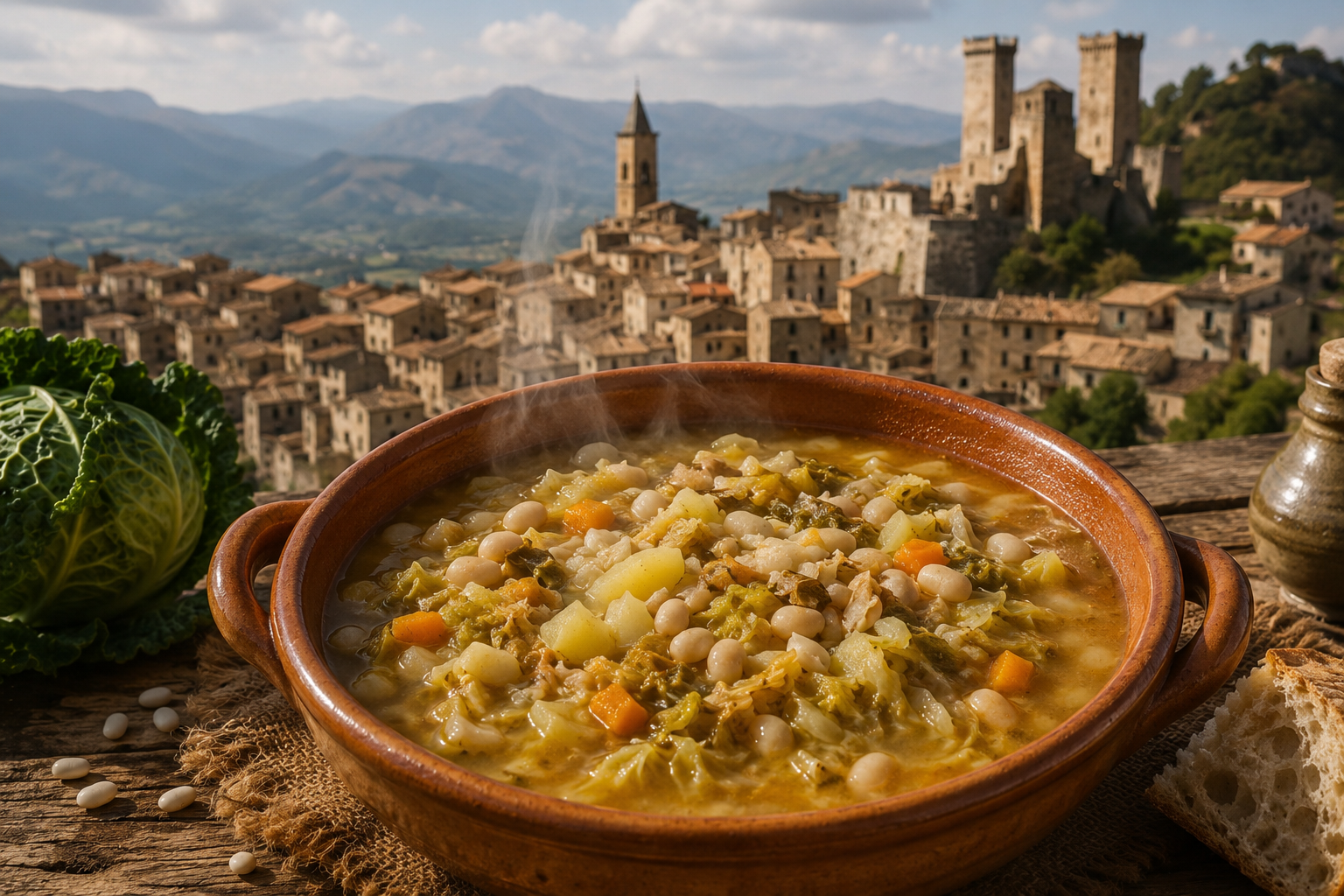 Recipe: Polta di Pacentro, the peasant dish that symbolises the traditions of Abruzzo
Originally a poor man’s dish and now a symbol of identity, pallotte cacio e ova tell the story of rural Molise better than any book. Stale bread, cheese, eggs, and a few herbs: simple ingredients that, in the expert hands of Molise grandmothers, were transformed into a nutritious, flavorful dish deeply rooted in the territory.
In this new installment of the column “Traditional Cooking”, we retrace the origins of pallotte, their local variations, and accompany you step by step in the preparation of the traditional recipe, with a special tribute to the Trivento Festival, which celebrates this cornerstone of Molise cuisine every year.
A humble dish of pastoral origin
Pallotte cacio e ova originated in a context of basic domestic economy, where nothing was wasted. In the peasant and pastoral homes of Molise, meat was a rare luxury, while bread, eggs, and aged cheeses were an accessible source of protein.
Stale bread was salvaged, cheese was grated down to the last piece, and eggs were used to bind everything together, creating “meatless” meatballs that could feed entire families. An anti-waste dish, linked to the rhythms of transhumance and rural life, which over time has become one of the most authentic symbols of regional cuisine.
The Molise variants and comparison with other regions
Over the years, the basic recipe has been enriched with numerous local variations. In Trivento, for example, the balls are traditionally prepared during Carnival with the addition of dry sausage to the mixture and cooked slowly in tomato sauce or broth for an even richer and more intense flavor.
In Termoli and Indiprete, they are known as scescille: they have a more elongated shape and are cooked in a sauce of tomatoes and peppers.
Molise shares this tradition with its neighboring regions. In Abruzzo, the balls are usually fried before being immersed in the sauce, while in Puglia, the bread, with its more compact crumb, makes the dough firmer. Curiously, according to popular tradition, pallotte cacio e ova are even the “ancestors” of Lazio’s carbonara, where bread has been replaced by pasta.
The Trivento Festival: when tradition becomes celebration
Today, pallotte are not only a dish of memory, but also the protagonists of events that celebrate their cultural value. Emblematic is the Sagra delle Pallotte di Trivento (Trivento Pallotte Festival), a highly anticipated event that attracts visitors from all over Molise and neighboring regions.
During the festival, pallotte are prepared according to the traditional Trivento recipe, providing an opportunity for people to meet, socialize, and rediscover their local gastronomic roots. This event demonstrates how simple cuisine can become a shared heritage and a source of local pride.
The traditional recipe for cheese and egg balls
Easy, inexpensive, and irresistible: meatballs are also perfect for making at home. Here is a version inspired by the Molise tradition.
Ingredients (for about 10 balls)
150 g stale bread
200 g grated aged pecorino cheese
3 eggs
150 g dry sausage (optional, Trivento version)
Parsley to taste
A pinch of salt
Extra virgin olive oil
Celery and onion
Tomato sauce to taste
Procedure
Coarsely chop the sausage and finely chop the stale bread. Combine everything in a bowl with the eggs, grated pecorino cheese, parsley, and a pinch of salt, kneading until the mixture is smooth.
With slightly damp hands, shape the mixture into balls and place them on a tray. In a saucepan, sauté the onion and celery in extra virgin olive oil, add the tomato sauce and bring to a boil. Gently place the balls in the sauce, making sure they are completely covered, and simmer for about 45 minutes.
Ready to serve!
Pallotte cacio e ova are not just meatballs: they are a story of ingenuity, memory, and identity. From the humble kitchens of peasant homes to village festivals, this dish continues to unite generations and territories, proving that simplicity can be extraordinarily tasty.
Whether you taste them in Trivento during the festival or prepare them at home following your grandmother’s recipe, one thing is certain: each ball contains a piece of Molise history. Enjoy your meal!
Ph. Federico Catena
Do you want to promote your business on e-borghi?
Reach travellers interested in villages, authentic experiences and quality tourism.
Discover how to become a partner