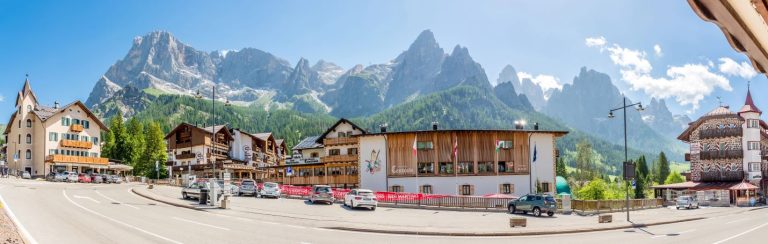
 San Martino di Castrozza
 VIVA! Festival 2026
 Tandem paragliding flights in Tirolo and Merano: the thrill of flying over the Alps
 Recipe: Polta di Pacentro, the peasant dish that symbolises the traditions of Abruzzo
In today’s “Traditional cooking” column, we celebrate one of Sardinia’s most iconic vegetables: the spiny artichoke, a product that embodies thousands of years of history, regional identity, and a cuisine capable of bringing out the authentic flavors of the land. With its strong character and intense aroma, the spiny artichoke is much more than an ingredient: it is an agricultural and cultural narrative that spans centuries.
An artichoke with ancient roots
The artichoke belongs to the Asteraceae family, genus Cynara, species Cynara cardunculus, subspecies Cynara cardunculus var. scolymus. In Sardinia, its name changes depending on the area: Canciofa in Campidano, Cartzofa in Logudoro, Scalciofa in Gallura, and Iscaltzofa in Sassari.
The term Cynara seems to derive from cinus, ash, a reference to ancient fertilization practices, but it also recalls the legend of the maiden Cynara, transformed by Jupiter into an artichoke plant. Scolymus, on the other hand, comes from the Greek and means “pointed,” a clear reference to the thorns that characterize the flower head.
Native to the Mediterranean basin, the artichoke was already known to the Egyptians and Greeks; Theophrastus mentions it in the 4th century BC, while in Roman times Pliny and Columella describe its use in food. Over the centuries, its gastronomic qualities have been complemented by its health benefits, making it increasingly popular.
The spiny artichoke and Sardinia: an agricultural story of identity
The cultivation of artichokes in Sardinia has ancient origins, although initially confined to family gardens. Evidence from the 18th and 19th centuries, such as that provided by Andrea Manca dell’Arca and Vittorio Angius, already tells of a product that was appreciated and a source of income.
The turning point came in the 20th century, when a thorny ecotype capable of early production was identified in the countryside around Bosa. From there, through successive selections, the current Carciofo Spinoso di Sardegna (Sardinian thorny artichoke) was born, which experienced a real commercial boom in the markets of northern Italy in the 1960s and 1970s.
Its name became synonymous with quality, so much so that official protection was necessary to establish its indissoluble link with the territory.
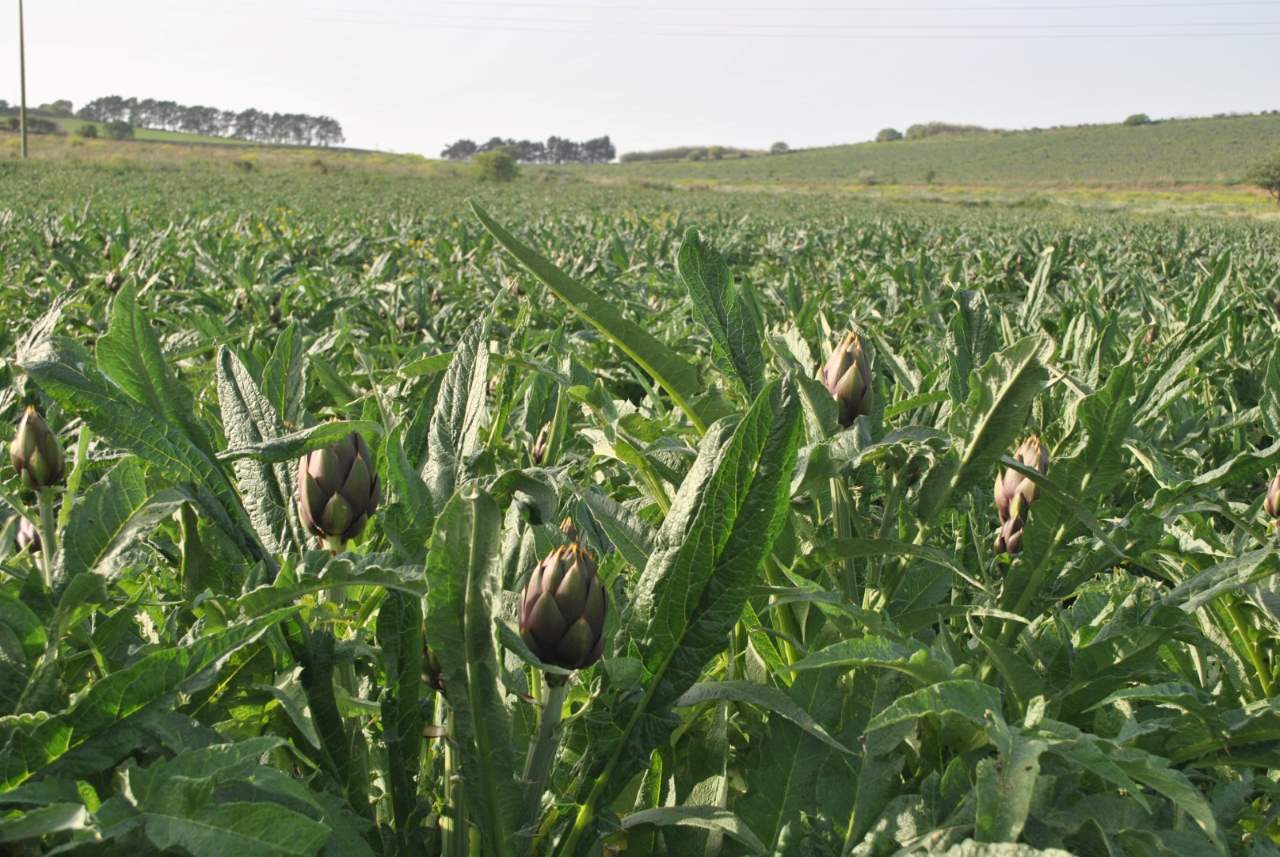
Ph. Consorzio di Tutela del Carciofo Spinoso di Sardegna
Protecting taste: the Consortium and the PDO
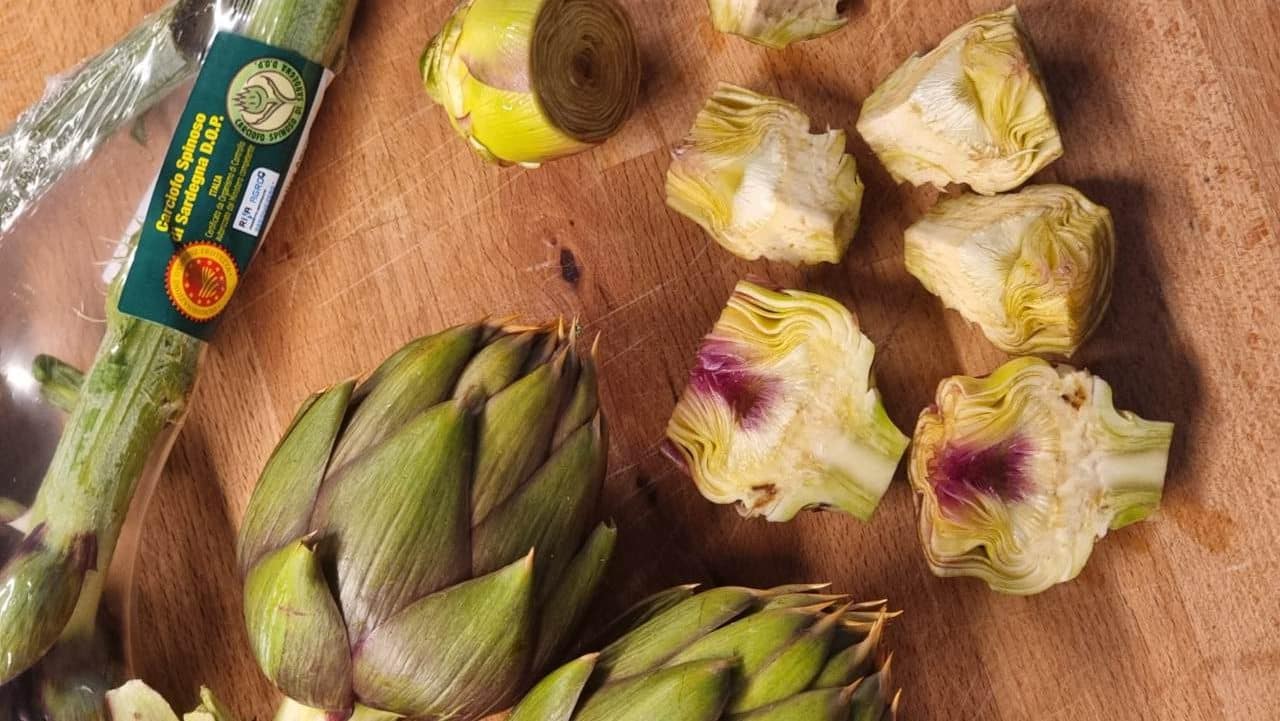
The identity, quality, and origin of the product are guaranteed by the Consortium for the Protection of Sardinian Spiny Artichokes, recognized by the Ministry of Agriculture. The spiny artichoke is in fact the only variety of artichoke with a PDO label, a recognition that certifies that its characteristics are strictly dependent on the Sardinian territory.
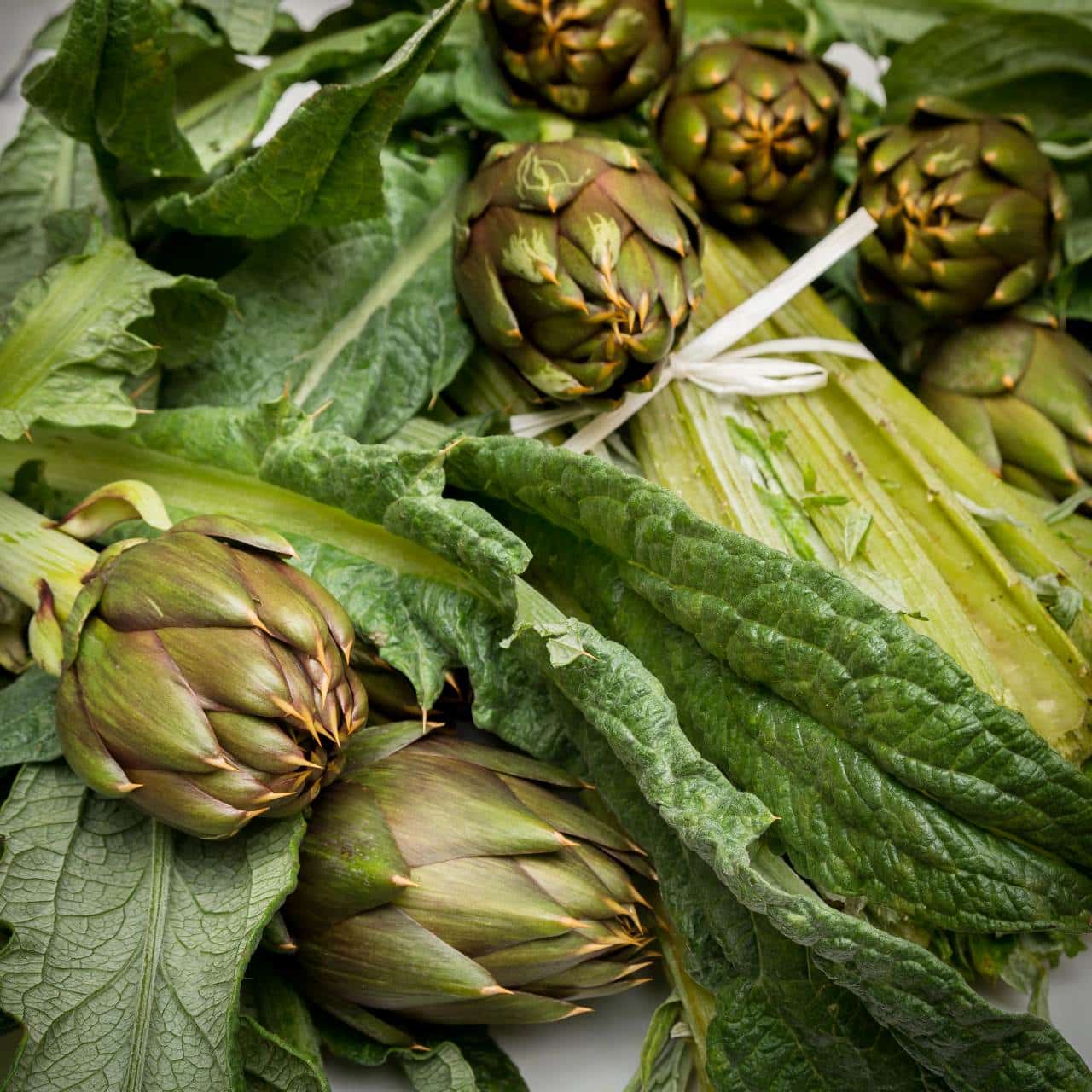
Compact, elongated heads, thorny leaves with purple hues, a tender stem, and a heart that accounts for over 30% of the weight: the organoleptic profile is intense and floral, with a perfect balance between the bitterness of polyphenols and the natural sweetness of carbohydrates. An excellence that arrives on tables from October to May, also recognizable by the official DOP label.
In the kitchen: Sassari-style artichokes
Among the traditional recipes that best showcase this vegetable, carciofi alla sassarese stands out. This dish is typical of the Sassari area but is popular throughout the island. Here, the strong flavor of the spiny artichoke meets the delicacy of potatoes, with a touch of chili pepper adding liveliness.
The preparation is simple but respectful of the raw ingredients: artichokes are trimmed and cut into quarters, browned with garlic, parsley, and extra virgin olive oil, then cooked together with potatoes until they reach a soft and enveloping consistency. To be enjoyed hot or cold, they are a perfect side dish for both meat and fish dishes, embodying the most authentic Sardinian cuisine: few ingredients, distinct flavors, great balance.
A symbol that tells the story of Sardinia
The spiny artichoke of Sardinia is not just an agricultural product, but a symbol of identity that speaks of landscapes, farming, and traditions handed down through the generations. From the earth to the table, through the protection of the Consortium and recipes that enhance its character, this vegetable continues to tell the story of the island in every spiny leaf and every tender heart. A true star of the table, capable of combining history, taste, and territory.
Do you want to promote your business on e-borghi?
Reach travellers interested in villages, authentic experiences and quality tourism.
Discover how to become a partner