 San Martino di Castrozza
 VIVA! Festival 2026
 Tandem paragliding flights in Tirolo and Merano: the thrill of flying over the Alps
 Recipe: Polta di Pacentro, the peasant dish that symbolises the traditions of Abruzzo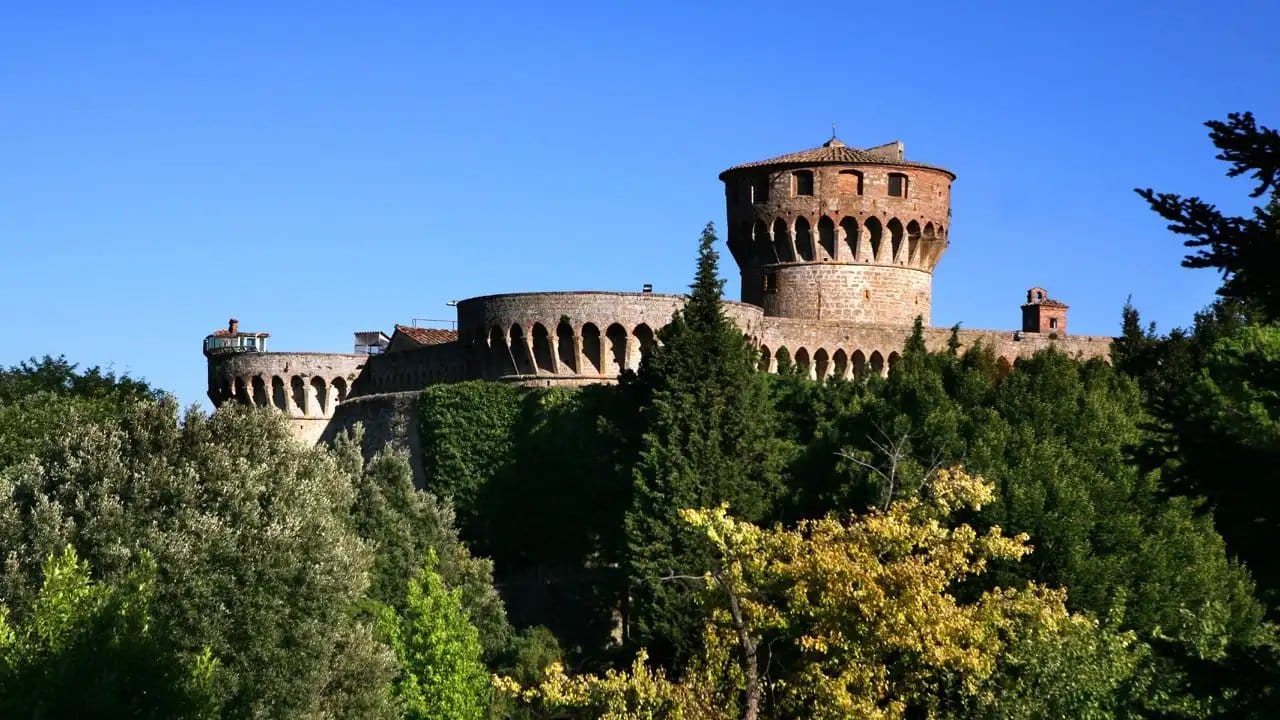
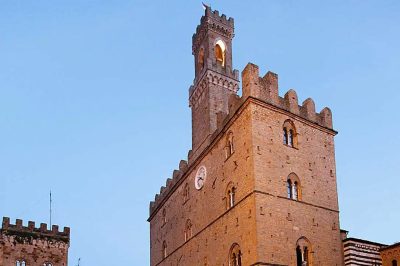
The Medici Fortress of Volterra towers above the city and the Valdicecina, standing as one of the region’s most recognisable landmarks. Its imposing walls tell a story of conquests, political control and military strategy. Unlike many other Tuscan fortifications, in fact, the fortress was not built primarily to defend the city, but to assert Florence’s power over the ancient and proud commune of Volterra.
The fortress was built in 1474 at the behest of the Medici, just two years after Florence’s conquest of the city, which took place at the end of the so-called War of the Alum. The conflict had broken out over control of the precious alum mines in the Volterra area, a vital resource for the textile industry of the time. Once victory was secured, Florence decided to consolidate its rule by building a large military structure capable of deterring any attempt at rebellion.
The present-day fortified complex, however, was built on the foundations of older defensive structures. The original core is represented by the Cassero, a fortification completed in 1292 to protect the area around Porta a Selci. In the 14th century, the Duke of Athens, Gualtieri VI of Brienne, further expanded the defensive system by constructing a new tower connected to the existing castle. In the 15th century, the characteristic defensive spur known as the ‘Scarpa’ was added, designed to withstand artillery fire more effectively.
The fortress now comprises two distinct architectural sections: the Rocca Vecchia, also known as the ‘Femmina’, which preserves the oldest parts of the structure, and the Rocca Nuova, built entirely by the Medici. The latter has a quadrangular layout with imposing cylindrical towers at the corners and the great keep dominating the entire complex. The two fortresses are connected by a double curtain wall which in the past housed the military garrison responsible for guarding the town.
The walls, towers and walkways still retain numerous features of Renaissance military architecture. Particularly striking are the characteristic sloping ramparts, designed to deflect enemy artillery fire, and the corbels that supported the parapets used for vertical fire, allowing soldiers to strike attackers from above.
From the time of its construction, the Medici Fortress also served as a prison. Over the centuries, it held political opponents of the Medici, common criminals and, during the Risorgimento, numerous Italian patriots. This function has remained unchanged to this day: the fortress still houses a prison and is not normally open to the public.
Although not open to the public, the Medici Fortress remains one of Volterra’s most important monuments. Its mighty walls, visible from miles away, recount a pivotal chapter in Tuscan history and bear witness to the city’s transition from municipal independence to the rule of Medici-ruled Florence. Even today, its austere silhouette dominates the landscape of the Valdicecina, a reminder of the strategic and political role that Volterra has played for centuries.