
 San Martino di Castrozza
 Malvasia in Porto 2026
 Tandem paragliding flights in Tirolo and Merano: the thrill of flying over the Alps
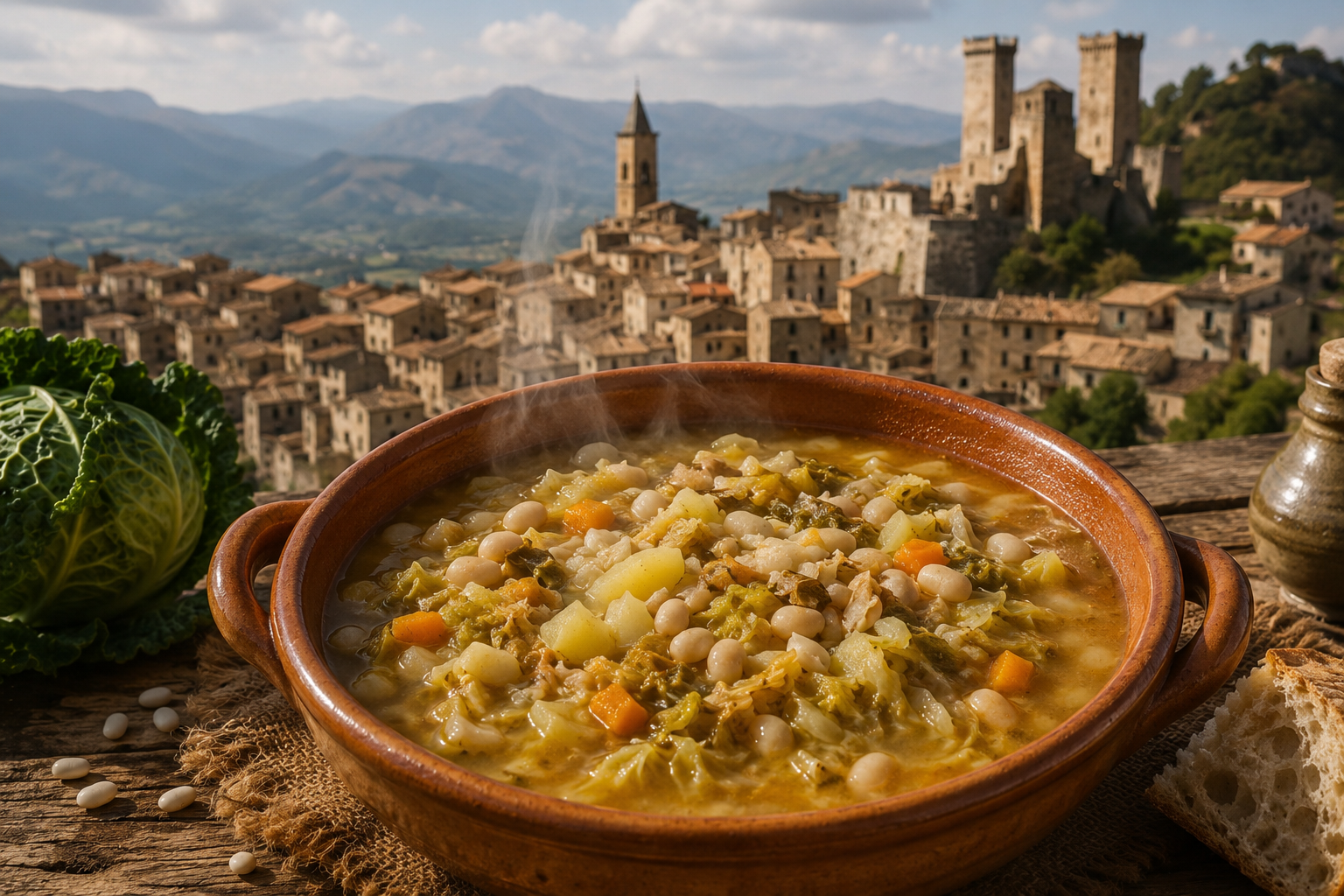 Recipe: Polta di Pacentro, the peasant dish that symbolises the traditions of Abruzzo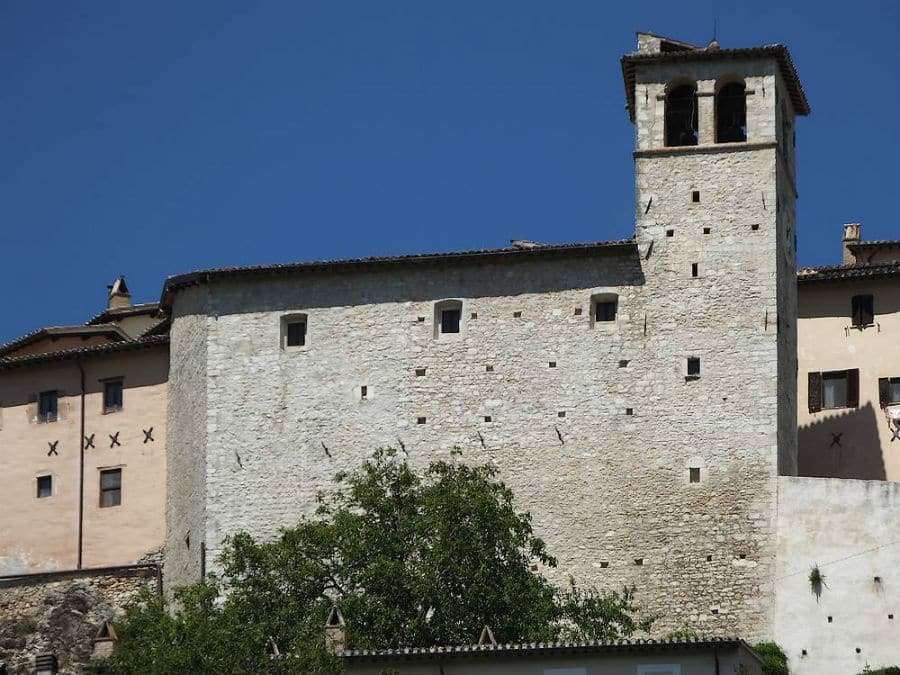
This is a rare example of a ‘hanging’ church built over an ancient covered passageway, of which two entrances are still visible: the first, beneath the present façade and partially obstructed by the modern entrance staircase; the second, on the opposite side and at a lower level, was the entrance to the castle from the village, which is no longer accessible today.
The entrance to Cammoro Castle is marked by a 14th-century stone portal with a coat of arms on the keystone depicting a lily. The bell tower is a reconstruction dating from 1612–13, likely built using materials salvaged from the demolition of a previous tower. The façade has undergone numerous alterations over time, which have altered its original 14th-century appearance.
The single-nave interior retains only two of the four carved, gilded and polychrome wooden altars that stood there some half a century ago, when the ancient high altar was also demolished. At the base of the bell tower there is a 16th-century stone baptistery in the form of a hexagonal temple (the century in which the church became a parish). There is also a wooden tabernacle in the shape of a parallelepiped with corner columns featuring three painted doors (The Pietà and two Angels), likely the work, like many others, of Camillo Angelucci da Mevale (c. 1570). The upper compartment still houses the mechanisms of the weight-driven clock.