 San Martino di Castrozza
 VIVA! Festival 2026
 Tandem paragliding flights in Tirolo and Merano: the thrill of flying over the Alps
 Recipe: Polta di Pacentro, the peasant dish that symbolises the traditions of Abruzzo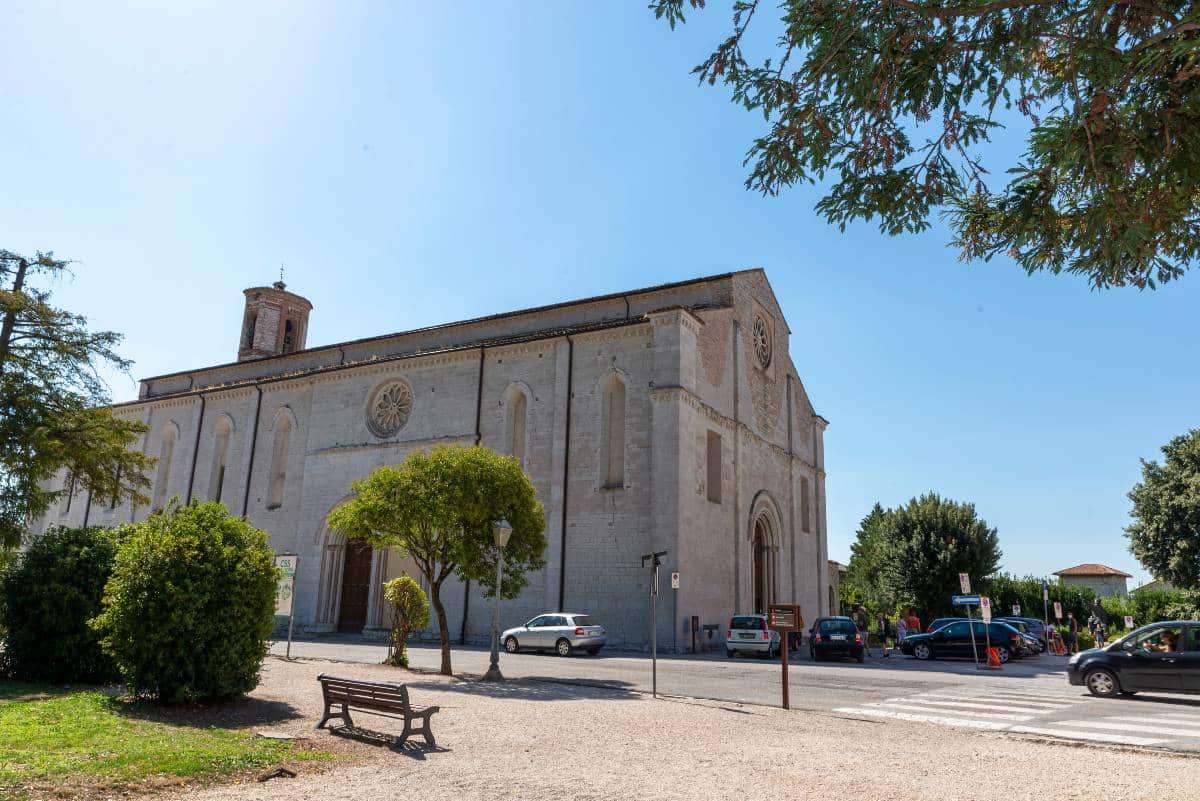
The Church of St. Francis stands in the lower part of Gubbio, on the southern side of Piazza Quaranta Martiri, and is one of the most significant places symbolising the deep bond between the city and St. Francis of Assisi. It is not just a religious building, but a historical and spiritual symbol that tells the story of the beginning of the Franciscan movement and the affection that Gubbio showed to the young Francis at one of the most decisive moments of his life.
The bond between Francis and Gubbio
Even before the church was built, there was a strong relationship between Francis and the city. His father, Pietro di Bernardone, conducted important business here, and the young Francis often visited on business. In Gubbio, he also found sincere friendships, particularly with the Spadalonga family, who were wool and cloth merchants.
When Francis publicly renounced his father’s possessions in 1206-1207, stripping himself naked in the square in Assisi, he sought refuge in Gubbio, in the Spadalonga family home. Here he was welcomed, clothed and supported. According to tradition, it was in this city that he wore the habit for the first time, a sign of the new life he was embracing. He stayed for several months, devoting himself to the poor and lepers at the hospital of San Lazzaro, near the Church of Vittorina, a place also deeply linked to Franciscan memory.
This special relationship prompted the city, a few decades after the saint’s death (he was canonised in 1228), to build a large church and convent in his honour, on the land that had belonged to the Spadalonga family.
The exterior: simplicity and harmony
La chiesa era già officiata nel 1256, come attestato da una bolla di papa Alessandro IV. La costruzione inglobò parte dell’antico fondaco e della casa degli Spadalonga, come dimostrano i rinvenimenti archeologici nella sagrestia.
La facciata, rimasta incompiuta, colpisce per la sua essenzialità. È dominata da un elegante portale romanico-gotico e da un rosone; prevalgono linee semplici, in piena coerenza con lo spirito francescano. Sul lato orientale si sviluppano tre absidi poligonali, slanciate e scandite da monofore. Una di esse, nel XV secolo, divenne basamento del campanile ottagonale, che ancora oggi si innalza accanto all’edificio.
L’insieme architettonico trasmette un senso di equilibrio e misura: una monumentalità discreta, capace di unire forza e semplicità.
The interior: art between the 13th and 15th centuries
The interior is divided into three naves by fourteen tall columns with octagonal bases. The current cross vaults date back to the 18th-century renovations, which partially altered the original appearance and resulted in the loss of many frescoes along the side walls.
However, the apses still preserve pictorial cycles of extraordinary importance. The central apse features Christ blessing on the throne with saints and angels, a work from the second half of the 13th century attributed to a follower of the Master of St Francis.
The right apse contains some of the most significant scenes from the saint’s life: the spoliation and the dream of Innocent III. These representations, which predate Giotto’s famous cycle in the Upper Basilica of Assisi, testify to the precocity and importance of the Gubbio iconographic programme.
The left apse, dedicated to the Virgin Mary, houses the Marian Stories created in the early 15th century by Ottaviano Nelli: seventeen panels narrating episodes from the apocryphal Gospels and the life of Mary, among the most precious works of international Gothic art in Umbria.
The convent and cloister
Next to the church stands the Franciscan monastery, built around the mid-13th century and known as the “monastery of a hundred cells” due to its size. The cloister houses 14th- and 15th-century frescoes, including a Crucifixion and a painting depicting the Transfer of the House of Nazareth to Loreto, now detached and located in the chapter house.
The ancient seal of the Franciscan custody is also kept here, depicting St. Francis with the wolf, a symbol of one of the most famous episodes in the tradition of Gubbio.
Saint Francis and the wolf
The miracle of the taming of the wolf of Gubbio, recounted in the Fioretti, is one of the best-known stories associated with the saint. According to tradition, between 1220 and 1222, Francis pacified a ferocious wolf that was terrorising the city, striking a pact between the animal and the inhabitants. This episode, in addition to its symbolic value, reinforces the deep bond between Gubbio and the poor man of Assisi.
Even today, in the first days of September, a pilgrimage on foot connects Assisi to Gubbio, evoking the journey made by Francis when he sought refuge with his friends in Gubbio.
The Church of St. Francis in Gubbio is not just a medieval monument: it is a place where history, art and spirituality are inextricably intertwined. Here, one can sense the transition from Francis the man to Francis the saint, from the fragility of a young man searching for meaning to the strength of a choice that would change the world.