 Passignano sul Trasimeno
 Festival of Flags
 Tandem paragliding flights in Tirolo and Merano: the thrill of flying over the Alps
 Recipe: Cippillato, Trivento’s iconic sweet treat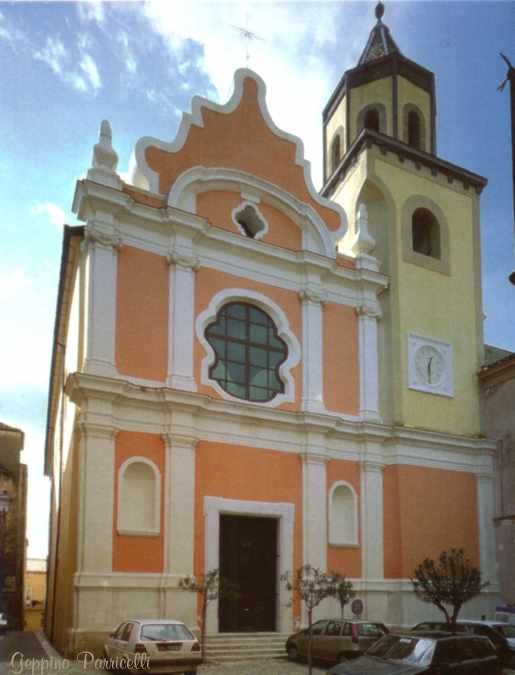
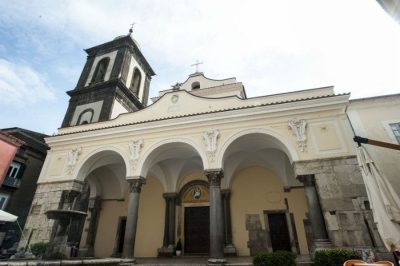
The Church and Convent of San Francesco, situated in Sant’Agata de’ Goti, form one of the most important and evocative religious complexes in the village. The settlement of the Friars Minor Conventual dates back to 1267, but its current appearance is the result of an 18th-century reorganisation that gave the entire complex a Baroque character.
The church features a striking Baroque façade flanked by a bell tower with a clock and a majolica spire, which has recently been restored. The interiors also reflect the Baroque style, enhanced by a fine wooden coffered ceiling decorated in gold and blue, recreating the effect of a starry sky. At the centre stands a painting from 1650 depicting Saint Francis in ecstasy.
Of great historical value is the tomb of Count Ludovico Artus, dating from 1370, situated immediately to the left of the counter-façade. The sarcophagus, surmounted by a Gothic arch, features a relief of the deceased and refined decoration depicting sacred scenes and figures of saints.
The interior houses numerous works of art: these include the 1702 panel painting of the Annunciation and the 1703 cycle of frescoes depicting biblical scenes by Corrado Giaquinto, as well as the large canvas depicting St Francis receiving the stigmata, located in the apse. The side altars are dedicated to various devotions, including the Pietà, St Catherine and Our Lady of Grace.
The floor, made of bricks and majolica tiles, is the work of the ceramist Giuseppe Massa (18th century), whilst the choir, the pulpit and the choir loft were crafted between the late 18th and early 19th centuries by the carpenter Alessandro Massa.
The convent also preserves elements of great interest, such as the cloister accessible through the 1747 portal, at the centre of which lies the mouth of the cistern. The blind single-lancet windows visible in the structure bear witness to the building’s Gothic origins. Following the suppression of 1809, the convent became municipal property and today hosts cultural events, concerts and gatherings.
Taken as a whole, the San Francesco complex represents a fascinating interweaving of styles and eras, where Gothic and Baroque elements coexist harmoniously, recounting centuries of the religious, artistic and social history of Sant’Agata de’ Goti.