 San Martino di Castrozza
 Malvasia in Porto 2026
 Tandem paragliding flights in Tirolo and Merano: the thrill of flying over the Alps
 Recipe: Polta di Pacentro, the peasant dish that symbolises the traditions of Abruzzo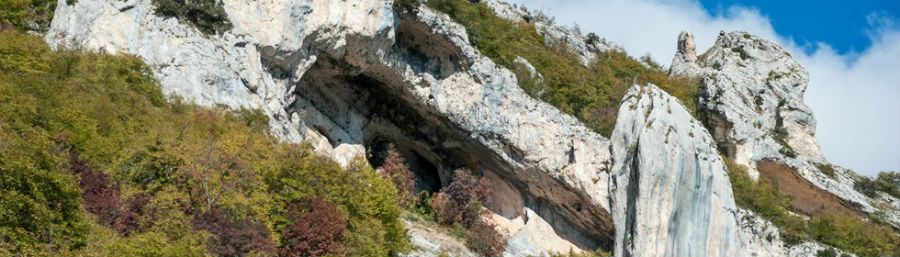
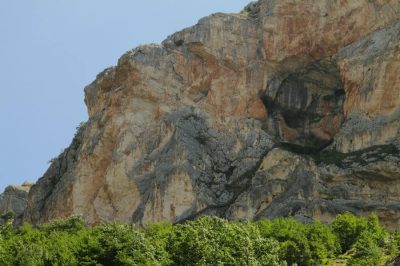
The Grotto of Sant’Angelo, together with the adjoining Hermitage of Sant’Angelo, is one of the most mysterious and fascinating places in the Majella, nestled amongst the rugged mountains of the Lama dei Peligni area. Situated at an altitude of around 1,300 metres, this ancient rock-hewn hermitage overlooks the Sangro Valley, set against a backdrop of great natural and spiritual beauty.
The hermitage stands within a natural cave carved into the limestone rock, in an isolated and difficult-to-reach location, a feature which over the centuries has made it an ideal place for ascetic and contemplative life. Access is via a steep and rugged path leading up to the ancient staircase carved directly into the stone. Next to the entrance, a small holy water font, also carved into the rock, is still preserved, bearing witness to the site’s long history of religious use.
The origins of the sanctuary are lost in time. Certain features of the cave likely encouraged, perhaps as early as the Lombard period, the establishment of a place dedicated to St Michael the Archangel, a figure greatly venerated by the Lombards following their conversion to Christianity. According to tradition, the monastery was subsequently built by Robert of Salle, whilst the actual hermitage of Sant’Angelo is said to have been constructed in the 13th century.
The first reliable historical record dates back to 1447, when the priory of Sant’Angelo is mentioned in documents relating to the census of households in the Sangro Valley. In the past, the cave was divided into several rooms: a small, flat entrance hall probably used for the hermits’ daily life, a cell carved into the rock, and masonry structures that once enclosed the front of the refuge.
Today, few but evocative traces of the ancient monastic complex remain. Among these is a small wooden shrine, near which there were once paintings depicting Sant’Angelo, Saint Benedict and Pietro da Morrone, which have sadly disappeared. Inside the cave there is also a basin where water was collected from a spring that still nourishes mosses and vegetation today, helping to create a damp and silent atmosphere of great charm.
The Grotto of Sant’Angelo is one of the many hidden spiritual sites of the Majella, a mountain that has always been linked to the hermitic tradition of Abruzzo. Here, unspoilt nature, silence and religious memory merge in an austere and deeply evocative setting, still capable today of conveying the sense of isolation and contemplation sought by the ancient hermits.