 San Martino di Castrozza
 Malvasia in Porto 2026
 Tandem paragliding flights in Tirolo and Merano: the thrill of flying over the Alps
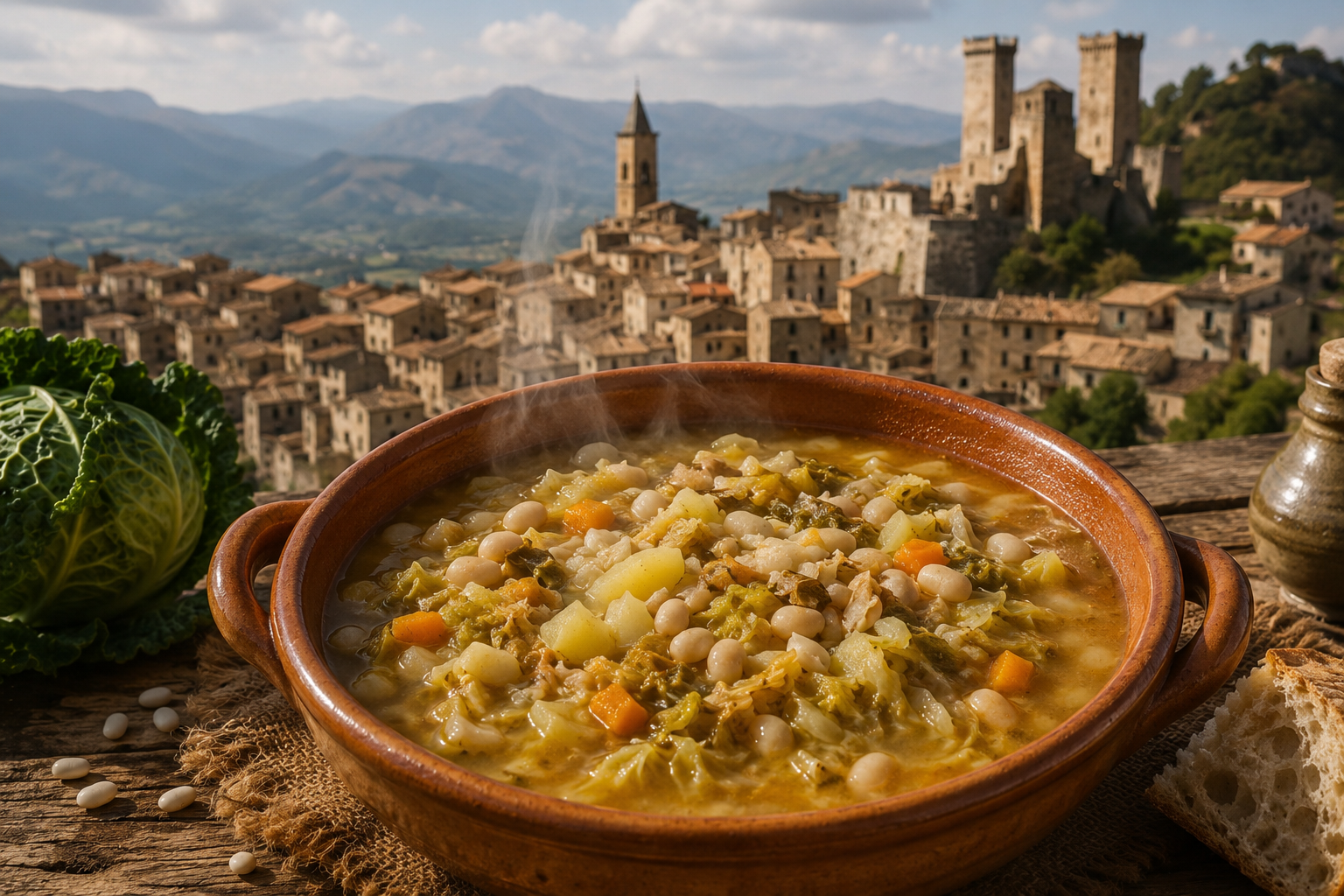 Recipe: Polta di Pacentro, the peasant dish that symbolises the traditions of Abruzzo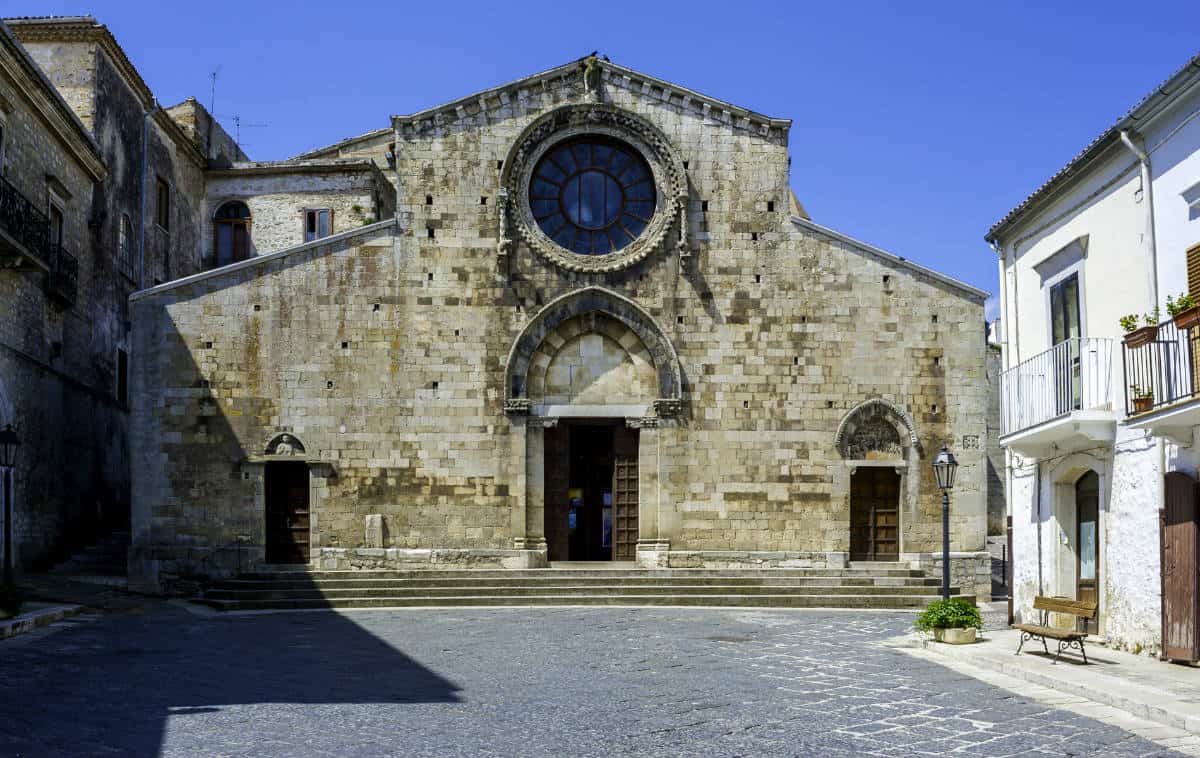
In the heart of Bovino’s historic centre stands the Co-Cathedral of Santa Maria Assunta, a building that combines simplicity with grandeur, representing one of the most significant examples of Apulian Romanesque architecture with Byzantine influences. The façade, attributed to the Gallic architect Zano, was constructed in 1231 on the commission of Bishop Pietro I and is distinguished by the elegance of its decorative elements.
The main entrance is framed by piers supporting corbels carved with floral motifs, above which rises a broad pointed archway adorned with a refined palmette frieze. The side portal also echoes the same decorative style, featuring a pointed arch embellished with small leaves carved into the stone. At the top of the façade stands a unique sculpture depicting an ox with severed horns, a symbolic element that dominates the entire façade.
The interior follows a Latin cross plan, with the central nave wider than the side aisles and a raised chancel. The granite columns, probably originating from Roman buildings, vary in height: to compensate for these differences, bases and capitals of various styles were used, often reused, creating an architectural ensemble rich in historical resonance. Among the oldest elements is the baptismal font, fashioned from a large Roman mortarium resting on an inverted Ionic capital.
One unusual feature of the cathedral is the absence of a proper apse: the end wall is in fact occupied by the organ pipes, which create a unique visual effect. From the transept, one enters the so-called ‘Cappellone’ of St Mark, a space that was originally independent, featuring a monumental portal with a carved lunette depicting St Mark of Aecae wearing a mitre and holding a crosier, flanked by two deacons.
This sacred space, built in 1197 according to a later inscription, is closely linked to the devotion to Saint Mark of Eca, whose relics arrived in Bovino over the centuries, helping to strengthen his cult as the city’s patron saint.
The cathedral also played an important historical role as the burial place of the diocese’s bishops, housing monumental tombs that bear witness to the prestige of the local ecclesiastical institution.
The Co-Cathedral of Santa Maria Assunta is today one of Bovino’s most important symbols, a place where art, history and spirituality intertwine, recounting the town’s profound identity through the centuries.