 San Martino di Castrozza
 VIVA! Festival 2026
 Tandem paragliding flights in Tirolo and Merano: the thrill of flying over the Alps
 Recipe: Polta di Pacentro, the peasant dish that symbolises the traditions of Abruzzo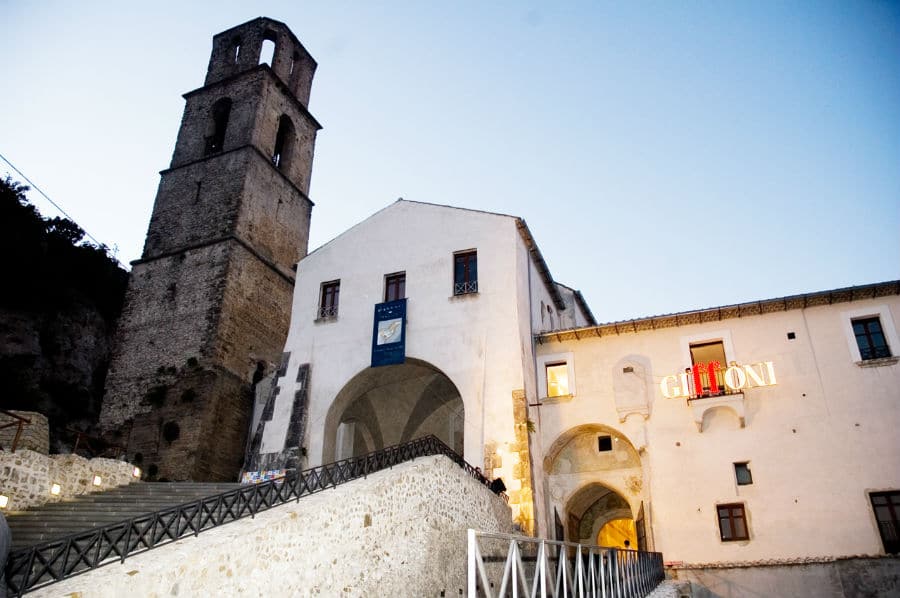
At the foot of Terravecchia, in the historic heart of Giffoni Valle Piana, stands the 14th-century Convent of San Francesco, one of the area’s most significant complexes from an artistic and cultural perspective. The building is a perfect example of Gothic-Franciscan architecture, characterised by clean lines and a harmonious structure that unfolds over two levels around an elegant ogival cloister.
The convent houses a rich cycle of frescoes reflecting the characteristics of Giotto’s style, making it a site of great interest for art history. The lunettes of the portico feature a series of scenes from the life of St Francis of Assisi, whilst on the first floor one can admire fragments of a 15th-century depiction of Christ taken down from the Cross. At the entrance, two 17th-century paintings placed opposite one another offer iconographic glimpses linked to the local area, whilst on the first floor a fresco from 1560 depicts the Resurrection of Christ, helping to complete the complex’s artistic journey.
Adjacent to the cloister, on the north side, stands the church, a single-nave structure with a transept and apse, once dedicated to the Holy Thorn, a relic venerated for some four centuries. Its presence made the convent an important centre of devotion until 1806, when the Napoleonic suppressions led to the closure of monastic orders and the cessation of religious services. Today, the relic is housed in the Church of the Santissima Annunziata.
The interior of the church is also adorned with frescoes of great value, depicting episodes from the life of Christ and sacred subjects. Among the most significant works is a 14th-century fresco depicting Saint Francis Enthroned, a testament to the centrality of Franciscan worship within the complex.
The bell tower, built of piperno stone, also catches the eye; with its square plan and forms reminiscent of the Romanesque style, it is an architectural feature that lends further character to the entire complex.
Today, the Convent of St Francis stands as a true symbol of Giffoni Valle Piana, capable of recounting, through its architecture and frescoes, centuries of history, spirituality and culture in the heart of Campania.