
 San Martino di Castrozza
 Amici del Ponte Festival 2026
 Tandem paragliding flights in Tirolo and Merano: the thrill of flying over the Alps
 Recipe: Polta di Pacentro, the peasant dish that symbolises the traditions of Abruzzo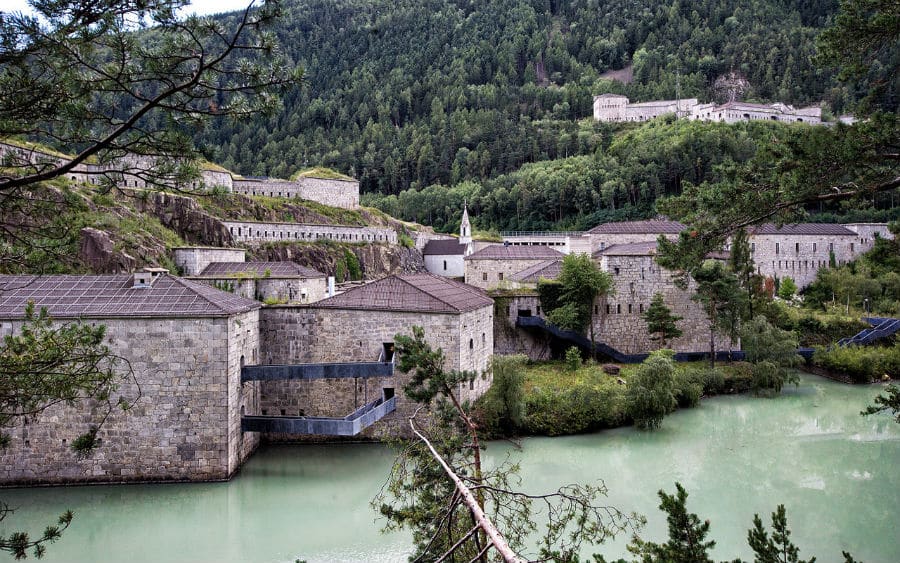
Fortress of Fortezza is one of the most imposing fortifications in the Alps and a true masterpiece of 19th-century Austrian military engineering. Located in Fortezza, in a strategic position between the Isarco Valley and the Puster Valley, the complex was built between 1833 and 1838 to defend one of the Habsburg Empire’s most important transport routes: the Brenner Pass.
The fortress, known in German as Festung Franzensfeste, was commissioned by the Austrian Empire during a period marked by the Napoleonic Wars and tensions along the Alpine borders. The choice of location was suggested by Archduke John of Austria, a man with a deep knowledge of the area and fully aware of the strategic importance of this narrow mountain pass.
The fort was designed as a virtually impregnable structure, built to be ‘bomb-proof’ thanks to techniques that were innovative for the time. Despite its extraordinary grandeur and defensive power, the fortress was never involved in actual warfare, eventually becoming a gigantic military citadel used primarily as a depot and barracks.
The entire complex covers an area of approximately 65,000 square metres and is divided into three large, independent fortified sections: the Lower Fort, the Middle Fort and the Upper Fort, also known as the Citadel. The various sections were designed to be able to withstand a siege independently and were connected by corridors, tunnels and a long covered staircase carved into the mountainside.
Particularly striking is the internal staircase connecting the lower fort with the upper part of the fortress: over 450 steps protected by a vaulted tunnel that climbs up the mountainside. The upper levels housed the ammunition, whilst the barracks and the garrison’s quarters were located on the lower levels.
The construction required enormous logistical and human effort. Thousands of labourers, craftsmen and soldiers worked simultaneously on the site, using granite, limestone, bricks and lime sourced from the surrounding valleys. The village of Fortezza sprang up right around the construction site, developing thanks to the workers involved in the project.
Throughout the 20th century, the fort continued to be used as a military structure and storage facility until the early 2000s. Today, following a major architectural restoration that has won international acclaim, Fortress of Fortezza has become one of South Tyrol’s most important cultural hubs.
Its vast halls, underground corridors and casemates host permanent and temporary exhibitions dedicated to the history of the region, the memory of the Alpine wars and contemporary art. Today, the fort stands as a meeting point between past and present, where the grandeur of military architecture engages with culture, memory and the Alpine landscape.