 San Martino di Castrozza
 Malvasia in Porto 2026
 Tandem paragliding flights in Tirolo and Merano: the thrill of flying over the Alps
 Recipe: Polta di Pacentro, the peasant dish that symbolises the traditions of Abruzzo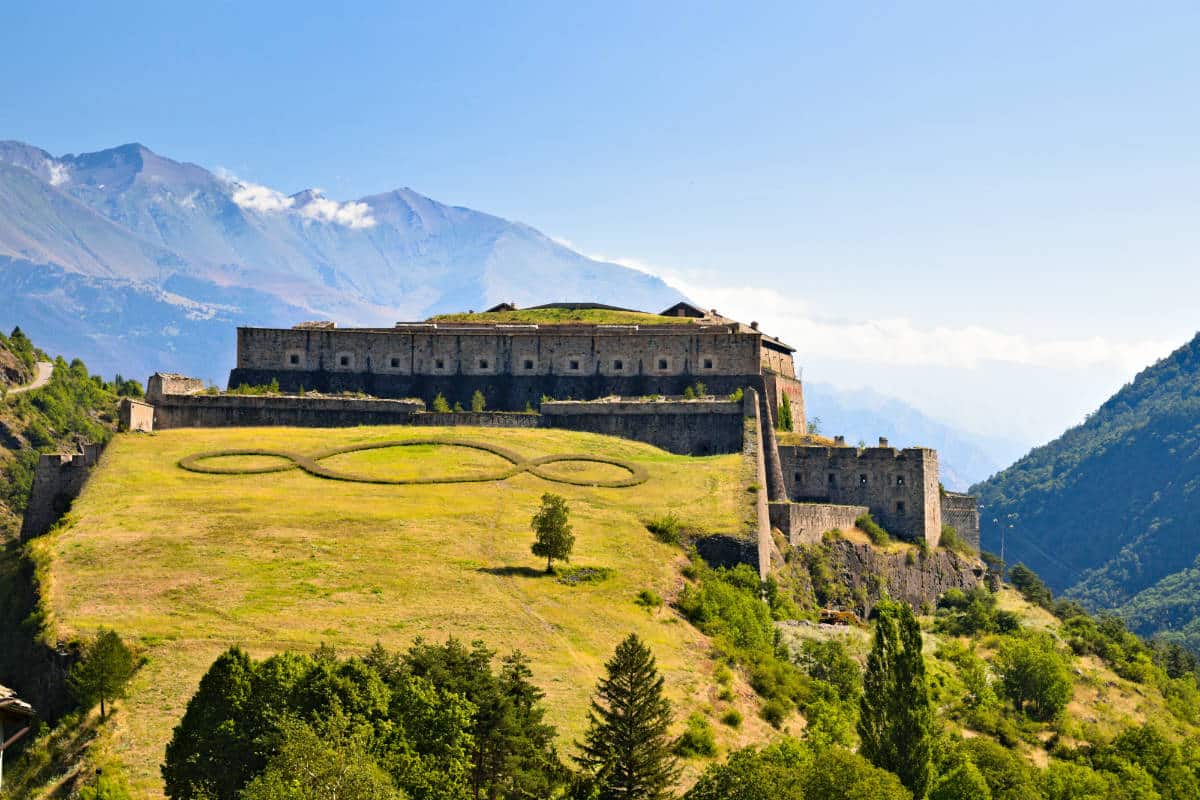
The Fort of Exilles, an imposing bastion overlooking the Susa Valley, is one of the oldest and most fascinating monuments in Piedmont, a guardian of centuries of history and legends.
Origins and strategic function
Its origins are not entirely certain: the earliest mentions date from the 7th century, but as early as 1155 it existed as an articulated structure. In 1339 it is described as a rare example of a “road castle”: a quadrangular construction, equipped with towers, internal roads and storehouses, surrounded by several circles of walls. Its location was strategic: in fact, the fort rises to guard the Montgenèvre Pass, a fundamental communication route between Piedmont and Provence. For this reason it was disputed for centuries between the French and Savoy, amid wars, alliances and changes of power.
From castle to bastion fortress
In the 16th century, in the midst of religious and political contrasts, the fort was at the center of struggles between Catholics and Reformed. In the early seventeenth century, the medieval structure was transformed into a modern bastioned fortress, capable of withstanding the new artillery. It was during this period, between 1681 and 1687, that the fort hosted one of its most mysterious guests: the Iron Mask, a famous prisoner whose identity remains shrouded in mystery.
Savoy transformations
With the Treaty of Utrecht in 1713, which assigned the Susa Valley to the Savoy, it became necessary to reverse the defensive front toward France. In the first decades of the 18th century, under the direction of military engineers Bertola and De Willencourt, the fortress was renovated and made even more powerful. In the middle of the century further interventions strengthened its defensive autonomy, with independent and self-sufficient corps.
Razed to the ground by the French in 1796, the fort was rebuilt between 1818 and 1829 at the behest of King Victor Emmanuel I of Sardinia, designed by Giovanni Antonio Rana and Francesco Olivero. It has maintained its present appearance ever since.
The decline and abandonment
Disarmed in 1915, the fort was used as a depot and recruiting center until World War II, only to be finally abandoned on September 8, 1943.
Recovery and revival
It was not until 1978 that the Piedmont Region acquired ownership, initiating a lengthy conservative restoration project. After decades of work, the Fort of Exilles was reopened to the public on July 8, 2000, with two permanent museum areas and spaces set aside for cultural and musical events that enliven the Valsusine summers.
What to see
A visit to the Fort is a true journey through time:
- The drawbridge and access ramps, which introduce the Knight’s Courtyard.
- The serpentine defensive pincers, designed to hinder assaults.
- The Great Well, a vital source of water for the garrison.
- The dorms and officers’ rooms, bare but evocative.
- The Military Dovecote, where carrier pigeons were bred.
- The prisons, a dark place that evokes the stories of famous and common inmates.
The Fort today
Today the Fort of Exilles is not only a museum site but also an exceptional stage: concerts, shows and historical re-enactments bring its walls back to life. A place where alpine nature, history and culture come together in one evocative experience.