 San Martino di Castrozza
 VIVA! Festival 2026
 Tandem paragliding flights in Tirolo and Merano: the thrill of flying over the Alps
 Recipe: Polta di Pacentro, the peasant dish that symbolises the traditions of Abruzzo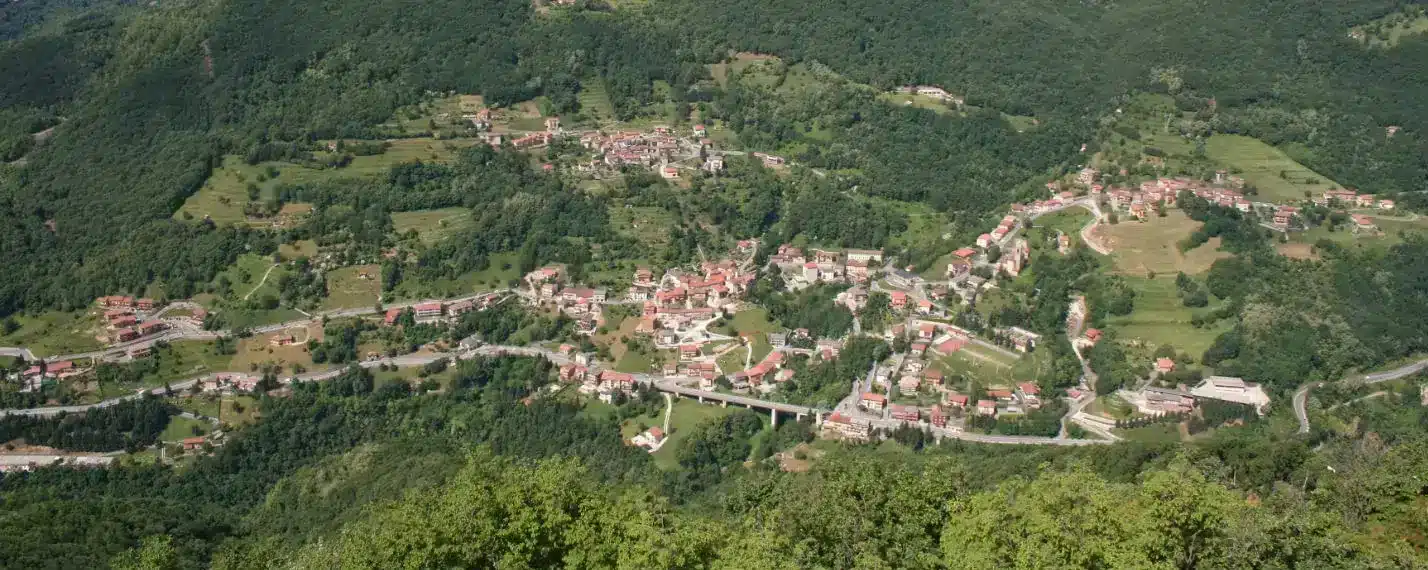
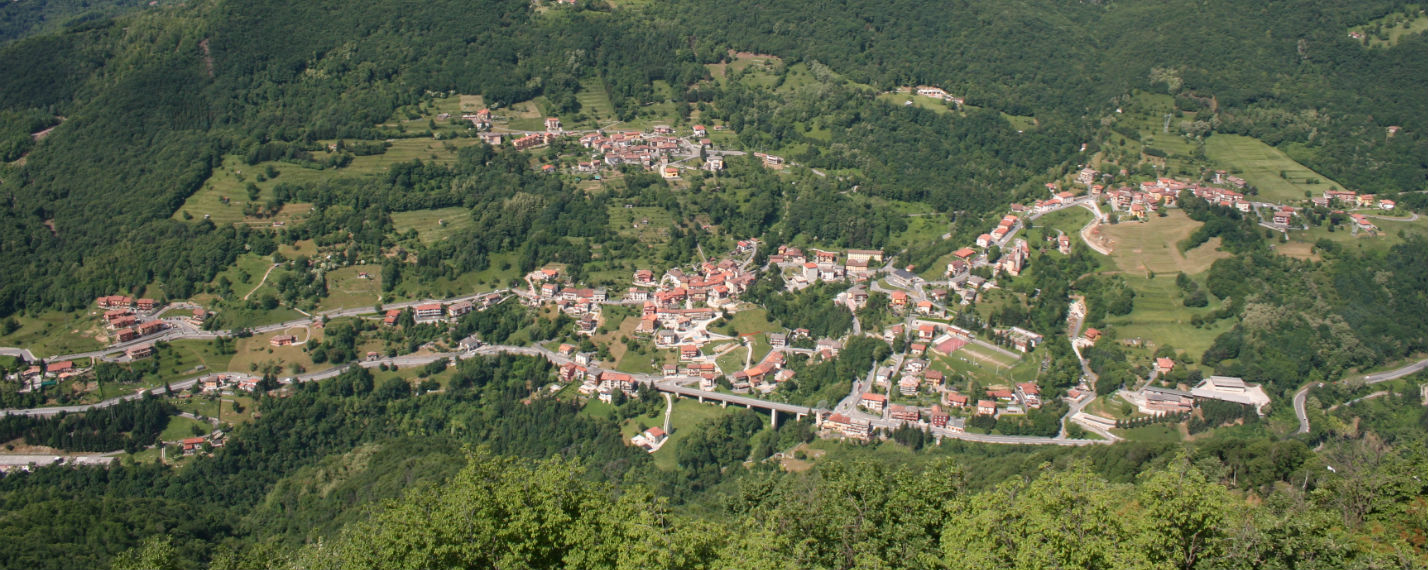
Strozza is the first town at the mouth of the Imagna valley, placed as a “sentinel” of the naturalistic treasures that the valley contains. In the inhabited center you can still admire numerous buildings dating back to medieval times, including some fortified houses complete with a tower, but also very characteristic districts and rustic buildings.
Photo gallery



The first signs of human presence in the Strozza area date back to Roman times, as documented by the discovery of an aqueduct on the slopes of Mount Albenza, located on the right side of the village. However, the origins of the village, located at the entrance to the valley, date back to approximately the year 1000. Here, the mountains converge considerably, creating a bottleneck, before opening up into the Imagna Valley. The name Strozza derives from this geographical feature. It was in the Middle Ages that the village began to take on a distinct appearance, although there had been a few scattered settlements in previous centuries.
During that period, bloody clashes between the Guelphs and Ghibellines raged in the area, much more so than in other areas of the Bergamo province. This was due to the fact that the Imagna Valley, predominantly Guelph, was in stark contrast to the neighbouring Brembilla Valley, which sided with the Ghibellines. Castles and fortifications sprang up throughout the area, and Strozza was no exception: there are some remains of buildings, including tower houses and fortified settlements dating back to between the 12th and 13th centuries. The first clashes saw the Guelphs prevail, so much so that the Ghibellines asked for help from the Visconti, lords of Milan. The latter managed to defeat their opponents and extend their rule over the valleys in the area. The way in which they raged against their opponents led the Guelphs to seek revenge several times with further killings.
After continuous reversals, the Visconti and Ghibellines finally gained definitive control, even though Guelph resentment often led to popular uprisings, which were frequently suppressed by force of arms. The situation was reversed when the area came under the control of the Republic of Venice which, in contrast to the Visconti, supported the Guelphs. This was followed by the destruction of Ghibelline possessions, while Guelph villages, including Strozza, received favourable treatment.
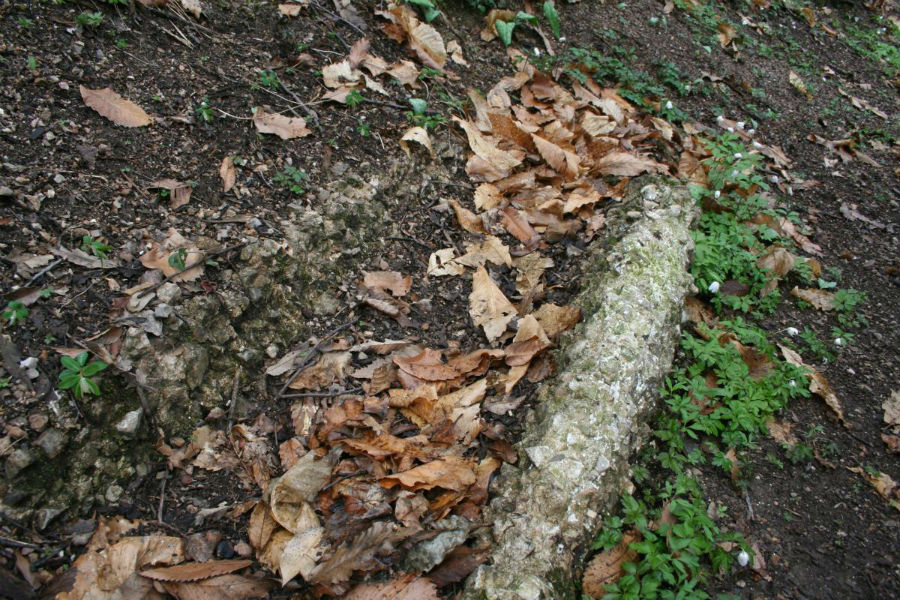
The first village at the entrance to the Imagna Valley, Strozza stands guard over the natural treasures that the valley holds. On the left bank, the steep slope rises steeply to the summit of Mount Ubione. There are no settlements here, and the slope is covered by dense forest, at the base of which winds the “Sentiero naturalistico del Chitò” (Chitò Nature Trail), which starts in Clanezzo, runs along a disused hydroelectric canal and then crosses the Imagna near Strozza via a daring stone canal bridge. The recently reconfigured trail runs through areas of particular naturalistic interest with encrusted springs and concretion deposits, which are rare in the Bergamo area. The right bank is steeper and allows for the settlement of Strozza with the districts of Cà Brozzo and Cà Campo and the hamlet of Amagno.
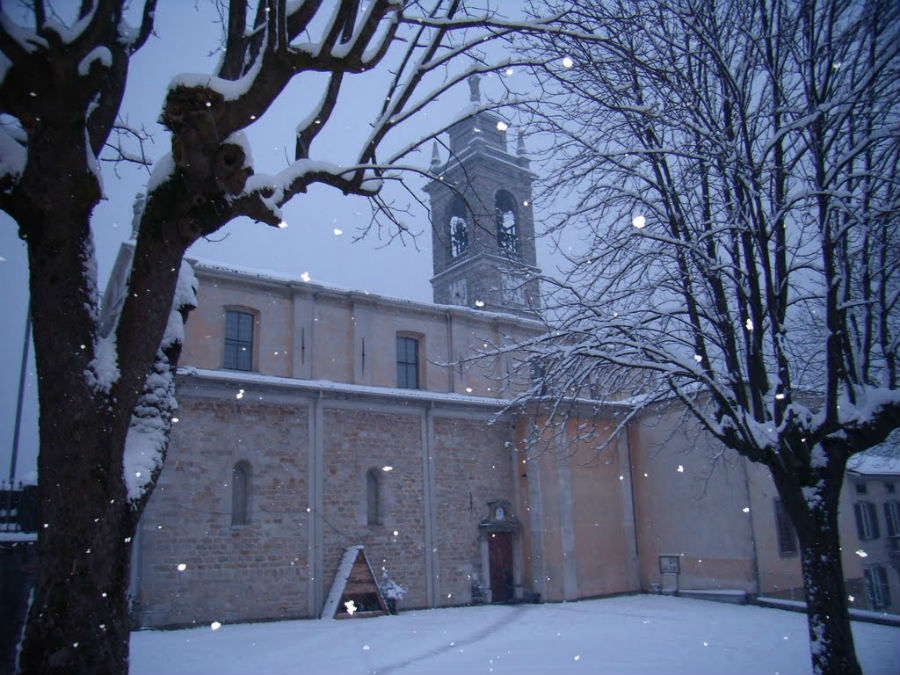
In the town centre, you can still admire numerous buildings dating back to medieval times, including some fortified houses complete with towers, as well as very characteristic districts and rustic-style buildings. The parish church of Sant’Andrea is of great religious importance. Already mentioned in documents dating back to the 14th century, it was partially rebuilt in the 18th century and further renovated in the following centuries. During one of these renovations, the masonry of the southern wall of the 15th-century structure emerged, with two single-lancet windows with trefoil arches. Inside, the gilded inlays on the high altar and choir are noteworthy, as is the organ made by the Serassi family.
Cà Campo
A handful of houses huddle around the small chapel of San Pantaleone, almost as if to defend it. Cà Campo was never isolated thanks to the network of mule tracks that form a crossroads here. People passed through it to enter and leave the valley. Visiting Cà Campo and strolling through its narrow lanes is well worth the short time spent there. The charm is strong: intact medieval corners, stone portals, wooden balconies and tower houses; finally, the 15th-century oratory of San Pantaleone, a valuable work of faith in the cult of the statue of San Momà, the patron saint of nursing mothers without milk.
Amagno
Walking along the main road, which runs alongside the parish church, after a few hundred metres you enter the medieval village of Amagno. At the entrance, you are greeted by the austere façade of the Gavazzeni de Gaiboni family home. Continuing on, you reach the small square with the wash house, dominated by the east façade of the Cà del Maestro with its entrance door and the large window of the new Valdimagnino Museum. To discover the most evocative part of Amagno, you need to go up the entrance hall, which passes under the Cà del Maestro: here is the true heart of the village, a small square paved with piea, overlooked by historic buildings such as an austere and elegant medieval tower house and the 17th-century Cà del Maestro. This small palace, restored to its original architecture, features a portico with two large arches on the ground floor, supported by a mighty central pillar, and a small loggia on the first floor, supported by a series of elegant columns.
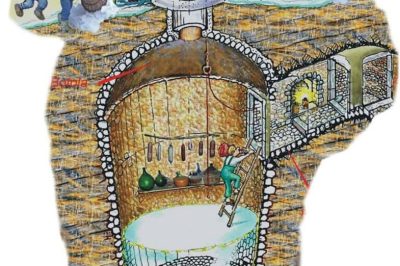
At the bottom of the square, protected by a railing, is the trapdoor to the ice house. Before La Ghiacciaia was opened to the public, few knew the secret hidden by the Cà del Maestro: an underground passageway led from one of the rooms on the street side to a cylindrical vaulted chamber used as an ice house. It is a splendid structure that has remained intact, despite being a couple of centuries old, or perhaps even older. The opening with the trapdoor is visible on the vault, through which snow was brought in during the winter months. The Valdimagnino Museum occupies the two rooms in front of the tunnel that leads to the ice house. After a recent restoration, it now houses many objects from Valdimagnino’s past. The fireplace with a ‘nicia’ (niche) is very interesting. It was discovered after the demolition of a wall that had been hiding it. Sitting in the niche is Pierino, the ghost of the ice house! During visits to the Valdimagnino Museum by pupils from some primary schools in the Imagna Valley, the children became fond of this particular grandfather, who takes care of the objects kept in the museum.
Village of Strozza
Municipality of Strozza
Province of Bergamo
Lombardy Region
Population: 1.080 strozzensi
Altitude centre: 378 m s.l.m.
the Municipality is part:
Comunità Montana Valle Imagna
Municipality
Via Roma 7 – Tel. +39 035 863180
BY CAR
- Along the highway the closest exits to the center of Strozza are:
– Bergamo exit (A4 Turin-Trieste)
– Dalmine exit (A4 Turin-Trieste)
– Treviglio exit (A35 Brescia-Milan)
– Caravaggio exit (A35 Brescia-Milan)
ON THE TRAIN
- Ponte S.Pietro station
- Cisano Caprino Bergamasco station
BY PLANE
- Bergamo Orio al Serio airport
- Milan Linate Airport
- Milan-Malpensa airport
What to see in Strozza
Discover what to see in Strozza among monuments, scenic views, museums, churches and symbolic places of the village. A useful selection to plan your visit and explore the area.
Continue the journey
Strozza is only one of the treasures of the area. Use the interactive map to discover what to visit nearby, how far the other villages are and which experiences you can enjoy along the route.
Explore the area