
 Passignano sul Trasimeno
 Montefeltro
 Terronia Summer Camp
 Tandem paragliding flights in Tirolo and Merano: the thrill of flying over the Alps
 Upper Val di Non: A melting pot of cultures between South Tyrol and Trentino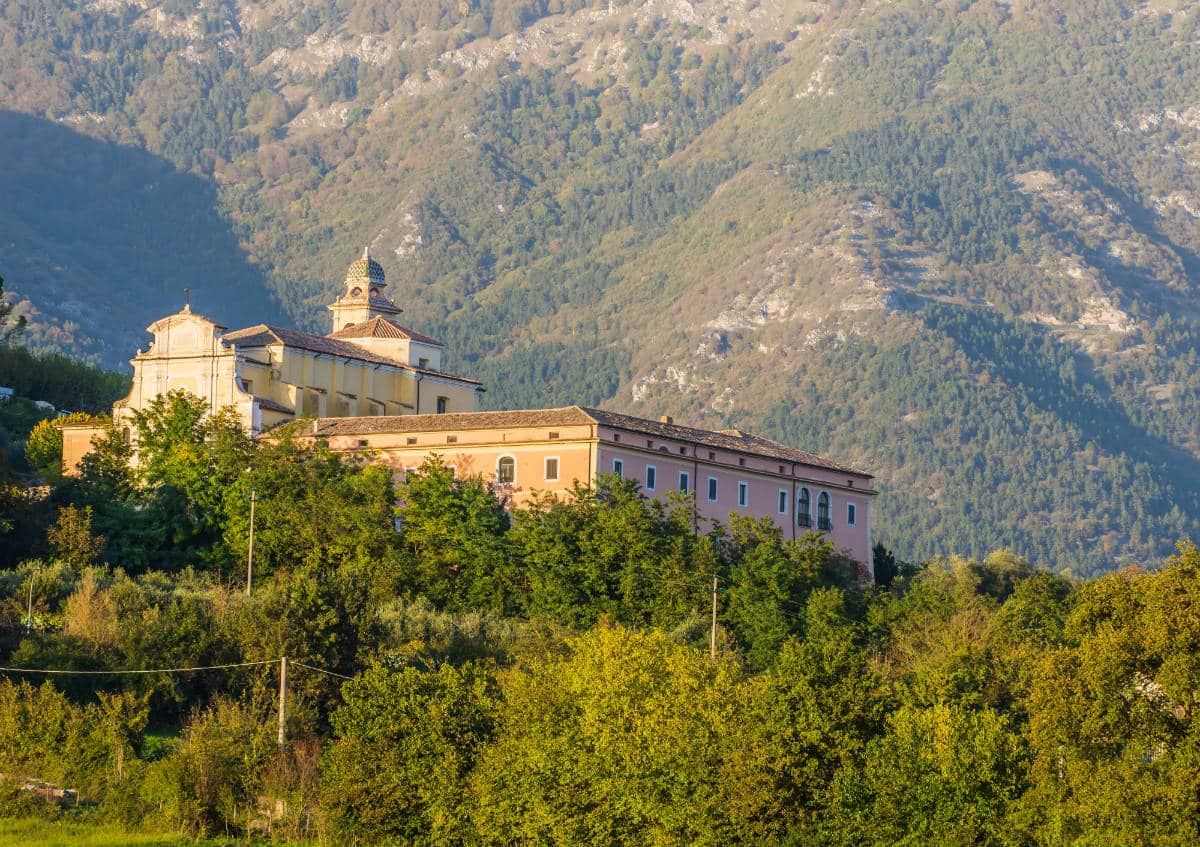
Situated on the slopes of the hill on which Alvito stands, the Convent of San Nicola is one of the most important religious complexes in the area, combining history, art and the transformations it has undergone over the centuries. Built in 1516 by the Conventual Franciscans outside the town walls, the convent occupies a panoramic position overlooking the plain below, a typical choice for monastic settlements of the time.
During the 18th century, the complex was extended and restored, taking on a more elaborate appearance in keeping with the late Roman Baroque style. A decisive role in this phase was played by Clement XIV, who stayed here for a time as master of novices and helped to enrich the convent with numerous works of art. Precisely because of its importance and wealth, the complex was nicknamed ‘the little Montecassino’.
From an architectural point of view, the convent features elements characteristic of the so-called ‘barocchetto’ style, with elegant yet not overly monumental forms. Among the most interesting features are the cloister, now restored, and the large entrance door, which leads into the interior.
The adjoining church, situated on the northern side of the building, has a single nave and retains a sober design, consistent with Franciscan spirituality. In the past, it also housed two paintings attributed to Raphael, bearing witness to the artistic prestige achieved by the complex throughout its history.
With the transformations of the modern era, the convent has changed its function: today it is largely publicly owned and houses an agricultural technical college, whilst the church belongs to the Fund for Places of Worship, continuing to serve its religious purpose.
The Convent of San Nicola thus remains a symbolic site in Alvito, capable of recounting, through architecture and memory, the transition from a spiritual centre to a space of education and culture.