 San Martino di Castrozza
 Malvasia in Porto 2026
 Tandem paragliding flights in Tirolo and Merano: the thrill of flying over the Alps
 Recipe: Polta di Pacentro, the peasant dish that symbolises the traditions of Abruzzo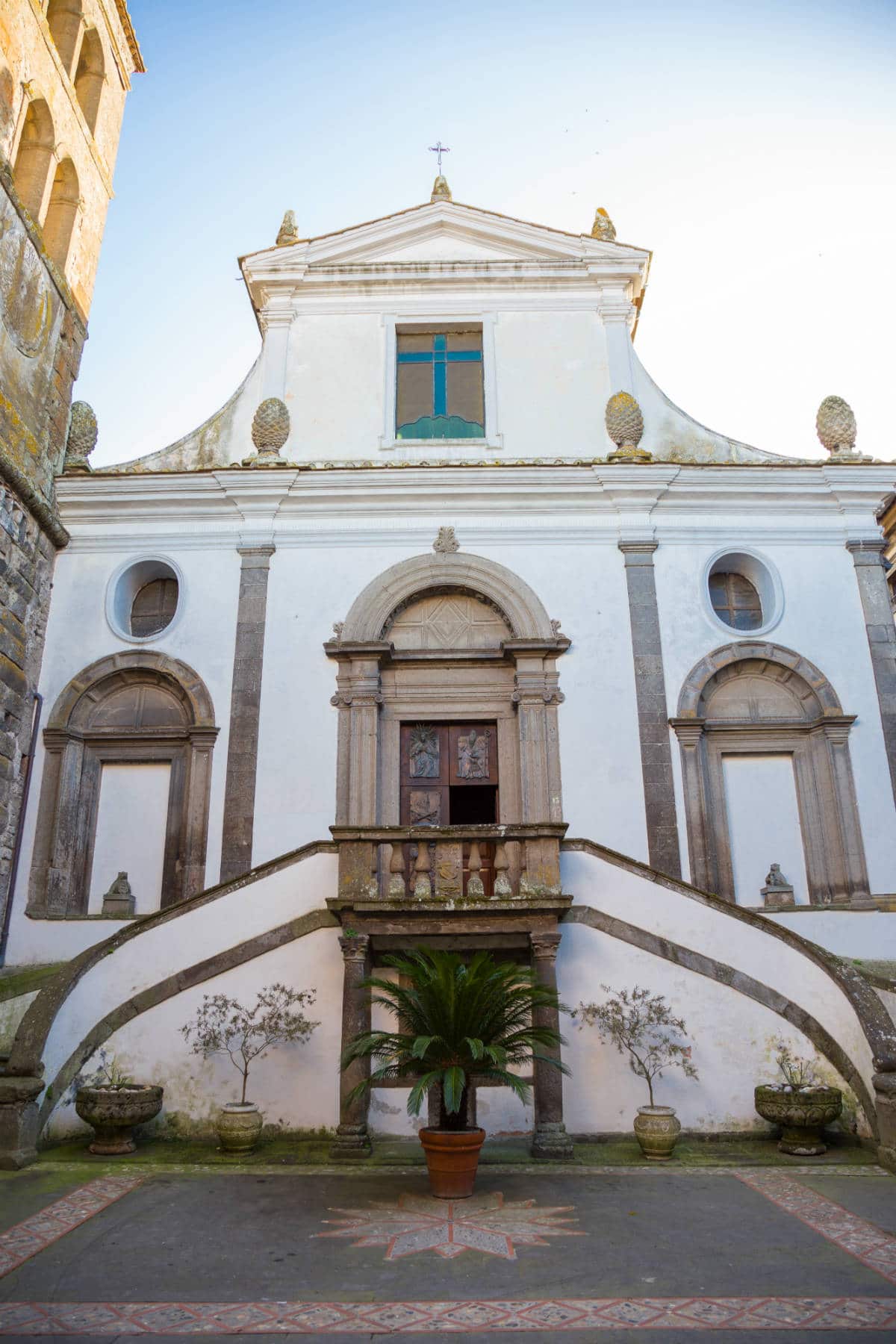
Bomarzo Cathedral, dedicated to Our Lady of the Assumption, is one of the main historical and religious monuments in this village in Lazio, a repository of a history that dates back to the early centuries of Christianity. According to some sources, as early as the 6th century, Bomarzo had its own bishop and chapter, a sign of the religious importance the town had attained in very ancient times. The historian Flavio Biondo even speculated that Pope Sabinian, who reigned between 604 and 606, was originally from Bomarzo.
The original building is thought to have had early Christian features and likely underwent alterations during the Carolingian period, as evidenced by certain architectural elements dating from the 7th to the 9th centuries. The cathedral’s current appearance, however, dates mainly from the 15th century and shows clear references to the Renaissance style inspired by Filippo Brunelleschi.
During the 16th century, the cathedral was further embellished. In 1546, beneath the loggia of the façade, a well intended for the local community was constructed; commissioned by Giovanni Corrado Orsini and completed by Giulia Farnese during the absence of her husband Pier Francesco Orsini, known as Vicino, who was engaged in the military campaigns of Charles V.
The cathedral’s façade is striking for the understated elegance of its lines and, above all, for the spectacular horseshoe-shaped staircase built in the 17th century, which lends the building a powerful monumental presence. The portals, decorated with classical motifs, and the second-order gables complete the harmonious whole.
Inside, the church comprises three naves separated by sturdy peperino pillars, creating an austere yet refined atmosphere. Above the high altar hangs a precious altarpiece depicting Saint Anselm symbolically offering the town of Bomarzo to the Virgin of the Assumption. Beneath the altar lie the saint’s relics.
Next to the cathedral stands the bell tower, built on a structure of Etruscan origin and also constructed from blocks of peperino stone. Of particular interest is the presence of a Roman tombstone depicting a man and a woman, incorporated into the tower’s masonry and bearing witness to the many layers of history that characterise this place.
The Cathedral of Bomarzo thus represents a perfect fusion of spirituality, history and architecture, recounting through its stones centuries of religious and civil events in the Tuscia region.