 Tuoro sul Trasimeno
 Montefeltro
 Francigena Film Festival
 Guided tour and tasting
 Stress-free Elba: practical tips for planning the perfect holiday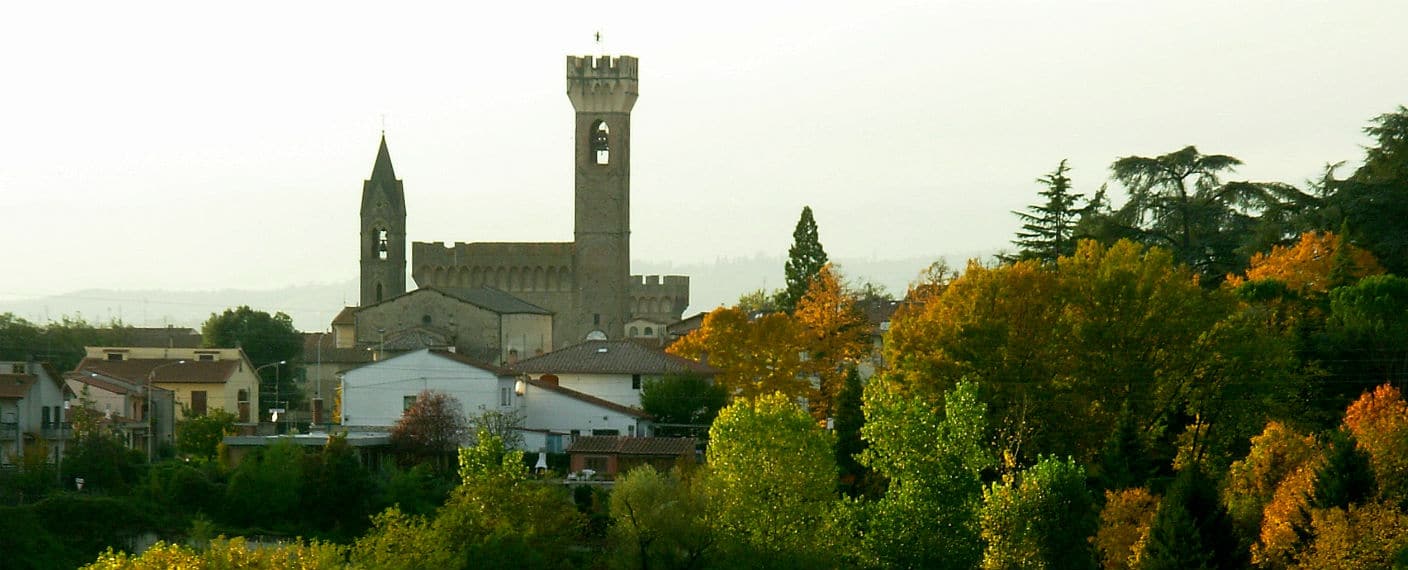
Founded in 1306 by the Florentine Republic as a military outpost on the ancient road between Florence and Bologna, Scarperia is one of the most charming villages in the Mugello area. Originally named Castel San Barnaba, it still retains the regular layout of the medieval ‘terra nuova’ (new land) and an identity strongly linked to the history of Florence. Famous for its majestic Palazzo dei Vicari and its ancient tradition of cutting tools, Scarperia combines art, craftsmanship and gentle, harmonious landscapes at the foot of the Apennines.
Photo gallery
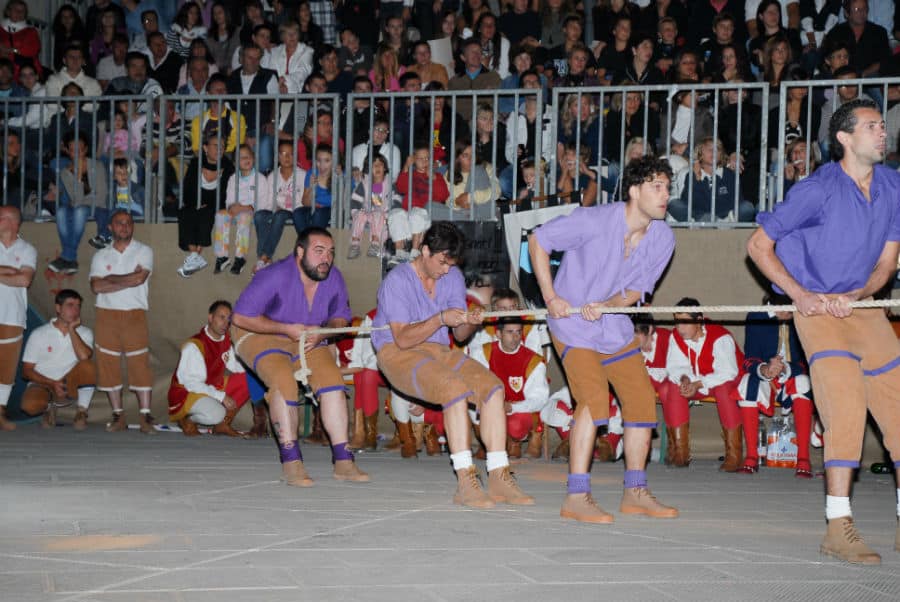

Nestled among the rolling hills of the Mugello, north of Florence, Scarperia is one of the most representative villages of the Tuscan-Emilian Apennines. Founded in 1306 by the Florentine Republic under the name of Castel San Barnaba, it began as a walled ‘new town’ and military outpost to control traffic across the Apennines and curb the power of the Ubaldini family. Its strategic position, just before the Passo del Giogo mountain pass, made it an obligatory stop along the ancient road connecting Florence to Bologna for centuries.
A Florentine “new land”A Florentine “new land”
The village was designed according to an orthogonal layout, typical of 14th-century Florentine foundations: Via Roma still runs through the centre today, the main axis that ideally leads towards the Apennine pass. Originally, the name Castel San Barnaba referred to 11 June, the day dedicated to the saint, a symbolic date linked to the Florentine victory at Campaldino.
Scarperia soon became the seat of the Vicariate (1415), assuming a leading administrative role in the Mugello area. The Vicar, representative of the Republic of Florence, resided here and governed by applying the Statutes: rules that regulated not only political life but also social relations, economic activities and urban decorum.
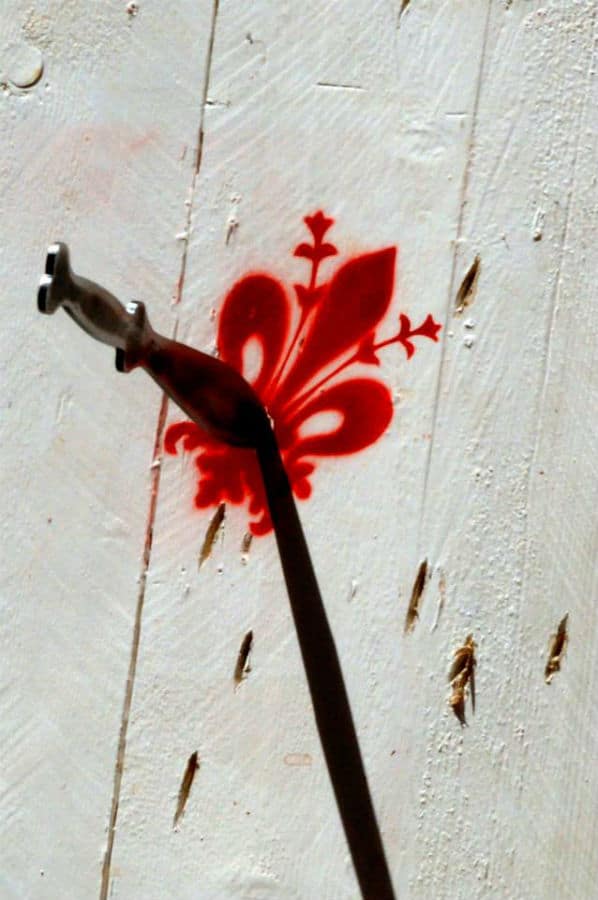
In 1351, after the victory against the Milanese troops, the bond with Florence was further strengthened: as a sign of gratitude, the village was granted permission to adopt the same coat of arms as Florence, but with the colours reversed – a red lily on a white field – symbolising an identity closely intertwined with that of the Tuscan capital.
The Palazzo dei Vicari, a symbol of identity
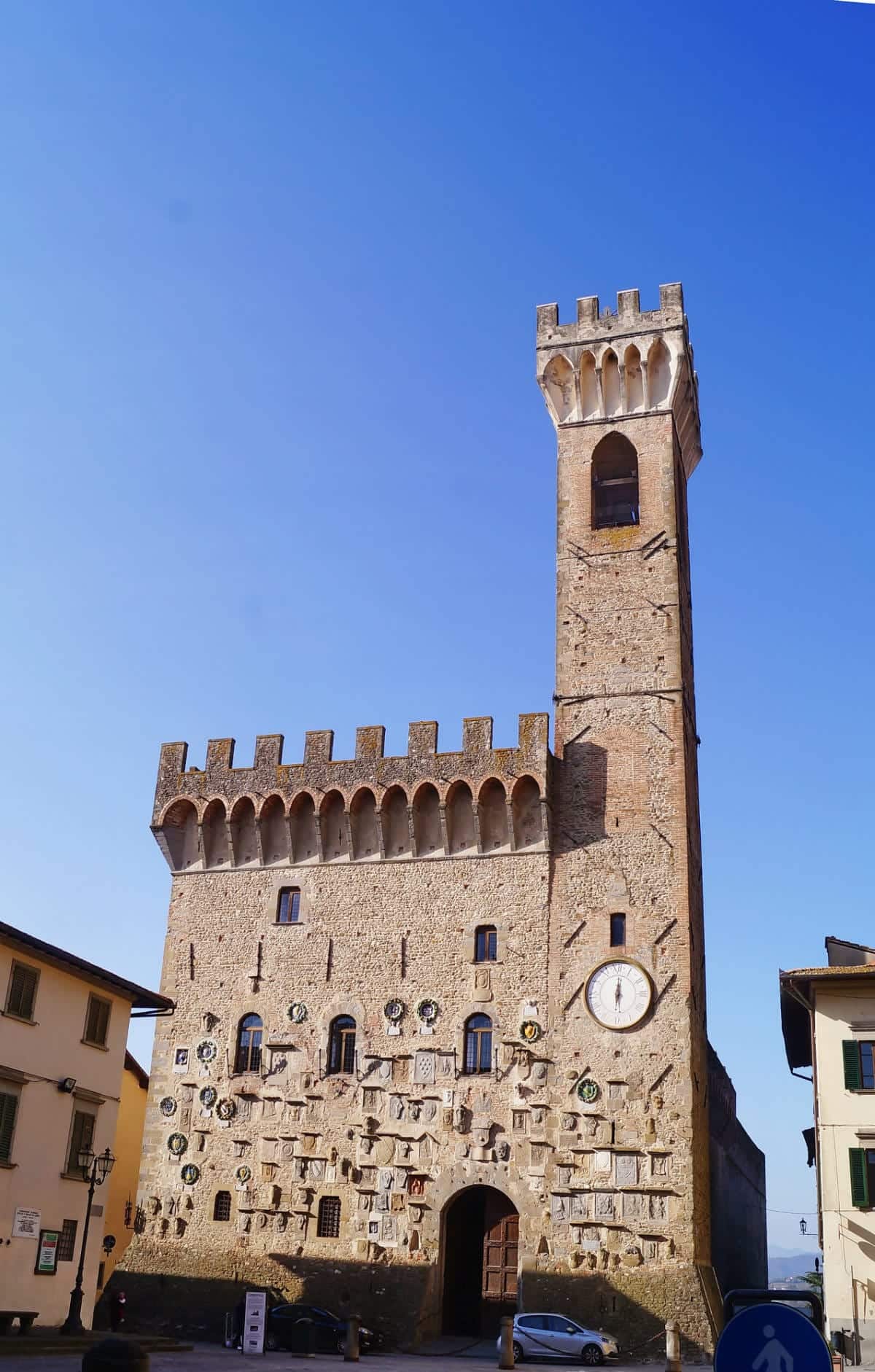
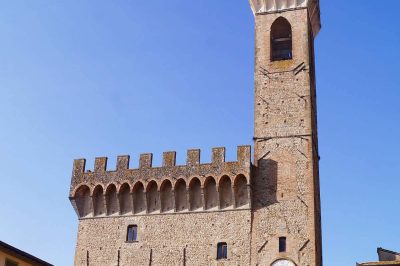
Dominating the square of the same name, the Palazzo dei Vicari is the symbolic monument of the village. Probably built as a tower and residence for the Captain, it was enlarged during the 14th and 15th centuries to accommodate the official rooms: the chapel, the hall and the monumental entrance.
The stone façade is decorated with an extraordinary collection of coats of arms in sandstone and glazed terracotta, bearing witness to the Vicars who succeeded one another in governing the town. Its current appearance, with battlements and corbels, is the result of 20th-century restoration work that reinforced its ‘medieval’ image, echoing the model of the Palazzo della Signoria in Florence.
Inside, you can admire a fresco from the school of Ghirlandaio (1501) and the ancient clock in the bell tower, documented as the work of Filippo Brunelleschi: a unique and precious testimony to his activity in the field of clockmaking.
Dominating the square of the same name, the Palazzo dei Vicari is the symbolic monument of the village. Probably built as a tower and residence for the Captain, it was enlarged during the 14th and 15th centuries to accommodate the official rooms: the chapel, the hall and the monumental entrance.
The stone façade is decorated with an extraordinary collection of coats of arms in sandstone and glazed terracotta, bearing witness to the Vicars who succeeded one another in governing the town. Its current appearance, with battlements and corbels, is the result of 20th-century restoration work that reinforced its ‘medieval’ image, echoing the model of the Palazzo della Signoria in Florence.
Inside, you can admire a fresco from the school of Ghirlandaio (1501) and the ancient clock in the bell tower, documented as the work of Filippo Brunelleschi: a unique and precious testimony to his activity in the field of clockmaking.
The art of sharp tools
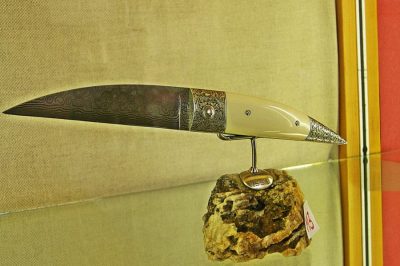
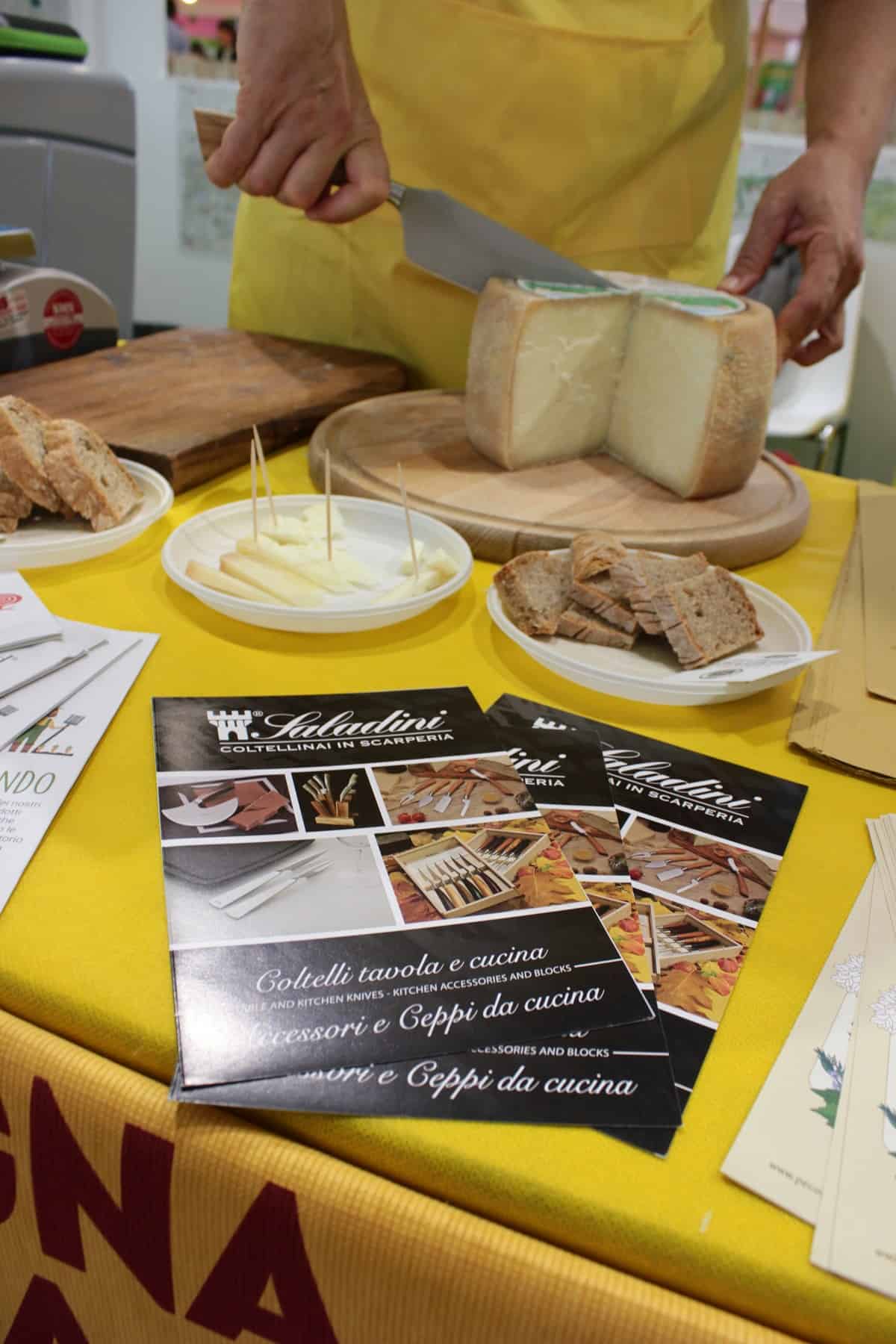
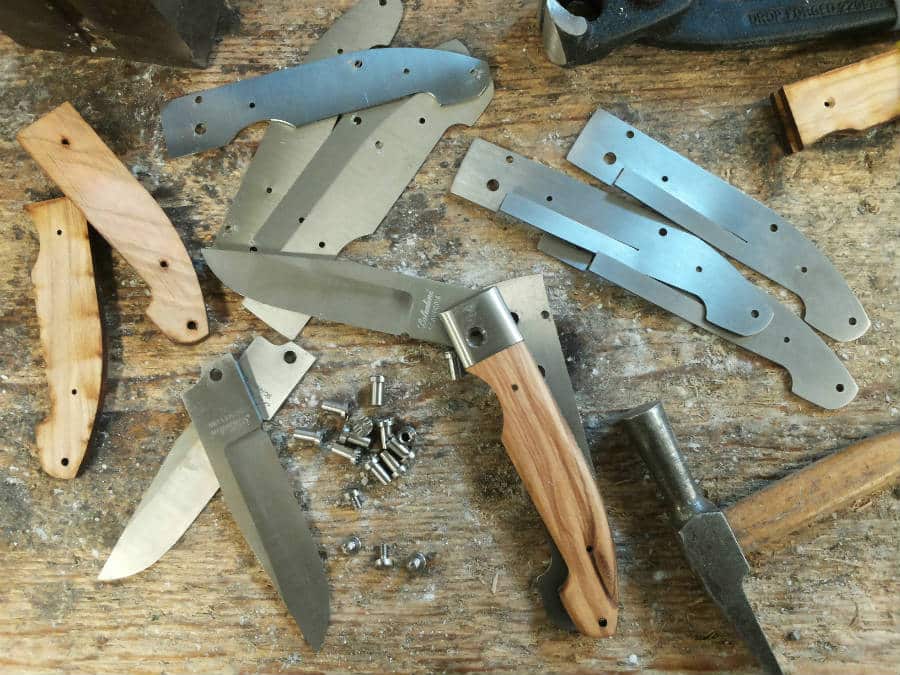
Scarperia is considered one of the most important centres in Italy and Europe for the artisanal production of knives. The activity of knife makers has been documented since the 15th century and for centuries has been at the heart of the local economy.
In the 15th and 16th centuries, the main street was lined with shops and workshops where iron was worked, agricultural tools were produced and, above all, folding knives were made. This specialisation made the village famous far beyond the borders of Tuscany.
The 18th century marked a difficult period: with the opening of the new Futa road (1752), Scarperia lost part of the commercial traffic that had determined its fortune. Subsequently, the Giolitti law of 1908, which restricted the trade in folding knives, dealt a severe blow to local craftsmanship.
Today, however, the tradition has been revived thanks to collectors and the use of high-quality materials: walking through the historic centre, you can visit historic cutlery shops where the art of ‘sharp tools’, the symbol of the village’s identity, is still handed down.
Alongside this ancient tradition, Scarperia is also known for the production of professional coffee machines, an example of how artisan know-how has evolved over time while maintaining deep roots.
Between faith, art and memory
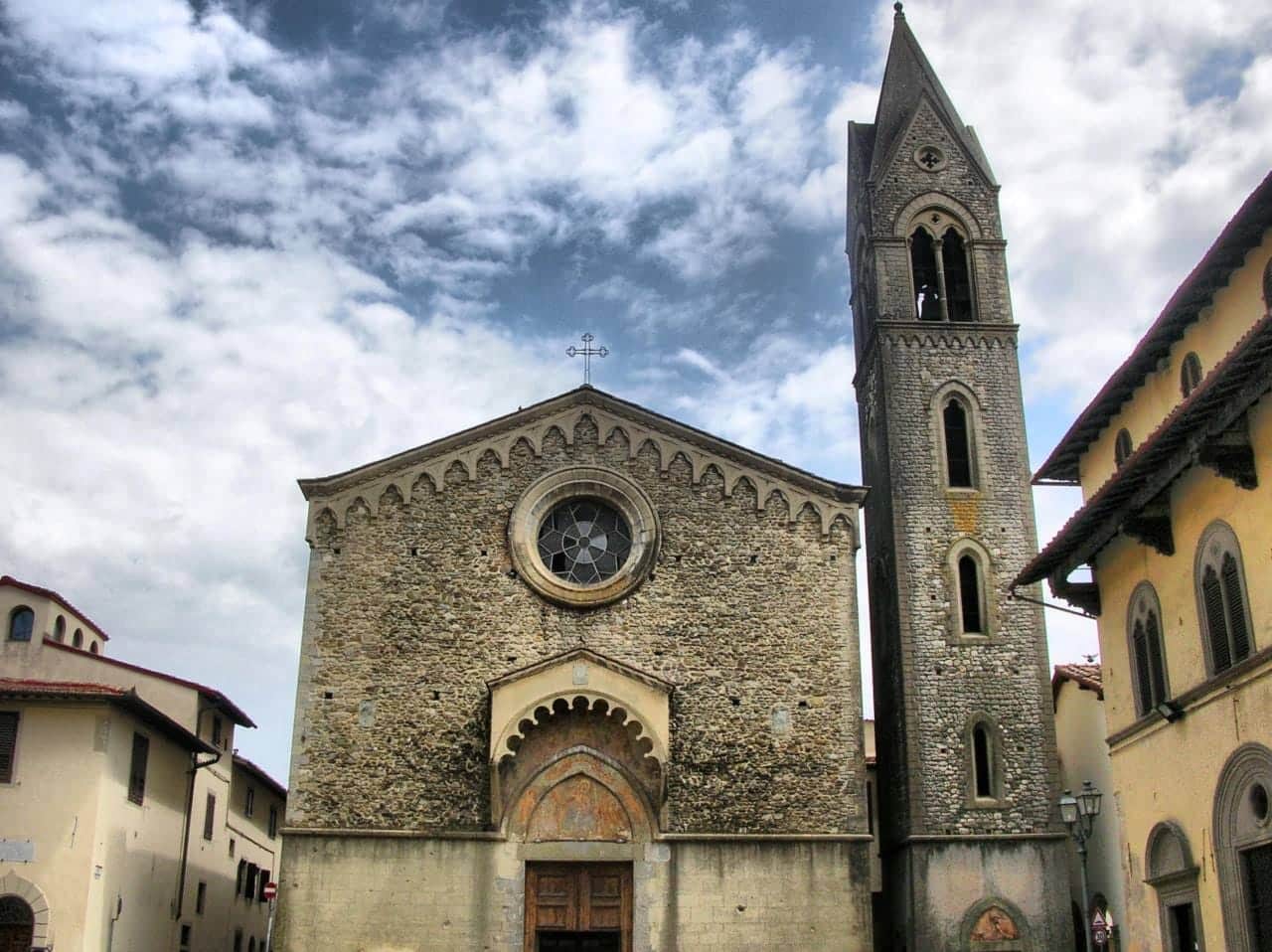
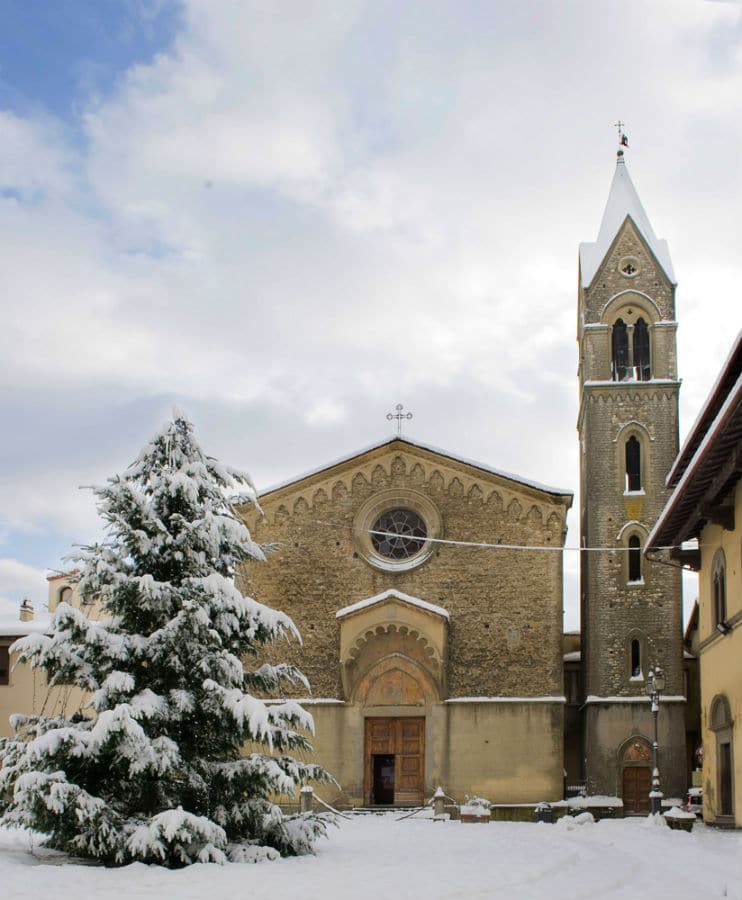
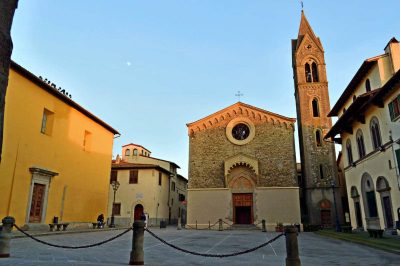
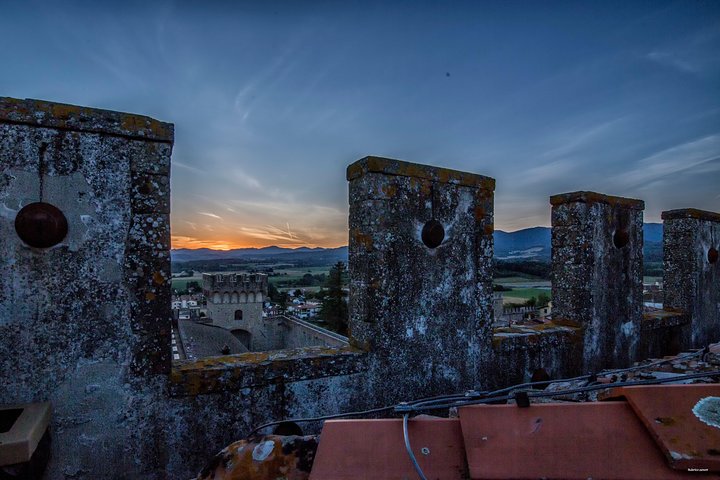
In addition to the Palazzo dei Vicari, the village is home to important religious buildings: the Church of SS. Jacopo e Filippo, the Oratory of the Madonna di Piazza – the site of the official investiture of the Vicar – and the Church of the Madonna dei Terremoti, with its central plan. Remains of the 14th-century walls and the medieval tower are reminders of the ancient defensive function of the walled city.
The Palazzo also houses the Pre-Unification Historical Archive, with thousands of documents recounting the history of the Vicariate of Mugello from the 15th to the 19th century, a valuable source for understanding the administrative and social life of the area.
Nearby, about one kilometre away, is the Pieve di Fagna, while in the hamlet of Sant’Agata you can visit the Romanesque parish church, the Sacred Art Collection and the Archaeological Documentation Centre.
Sport, nature and modernity
The Scarperia area is not just about medieval history. The municipality is home to the Mugello International Circuit, one of the most famous racetracks in the world, which hosts international motor racing competitions that attract enthusiasts from all over.
For those who love slow tourism and greenery, the Poggio dei Medici Golf Club offers an elegant and well-kept landscape, framed by the rolling hills of the Mugello.
A village between the past and the future
Scarperia still retains the soul of Florence’s “new land”: a tidy, compact village, crossed by a single main road and dominated by a building that speaks of its authority and civic pride.
Here, historical memory intertwines with artisan skill, the energy of international sport and an Apennine landscape that invites discovery. Visiting Scarperia means entering a place where the tradition of knife-making coexists with the roar of engines, where the Middle Ages dialogue with modernity and where every stone tells a fragment of Tuscan history.
Village of Scarperia
Municipality of Scarperia e San Piero
Metropolitan City of Florence
Tuscany Region
Population: 12.047 scarperiesi e sampierini
Altitude centre: 292 m s.l.m.
Unesco Site:
Giardini e Ville Medicee. La Villa del Trebbio
the Municipality is part of:
I Borghi più belli d’Italia
Città dei motori
Unesco World Heritage Sites
Unione Montana del Mugello
Municipality
Via dei Bastioni 3, Scarperia – Tel. +39 055 843161
BY CAR
- From North and South: Take the A1 highway, exit at Barberino, continue on the SP 31 and then on the SS 65, follow in the direction of Scarperia and San Piero.
ON THE TRAIN
- San Piero a Sieve railway station
BY PLANE
- Florence airport
What to see in Scarperia
Discover what to see in Scarperia among monuments, scenic views, museums, churches and symbolic places of the village. A useful selection to plan your visit and explore the area.
What to do in Scarperia
If you are wondering what to do in Scarperia, here you will find activities, experiences and tours to enjoy the village and its area in an authentic way, among nature, culture, food and wine, and guided routes.
Where to shop in Scarperia
Discover where to shop in Scarperia among small shops, local producers, wineries, artisan workshops and local excellences to take home after your visit.
Events in Scarperia
Upcoming events, festivals and initiatives.
News and stories about “Scarperia”
Insights and stories from the area, to keep discovering.