 Tuoro sul Trasimeno
 Montefeltro
 Francigena Film Festival
 Guided tour and tasting
 Stress-free Elba: practical tips for planning the perfect holiday
Nestled between Val di Chiana and Val d’Orcia, Montepulciano is one of Tuscany’s most charming villages, where history, art and landscape coexist in perfect harmony. Of Etruscan origin and shaped over the centuries by political events, popular traditions and great Renaissance architecture, the town dominates a territory dedicated to viticulture, famous throughout the world for its Vino Nobile. Strolling through its streets means walking through centuries of culture, among historic buildings, monumental churches, events that define its identity and views that reveal the most authentic soul of the Tuscan countryside.
Photo gallery

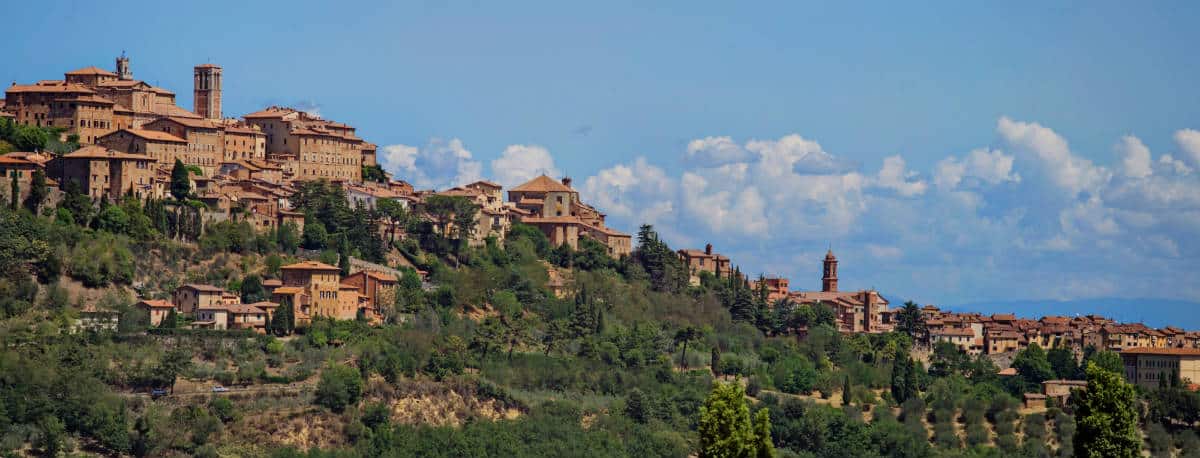
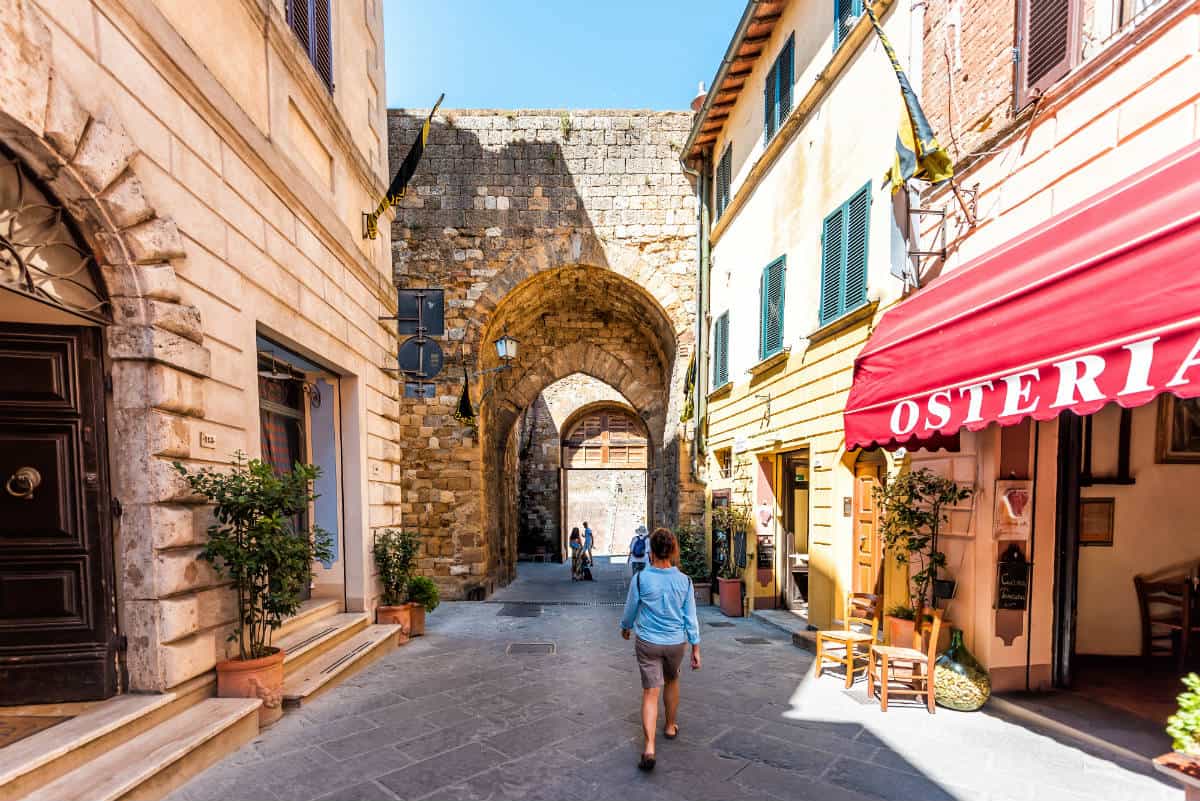
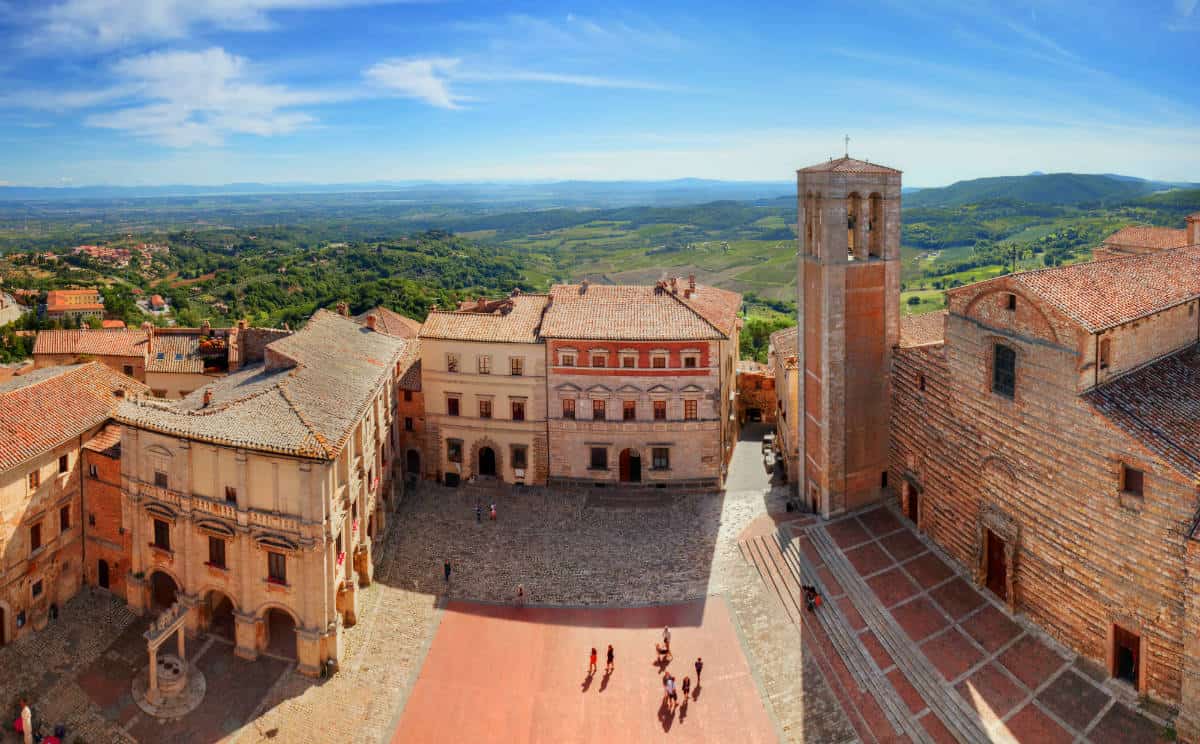
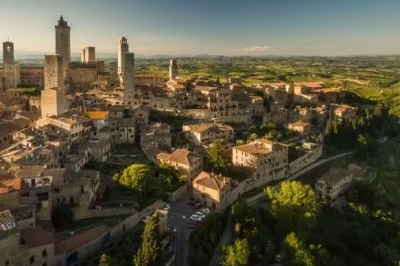
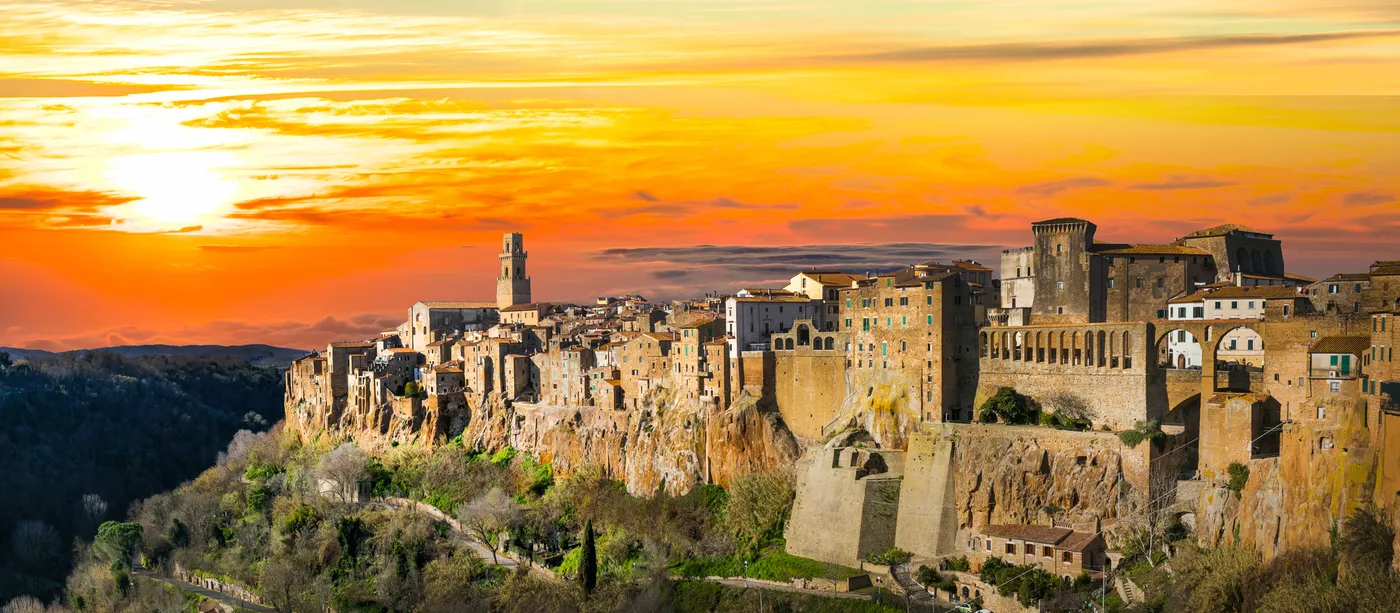
Nestled on the ridge separating Val di Chiana from Val d’Orcia, Montepulciano dominates the Tuscan landscape from a limestone hill, offering one of the most iconic and recognisable views in the region. Waves of cultivated hills, rows of vines arranged like embroidery, golden fields and isolated cypress trees frame an elegant village, where millennial history coexists with a strong agricultural and cultural identity.
Ancient origins and historical stratification
The origins of Montepulciano date back to Etruscan times, starting in the 4th century BC. According to tradition, its foundation is linked to Porsenna, lucumone of Chiusi. Artefacts and documents found in the area of the Fortress confirm the presence of a settlement as early as the Hellenistic period, while in Roman times the centre had a strategic function as a military garrison defending the consular roads.
The name Montepulciano derives from the combination of Monte and Policiano (or Pulciano), a term that refers to the Etruscan purth, meaning commander or magistrate, emphasising the important political role that the place has had since ancient times.
Evangelised in the 4th century by St. Donatus, bishop of Arezzo, the town experienced its first documented development in the Lombard era: a document from 715 mentions the Sancta Mater Ecclesia in Castello Pulliciano. In the following centuries, Montepulciano grew as an important civil and cultural centre, as evidenced by documents from the 8th and 9th centuries attesting to the presence of notaries, doctors and artisans, signs of an already developed community.
The medieval village and urban layout
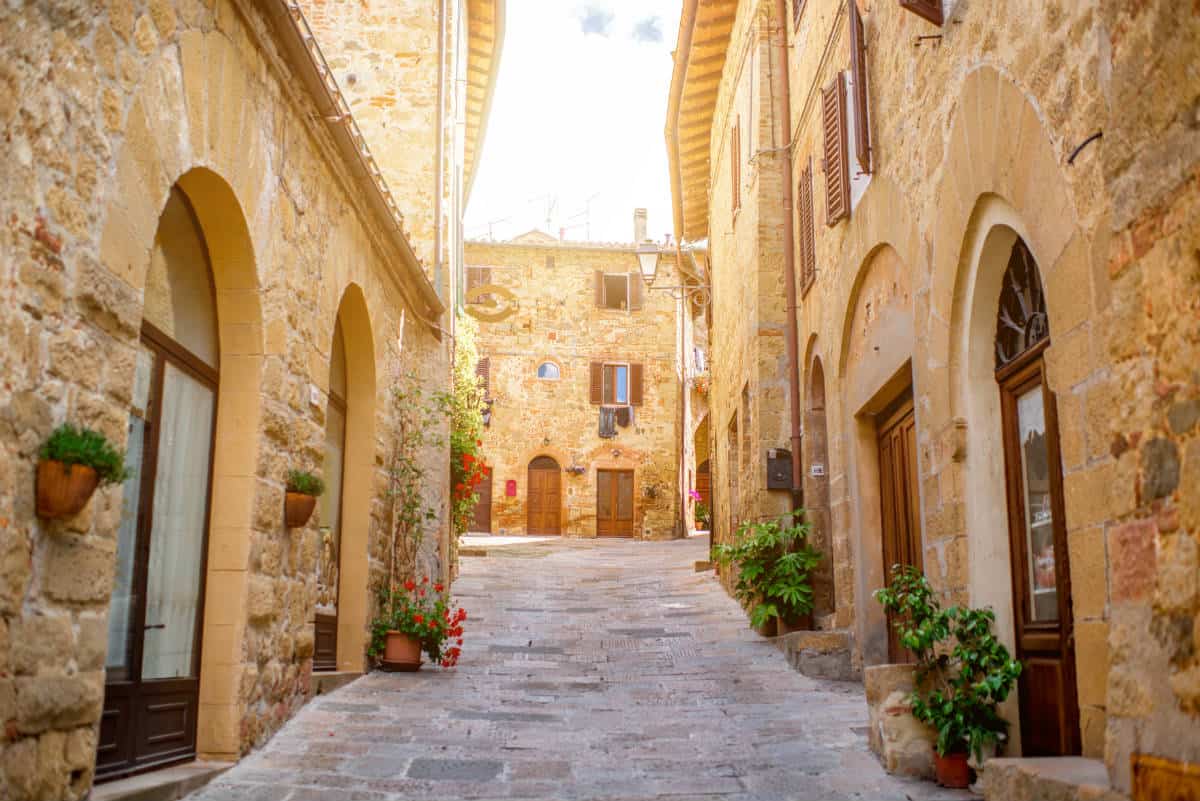
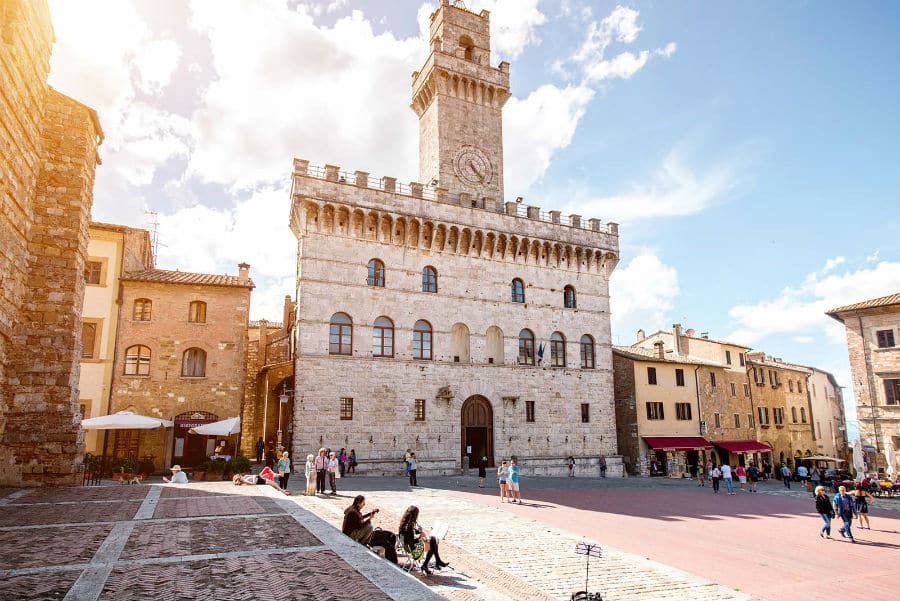
The historic centre has a characteristic S-shape and preserves its medieval layout enclosed within three walls, built during the 14th century. Walking through Montepulciano means slowly climbing along the main street, from Porta al Prato to Piazza Grande, crossing centuries of history condensed into Renaissance palaces, churches, shops and panoramic views.
During the Middle Ages and the Renaissance, the city was long contested between Florence and Siena, experiencing periods of political tension and struggles between ruling families. In 1511, with the definitive peace with Florence, the Poliziani celebrated their return to autonomy by engraving the famous inscription Recuperatio Libertatis on the town council chamber. From 1559, with the fall of Siena and the establishment of the Medici principality, Montepulciano lost part of its strategic role but retained its prestige and cultural vitality.
Art and architecture
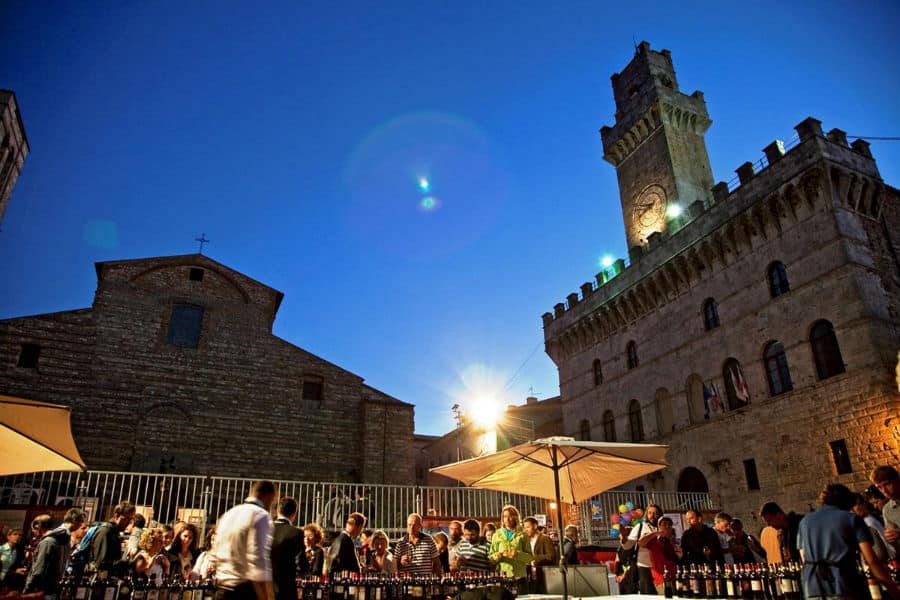
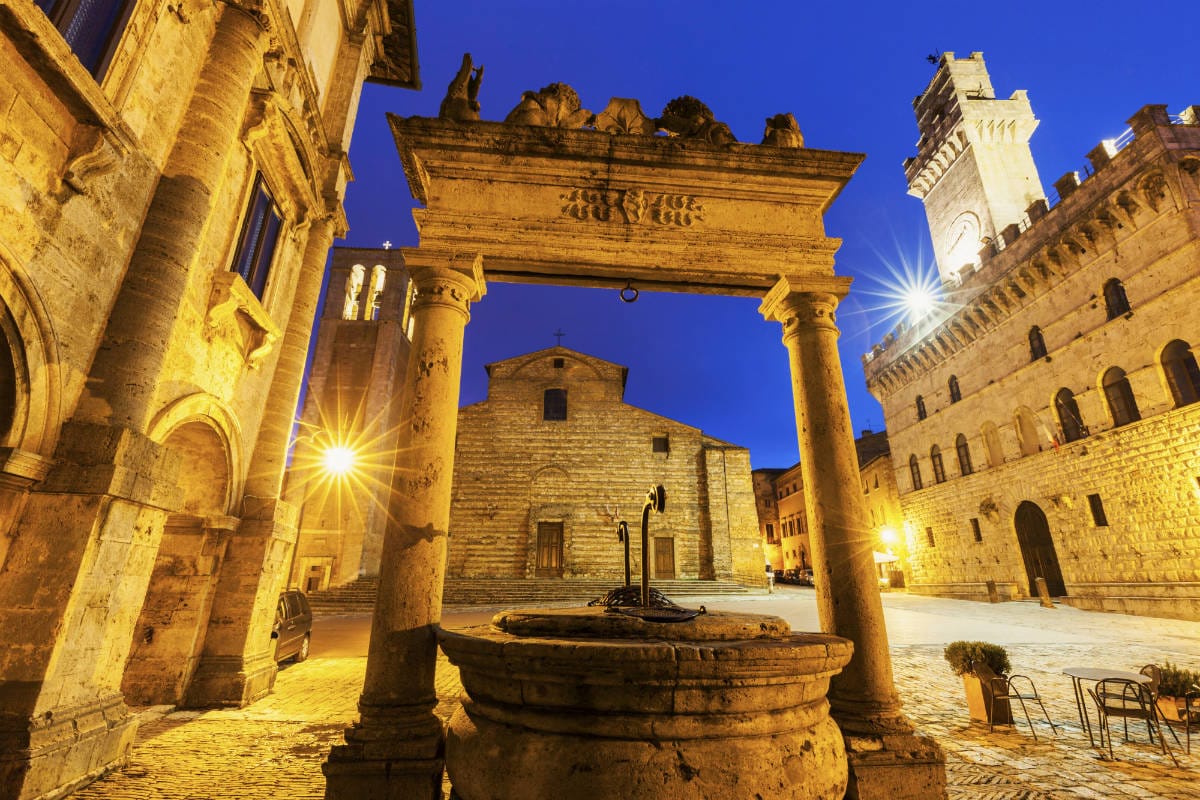
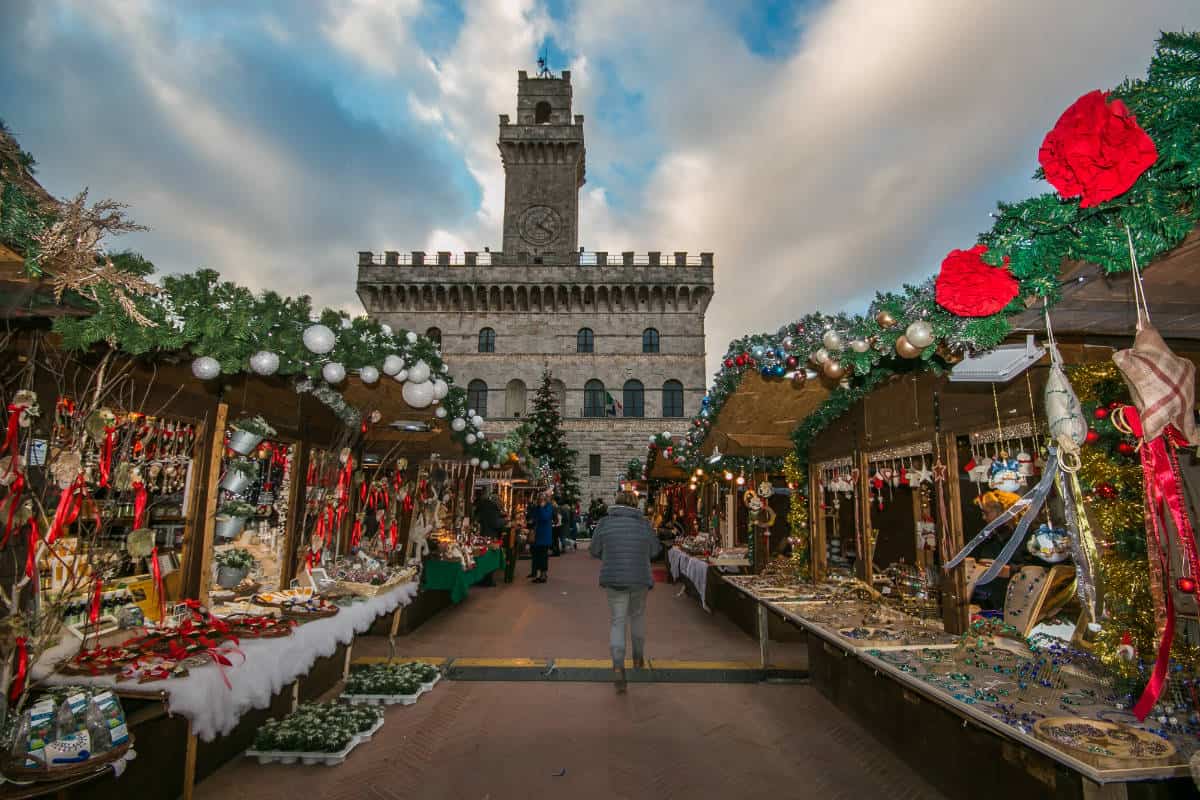
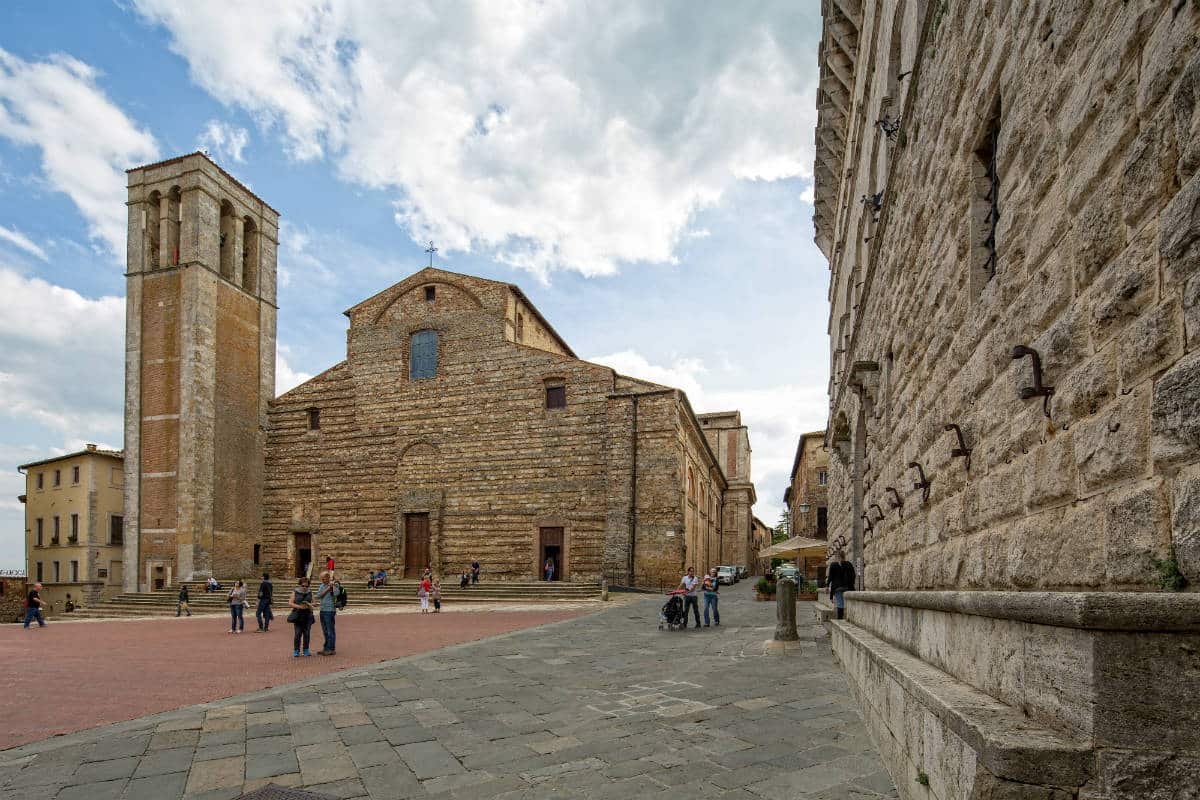
The symbolic heart of the village is Piazza Grande, one of the most charming Renaissance squares in Tuscany. It is overlooked by the Town Hall, with its Gothic tower, and the Duomo di Montepulciano, designed by Ippolito Scalza, which houses works by Taddeo di Bartolo, Michelozzo and Andrea della Robbia.
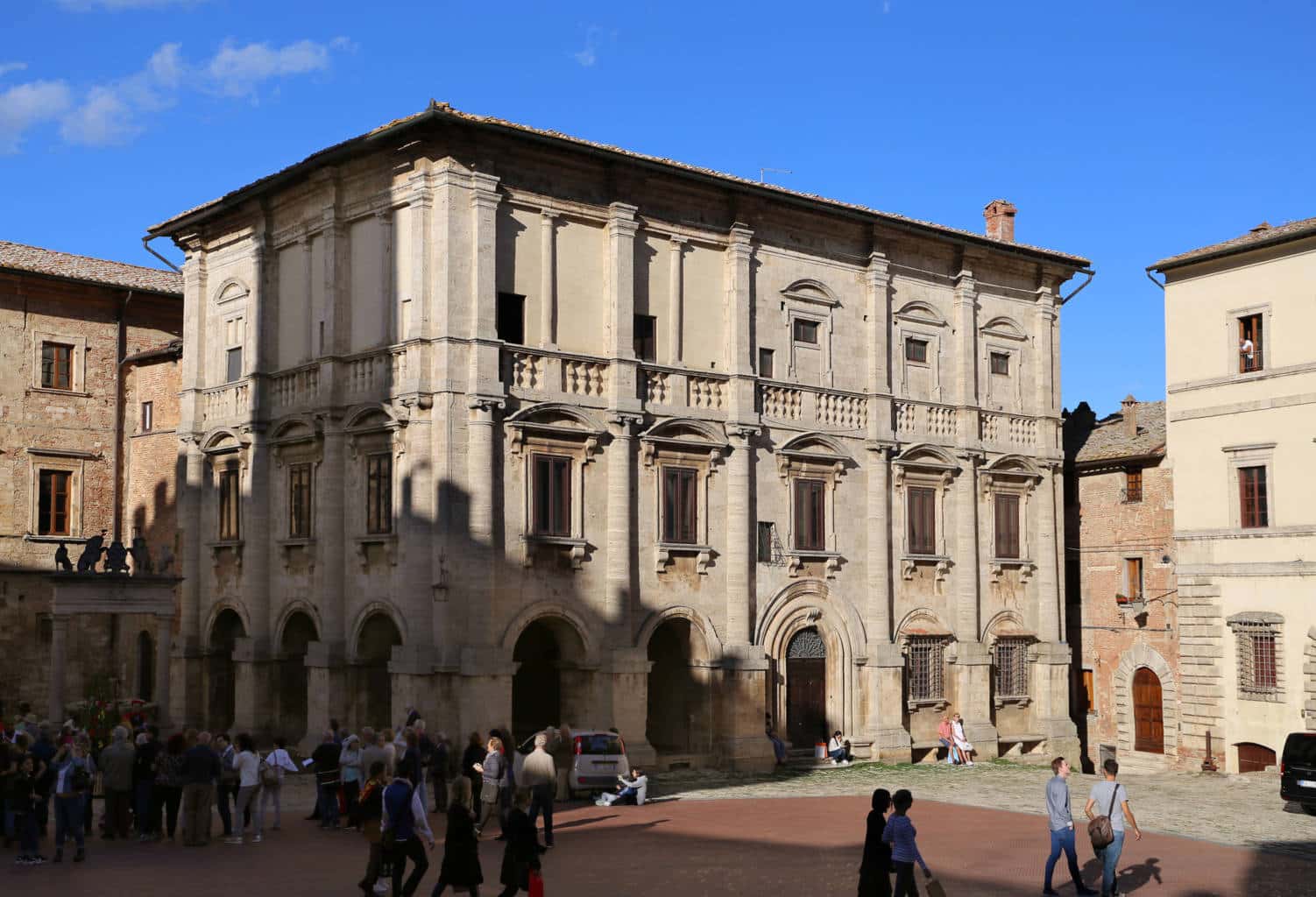
The urban fabric also features the Church of Sant’Agostino, with its travertine façade that harmoniously blends Gothic and Renaissance elements, and numerous noble palaces linked to the great families of Montepulciano – Nobili, Contucci, Ricci, Cervini, Bellarmino – who gave the city cardinals, bishops, men of letters and even a pontiff.
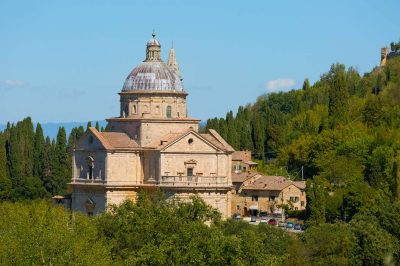
Just outside the city walls stands one of the greatest masterpieces of the Tuscan Renaissance: the Temple of San Biagio, designed by Antonio da Sangallo the Elder. Standing alone in a green meadow, with a Greek cross plan and central dome, the temple is considered a model of architectural perfection, so much so that it inspired Michelangelo in his studies for St Peter’s in Rome.
Traditions, events and cultural life
Montepulciano is a village deeply rooted in its traditions. The most famous of these is the Bravìo delle Botti, which dates back to the 14th century and takes place every year on the last Sunday in August: the eight historic districts – Cagnano, Collazzi, Gracciano, Le Coste, Poggiolo, San Donato, Talosa and Voltaia – compete by pushing 80 kg barrels along a challenging uphill route to Piazza Grande, preceded by an evocative historical procession.
Alongside this event, the Bruscello Poliziano, staged since 1939, is a form of popular sung theatre that tells epic stories or tales of everyday life, passing on a rural tradition that is still alive today. The Cantiere Internazionale d’Arte is also an international event that enlivens the summer with concerts, shows and artistic productions.
The territory and the thermal baths
The municipal territory is extremely varied: holm oak, chestnut and Scots pine woods alternate with clay hills, reclaimed plains and cultivated fields. A sparsely populated area, which has long remained isolated, preserving a profound balance between man and landscape.
In Sant’Albino, there are the Montepulciano Thermal Baths, known since the 16th century for the properties of their sulphurous salsobromoiodic waters. The springs, captured at depth and conveyed without contact with the air, maintain their therapeutic qualities intact, making the spa complex an ideal destination for wellness and treatment.
The land of Vino Nobile
Montepulciano is known throughout the world as the land of Vino Nobile, one of Italy’s finest wines. Viticulture has Etruscan origins, but it was in the Middle Ages that production was structured and regulated. Since 1980, Vino Nobile di Montepulciano DOCG has been protected by a Consortium and produced mainly from Prugnolo Gentile (Sangiovese) grapes grown on the hills surrounding the village.
Alongside Vino Nobile, Rosso di Montepulciano, Vin Santo and the prized Occhio di Pernice are also produced, wines that reflect the deep connection between the territory, tradition and expertise. The monumental cellars, often dug into the tuff beneath historic buildings, are works of art in themselves and essential stops for anyone visiting the city.
A village to experience
Visiting Montepulciano means immersing yourself in authentic Tuscany, where the beauty of the landscape blends with a thousand-year history, a vibrant culture and generous cuisine. With its art, wine, historical events and nature, the village is a perfect synthesis of Tuscan identity, capable of captivating visitors in every season and leaving a lasting impression on those who discover it.
Village of Montepulciano
The Municipality of Montepulciano
Province of Siena
Tuscany Region
Inhabitants: 13.673 monpulcianesi
altitude center: 605 m a.s.l.
The Municipality is part of:
Città del bio
Città del vino
Città della chianina
Città dell’olio
Terre di Toscana
Unione Valdichiana Senese
Acknowledgments
Orange Flag – Italian Touring Club
Protected Natural Areas:
Lake of Montepulciano Natural Reserve
Municipality
Piazza Grande 1 – Tel. +39 0578-7121
BY CAR
- From the North: Take the A1 highway, exit at Valdichiana – Bettolle, cross the town of Bettolle and follow the signs for Torrita di Siena, upon reaching Torrita, at the traffic lights turn left towards Montepulciano.
- From the south: Take the A1 highway, exit at Chiusi – Chianciano Terme, follow the signs for Chianciano Terme, cross the town of Chianciano and continue towards Montepulciano.
ON THE TRAIN
- Chiusi – Chianciano Terme railway station
BY PLANE
- Florence airport
- Pisa airport
- Rome Fiumicino Airport
What to see in Montepulciano
Discover what to see in Montepulciano among monuments, scenic views, museums, churches and symbolic places of the village. A useful selection to plan your visit and explore the area.
Where to stay in Montepulciano
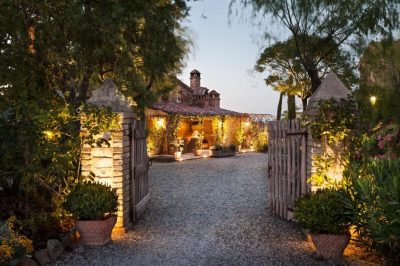
If you are looking for where to stay in Montepulciano, you can choose from hotels, B&Bs, farm stays and holiday homes in the village and nearby, for a slower stay among landscapes, culture and authentic hospitality.
News and stories about “Montepulciano”
Insights and stories from the area, to keep discovering.